BOISE, ID – A steady stream of visitors arrived at the El-Ada Community Action Partnership food pantry in Garden City from when it opened Thursday morning through the afternoon.
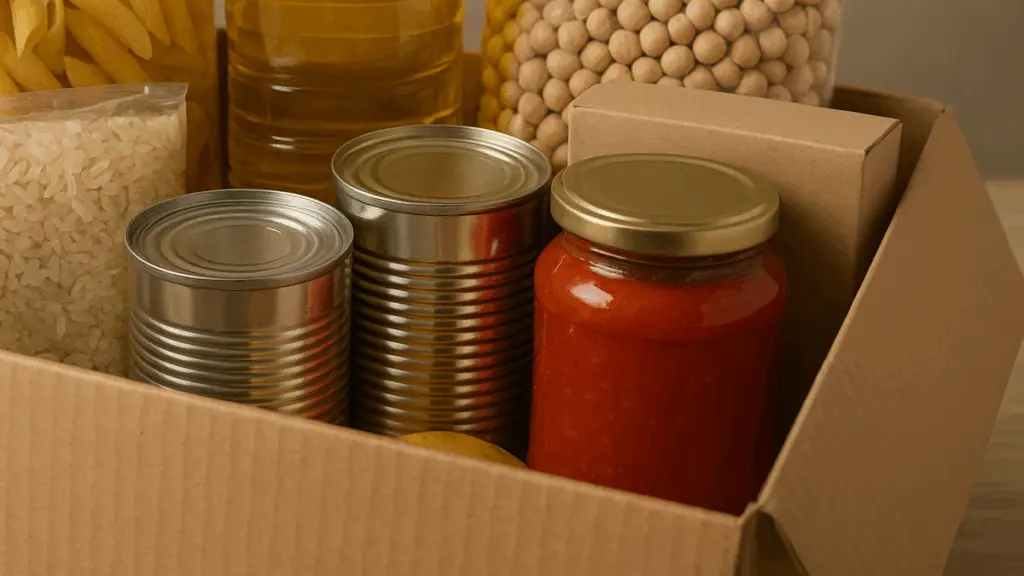
Behind the open garage door where clients receive their food boxes, the stacks of canned food were not as high as they usually are, Pantry Manager James Thompson said.
Thompson said the food bank location has been so busy, staff hasn’t had a chance to count how many people are visiting, but he estimated it’s up at least 50% with as many brand-new clients showing up as there are returning.
Food banks and pantries across the state are reporting the same increase in demand since the federal government shut down in October and it was announced that food benefits through the Supplemental Nutrition Assistance Program, or SNAP, would dry up in November.
“There’s a lot of people out there that are really, really struggling,” said Steve Small, food bank manager at the Community Action Partnership in Lewiston. “When it became certain that SNAP would be delayed or eliminated for this month, we had at least half a dozen people in here in tears, just in tears, saying, ‘I don’t know how I’m going to feed my family. I don’t know what I’m going to do.’”
Through multiple court orders and conflicting information coming from the White House and U.S. Department of Agriculture, which runs the food benefit program, the people who rely on the funding for groceries were left confused and concerned about where their next meal will come from. On Friday, the USDA said it would release full funding for November, States Newsroom reported.
However, the U.S. Supreme Court temporarily blocked on Friday night a lower court’s order that the Trump administration pay for a full month of food benefits, hours after some states began loading nutrition assistance funds on payment cards held by the 42 million Americans who use the program, States Newsroom reported.
In a two-page filing, Justice Ketanji Brown Jackson accepted the government’s request to pause a Thursday order from Rhode Island Chief U.S. District Judge John J. McConnell while a lower appeals court hears the case.
Local food banks say their supply is down as government shutdown, economic uncertainty continues
More than 130,200 Idahoans use SNAP to purchase food. The amount of money provided each month varies depending on household size, expenses, and income, but the average Idahoan receives $178 per month per household member, according to the Idaho Department of Health and Welfare.
One of the visitors to Garden City food pantry said she only received about $30 a month from SNAP, but with her limited Social Security income of $1,350 a month, that extra money was critical to purchase more expensive grocery items, like meat.
“You can get a lot of ground beef for $30,” said Maria Frolik, who lives in Boise.
Food banks also say their supply is down, driven by a combination of canceled orders from the federal government and fewer donations amid economic uncertainty.
As Thanksgiving approaches — the time of year when food banks see the highest demand — managers say they feel confident that the community will come together to meet the need, but they are increasingly concerned about their ability to feed their communities.
“We will always find a way to give food to people, but it makes it more and more challenging,” Small said. “We don’t ever intend in the future to send anyone away without food, but it just gets more and more difficult all the time.”
SNAP uncertainty prompts concern from recipients
After Congress failed to vote to extend federal funding by the end of the fiscal year, the federal government largely shut down starting Oct. 1. By Oct. 22, the Idaho Department of Health and Welfare announced that the state would stop distributing funds.
The announcement left people in a lurch, suddenly without food assistance for November.
“There wasn’t a lot of time to plan how they were going to kind of navigate through that,” said Ariel Jackson, executive director of the Community Food Basket in Idaho Falls. “… A lot of them that we’re seeing are families that were stable with their SNAP benefits, and when those suddenly disappear, and you weren’t really prepared for it, that becomes a crisis.”
Jackson said the Idaho Falls food pantry served 100% more families every day in the past two weeks than it has on average. Typically, around 50 to 60 families a day would visit the pantry. Every day the past week, there were 100 to 120 families each day, Jackson said on Thursday.
In Lewiston, the food bank usually provides around 35 to 40 boxes each day, Small said. On Monday, the food bank distributed 75 boxes and more perishable items “rescued” from local grocery stores.
“Seventy-five food boxes is a lot for our one location here in Lewiston any given day,” Small said. “Those are food boxes that average probably 50 to 55 pounds a piece. So we’re looking at right around 4,000 pounds of food in one day just through our pantry here.”
Thompson, of the Garden City food pantry, said some of his clients are visiting multiple food banks to try and stock up enough to feed their families.
Food banks are seeing a lot of new faces, as households who were able to make their finances pencil increasingly struggle to do so. Inflation on groceries and rising housing costs were already making it hard for many families to work, so the SNAP disruption sent some over the edge.
“Just with EBT you had, people who are just getting by,” Thomson said. “And now you take that away, you’re forcing them to come to food banks.”
Federal court orders USDA to provide full benefit
It’s unclear when SNAP recipients might get their cards used to pay for certain grocery items, called EBT cards, refilled.
The original guidance in October was that there was no money appropriated for the program. After court challenges, a federal judge had told the USDA it had to use available contingency funds for SNAP. The federal agency responded in court filings that it intended to pay about 50% of the benefit. The USDA later said it miscalculated how to adjust the payment, and the cut would be closer to 35% instead.
President Donald Trump on Tuesday, after the court order, wrote that no SNAP benefits would be provided until the government was reopened.
When the USDA failed to release the benefits by the court’s Wednesday deadline, the federal judge ruled Thursday the agency had to pay the full amount recipients usually receive.
The USDA announced Friday it would comply with the order, and provide the full funding available to the 42 million Americans who use the program, States Newsroom reported. Then later that day, the U.S. Supreme Court temporarily blocked the November payments.
It’s unclear when households will have access to those funds. Federal officials previously said it may take weeks or months before the money lands in accounts of recipients, NPR reported.
Idaho Department of Health and Welfare spokesperson AJ McWhorter told the Sun Nov. 3 the agency hadn’t received formal guidance from the USDA on how SNAP would be distributed. The agency couldn’t be reached after follow-up requests for comment on Wednesday and Friday.
Idaho food banks are facing supply challenges amid heightened demand
The food banks in the Treasure Valley, Lewiston and Idaho Falls said they had scheduled truckloads of food deliveries canceled this year by the federal government.
The orders from American farmers and producers would have totaled an estimated more than 370,000 pounds for Idaho food banks, the Sun previously reported.
Through what’s called the “bonus commodities” program within The Emergency Food Assistance Program, food banks can get American-produced products like meat, dairy and produce above and beyond what they typically get for assistance.
“It was unexpected, and it created a shortage, and we weren’t really happy about it,” Small said. “But we carried on, and did the best we could with the other commodities that were available.”
The El-Ada Community Action Partnership had six 18-wheeler trucks-worth of food canceled recently, Thompson said. The deliveries would’ve included cheese, pork, chicken and milk.
Jackson, from the Idaho Falls food bank, said her organization doesn’t rely much on federal funding but had made orders through the bonus food program. The canceled orders included boxed milk, tomato sauce, canned fruit, and other shelf-stable staples.
“We’ve had to buy more food this year than we have in our 45-year history,” Jackson said.
Around Thanksgiving, many food banks arrange special food boxes centered around the holiday. In past years, this may have included turkeys, but high expenses and lower donations mean that’s out of reach for some organizations this year.
Thompson said the Mountain Home food pantry location would host a turkey drive in a partnership with the Mountain Home Air Force Base, but it wouldn’t happen in other locations.
In Idaho Falls, the Community Food Basket will still provide turkeys in its special holiday boxes, but with limitations, Jackson said.
“I’m a little worried about having to potentially turn families away, because we do have to have a cap,” she said.
In the past, the organization has provided 300 households with turkey in Thanksgiving boxes, but she has to cap it at 150 families this year because of lack of supplies and rising costs.
In Lewiston, the food bank used to distribute between 800 and 900 turkeys to households. Last year, the large donors that had paid for the turkeys stopped doing so.
“We can’t really justify using our limited food budget to go out and buy 900 turkeys,” Small said. “That’s just a huge expenditure that we could use for other foods.”
“I think turkeys are incredibly important for families at Thanksgiving (for) food insecure families and low-income families. It’s just incredible, because it’s more than a meal. It’s actual participation in our community, in a sense. And so, I would love it if we could give away turkey, but last year, we couldn’t do it, and we’re probably not going to be able to do it this year either.”
Individual donations have been dipping all year, Small said, while demand has been picking up.
“Those two lines have converged, and it’s just really, really difficult right now,” Small said.
The best way for the community to help, the food bank leaders told the Sun, is monetary donations. Food drives can help but many turn up with expired items or less-nutritious canned goods. With financial support, food bank staff can fill gaps and stretch the donation further.
“We love food drives,” Jackson said. “They might bring in 300 boxes of cereal, but we need 2,000 a month … We have the ability to really stretch those dollars and make more of an impact.”
This story first appeared on Idaho Capital Sun.