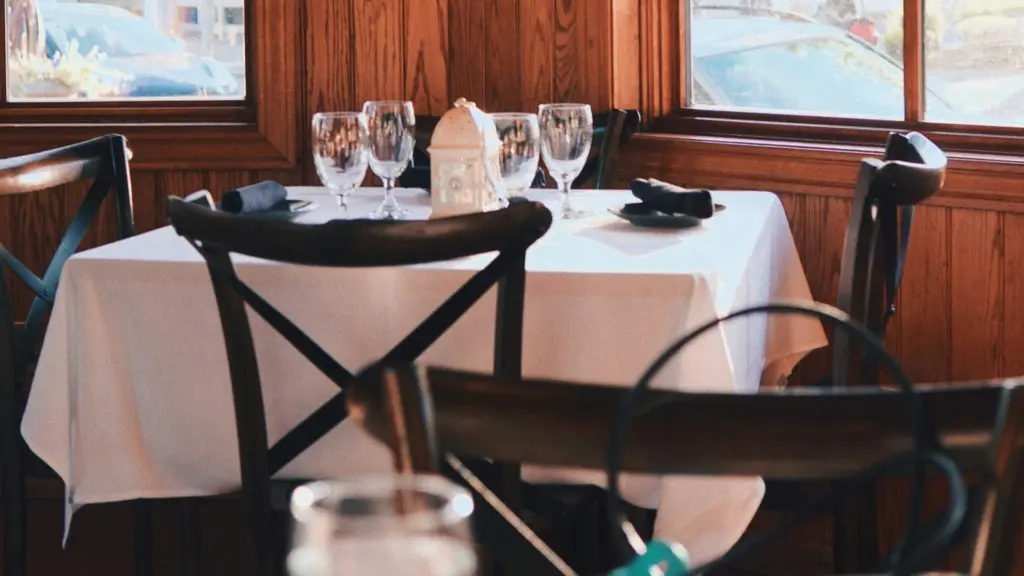
OLYMPIA, WA – The holidays are typically the busiest time of year for restaurants, but if trends continue here in Washington state, it might be a blue Christmas for eatery owners and operators.
“Costs have gone up, and customers are really pushing back on price,” said Anthony Anton, president and CEO of the Washington Hospitality Association, in an interview last week with The Center Square.
Restaurant owners, he said, have been forced to raise menu prices just to stay afloat under increased labor costs and additional taxes passed by the state Legislature.
“Customers really are revolting against higher prices, and yet the costs that the operators are paying keep going up, and they had already exhausted all their small tricks you can do in a restaurant to reduce costs,” Anton explained. “There was nowhere else to turn.”
He pointed to WHA’s recently released 2025 Dining Report.
“Washington state is the most expensive of the 48 states in this comparison, with menu prices 13.6% higher than the national average,” the report states.
Anton provided some context.
“Seattle is the second most expensive major U.S. city behind San Francisco, but well ahead of New York and L.A., and operators are just feeling like they’ve run out of levers. And that’s really the anxiety I hear at least six, seven times a day from operators,” he said, noting that in last year’s report, Washington was the least profitable restaurant state in the country. “Our margins were 60% lower than the national average.”
Anton said higher minimum wages, costly regulations, and an increasing tax burden are putting many operators out of business.
“So, at [a] 1.5% percent profit margin for a restaurant, there’s just nowhere to go,” he noted. “So, certainly we’ve seen a lot of closures this year.”
Anton explained that WHA is working to identify the types of restaurants going under, so it can help members avoid that fate.
“For many of them, this is the time where they have got to make enough money to survive because come January, February, March [when business is slower,] and then getting into April, it starts picking up again,” he said.
“Communities that have really large jumps in regulations like minimum wage, that has certainly been a big struggle for a lot of operators,” Anton noted.
Seattle’s minimum wage will increase to $21.30 per hour starting Jan. 1, 2026, up from the current rate of $20.76 per hour. This new rate applies to all employers in the city, regardless of size
The SeaTac minimum wage for hospitality and transportation workers will increase from $20.17 to $20.74 per hour on Jan. 1.
Renton and Burien have higher minimum wages than Washington state’s current rate of $16.66 per hour. Effective Jan. 1, Renton’s minimum wage will be $21.57 for large employers (501+ employees) and $20.57 for mid-sized employers (15-500 employees). Burien’s minimum wage will be $21.63 for large employers and $20.63 for mid-sized employers, with small employers (20 or fewer employees) following the state minimum wage of $17.13
“Restaurant costs for labor, for the people that work there, are now exceeding 40% and growing,” Anton observed. “And if you’re in any other part of the country, that number is about eight to 10 points less.”
The increasing tax burden, he noted, is also hurting the restaurant industry.
“Say alcohol sales are a big part of your business. Those higher taxes have been cited for a couple of closures and their inability to stay ahead. I think you saw that when Heritage made their announcement, and The Rock Wood Fired Pizza, too,” Anton said.
Heritage Distillery is closing its Gig Harbor tasting room, as well as all its tasting rooms in Washington and Oregon, on Dec 31.
The company stated that high state taxes and regulatory burdens made operations unsustainable.
The Rock closed six locations in Washington this year, citing financial challenges like increasing labor costs.
“It’s been a historic year for tax increases,” Anton said. “We saw sales tax on our food vendors, which we never saw before. So, we’re paying sales tax on the food, and then you pay a sales tax when you come to eat with us. We also saw the increase in the B&O [business and occupation] tax.”
He continued: “I think that’s the hardest thing for operators. They’ve run out of options, and they’re charging more, and they’re making less. It’d be one thing if these things pass and people were willing to pay. But when it gets to a point where the family of four can’t afford to eat out anymore or eat out less, that impacts everybody.”
Anton shared that WHA is still finalizing its 2026 legislative agenda, but hopes that lawmakers will take the time to understand the impact of taxes and regulations on the hospitality industry.
“I think we’d love to get the Legislature to understand one of the ways you can raise taxes is by having more restaurants survive and having more hospitality businesses in your community,” he elaborated. “About 20% of what you pay in a restaurant goes to some version of taxes. And so, you can raise a million in taxes by keeping five more restaurants open versus raising taxes and putting eight out of business.”
Anton noted that good-paying restaurant server jobs have been in short supply over the last couple of years in Washington.
“Those are some of the best income jobs in the industry,” he said. “And we know that that trend is not occurring in other states. We expect to see – this is the third year in a row, which kind of marks more than a coincidence that we’ve seen the number of server hours and number of servers drop as a way for operators to try to balance.”