WASHINGTON, D.C. – Licensed gun dealers are a major source of firearms that end up illegally trafficked, according to a new analysis using federal data by the research arm of Everytown for Gun Safety, which advocates for stricter gun laws.
Gun trafficking involves diverting guns from legal commerce into the illegal market, often through straw purchases, unlicensed dealing or other methods that bypass background checks and federal recordkeeping requirements.
A straw purchase is when someone who can legally buy a gun does so on behalf of another person who cannot or does not want their name associated with the purchase.
Using trace data from the federal Bureau of Alcohol, Tobacco, Firearms and Explosives, Everytown for Gun Safety found that 96% of guns recovered at crime scenes and traced between 2017 and 2023 were originally purchased from a licensed dealer. Everytown estimates more than 1.27 million guns will have been trafficked nationwide by 2026.
Licensed gun dealers earned an estimated $695 million from firearms that were later identified as trafficked, according to the report.
The report also points to gaps in federal oversight of gun shops, noting that the number of gun shop inspections has fallen sharply during the Trump administration. But the issue long predates the current administration.
In Oregon, for example, federal regulators inspected fewer than 2% of the state’s roughly 2,000 gun dealers in 2022 and 2023, according to records obtained by Oregon Public Broadcasting, a nonprofit media organization.
A federal budget document released in June shows that the U.S. Department of Justice plans to eliminate two-thirds of the investigators responsible for monitoring federally licensed gun dealers — reducing the number of inspectors from about 850 to roughly 300.
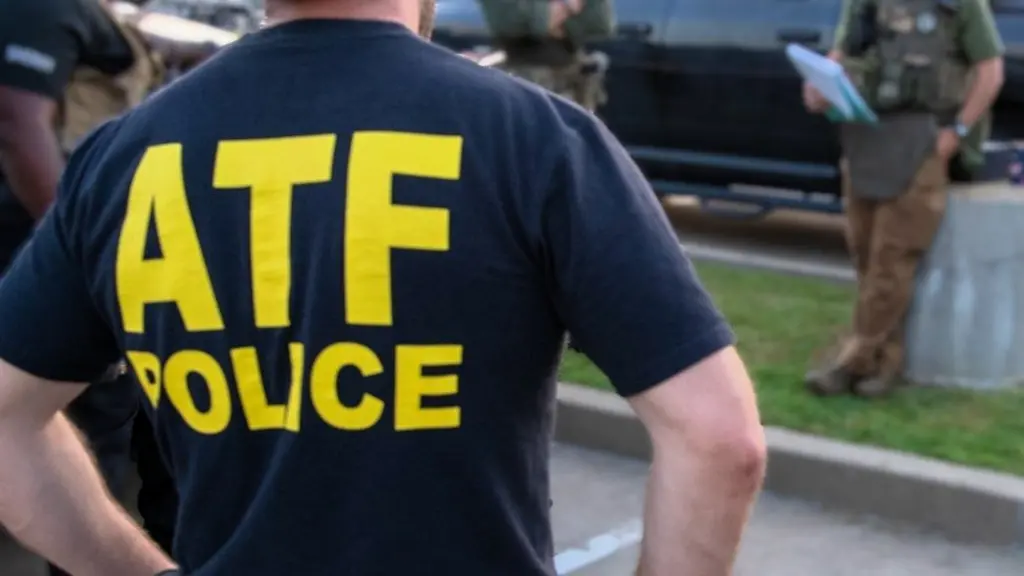
In May, the ATF announced a new policy loosening the rules that dictate when gun dealer licenses should be revoked. And since Trump took office in January, roughly 80% of the ATF’s 2,500 special agents have been directed to take on at least some immigration enforcement duties.
Everytown argues in its report that these oversight lapses allow suspicious sales to go undetected.
ATF data also shows that trafficked guns are involved in twice as many shootings as non-trafficked firearms. Nearly 88% of people who received these guns were legally prohibited from buying firearms, according to the report. Trafficked guns were frequently linked to drug offenses, aggravated assaults, homicides and attempted homicides.
The Everytown report urges states to increase regulatory inspections of gun dealers, adopt gun laws to deter trafficking and use data to identify and disrupt illegal supply chains.
“My years at ATF taught me that states don’t have to wait for Washington to act,” Marianna Mitchem, a senior firearms industry advisor at Everytown, wrote in an email. Mitchem is a former associate assistant director of field operations at the ATF.
At least 16 states and Washington, D.C., license and regulate firearms dealers, according to Everytown’s research.
Colorado and Illinois, for example, require gun dealers to obtain a state license and comply with security, recordkeeping, and storage standards, with state officials conducting regular inspections.
Stateline reporter Amanda Watford can be reached at ahernandez@stateline.org.
This story was originally produced by Stateline, which is part of States Newsroom, a nonprofit news network which includes Washington State Standard, and is supported by grants and a coalition of donors as a 501c(3) public charity.
Washington State Standard is part of States Newsroom, a nonprofit news network supported by grants and a coalition of donors as a 501c(3) public charity. Washington State Standard maintains editorial independence. Contact Editor Bill Lucia for questions: info@washingtonstatestandard.com.