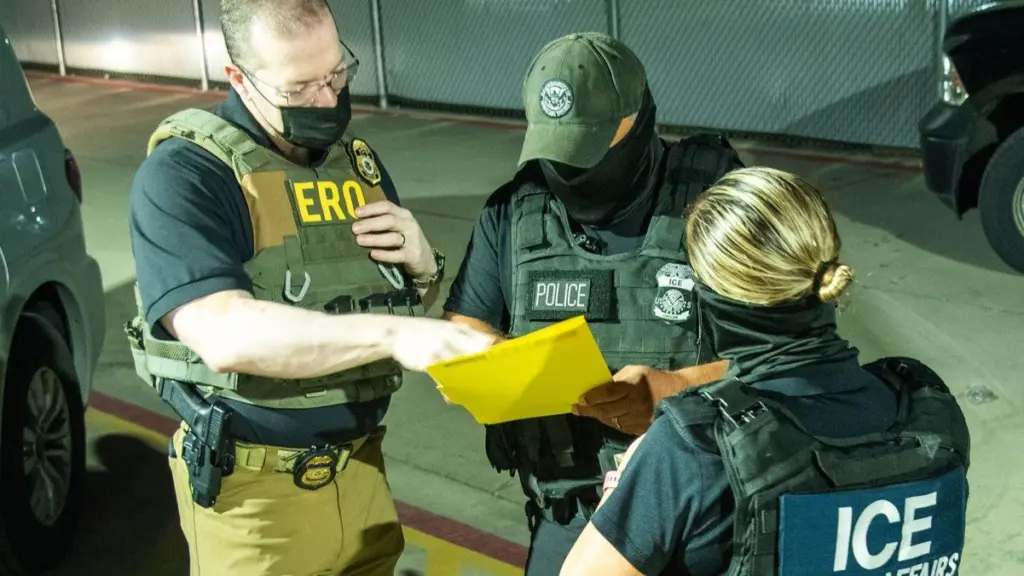
OLYMPIA, WA – California in September became the first state to ban law enforcement officers from wearing face coverings, in response to immigration raids where federal agents wore masks.
The U.S. Department of Justice sued the state over the prohibition last month.
Democratic lawmakers here in Washington are now planning similar legislation.
Washington’s proposal, spearheaded by Sen. Javier Valdez, D-Seattle, and Rep. Julio Cortes, D-Everett, resembles California’s law.
The Trump administration says the California policy jeopardizes the safety of federal officers, including those from U.S. Immigration and Customs Enforcement, and is unconstitutional because it tries to regulate federal activities.
Legislators in other states, including Virginia, Illinois and Michigan, have proposed similar restrictions. Connecticut has prohibited authorities from wearing face coverings inside state courthouses, with limited exceptions.
Cortes hopes the legislation would build community trust in law enforcement and hold police accountable.
“Trust is essential for crime reporting. When folks trust their local law enforcement, they are going to be reporting more crime,” he said Thursday. “When we see ICE out there, when those masked agents are out in communities, they create fear and intimidation, and that discourages community members from interacting with any law enforcement, even when they need help themselves.”
Cortes sees the proposed policy as consistent with existing state law requiring officers to be “reasonably identifiable,” meaning that their uniform displays their name and other information.
The bill would have some exemptions, like for undercover operations, or if officers need to wear protective gear such as gas masks or motorcycle helmets.
In an April raid at a Bellingham roofing company, dozens of ICE agents donned masks when they arrested 37 workers accused of being in the country without legal status.
Steve Strachan, executive director for the Washington Association of Sheriffs and Police Chiefs, declined to comment on the substance of the bill, but said he’s had a “very productive” discussion about it with Cortes and Valdez.
“We remain hopeful that these conversations will be ongoing and result with a proposal that we can all support,” Strachan said in a statement.
Valdez said it’s fair to say that law enforcement is “not excited about the bill.”
The Legislature convenes in January for a 60-day session. Both the House and Senate will need to pass the bill before it can get to the governor’s desk.
The potential legal battle that could ensue if the bill becomes law doesn’t discourage Cortes.
“That’s maybe a bridge that we’ll cross when we get there,” he said, adding that the focus now is to make “our community understand that we are here with them, and we are here to support them, and we are here to keep them safe.”
Attorney General Nick Brown said his office is monitoring the bill.
The bill will make clear that if the courts nullify California’s law, then Washington’s law, if passed, would remain on the books, but only apply to state and local law enforcement, not federal, Valdez said.
Congressional Democrats have filed bills focused on federal agents, including ICE, but the measures have little chance of success in the Republican-controlled Congress.
Next year, Washington state lawmakers will also consider a bill championed by Brown to protect immigrant workers. The Immigrant Worker Protection Act would require employers to notify their employees of a planned inspection of employment eligibility paperwork within 72 hours of being notified about it by Immigration and Customs Enforcement.
This story first appeared on Washington State Standard.