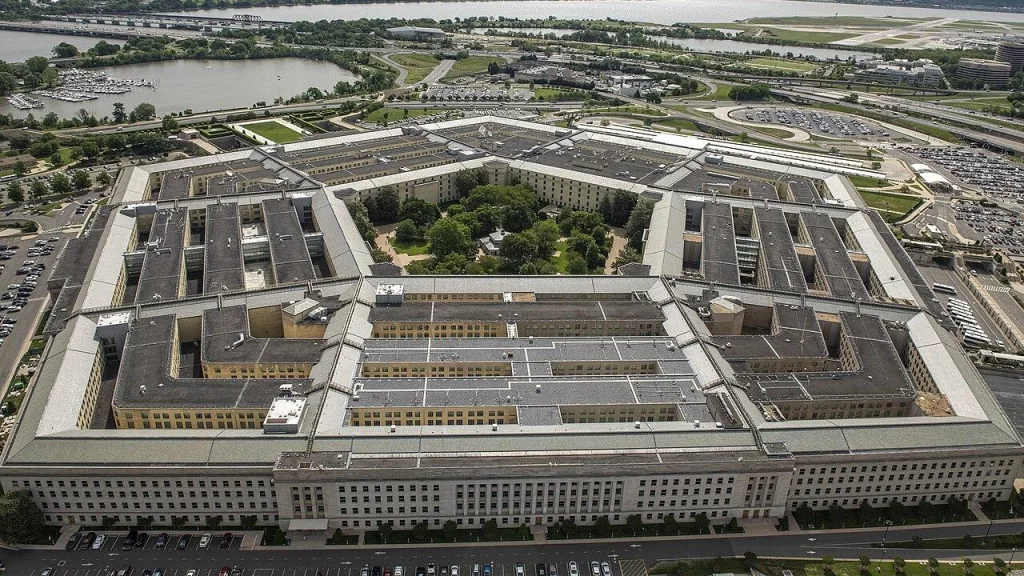
WASHINGTON, D.C. – Some U.S. lawmakers are already taking issue with the final negotiated version of the 2026 National Defense Authorization Act, the must-pass annual funding bill for the Pentagon that the House will vote on this week.
The $901 billion compromise legislation is $8 billion more than White House requested, but $24 billion less than the Senate’s version of the bill. Some Republican House members still aren’t satisfied with the high price tag; however, and appropriators still have to approve the topline number.
“Funding foreign aid and foreign wars is America Last and is beyond excuse anymore,” Rep. Marjorie Taylor Greene, R-Ga., posted on social media. “I would love to fund our military but refuse to support foreign aid and foreign militaries and foreign wars. I am here and will be voting NO.”
The bill includes comparatively little spending on foreign conflict, authorizing $120 million to support Israel and extending Ukraine aid by $400 million. It also repeals the 2002 Authorization for Use of Military Force for Iraq.
A significant portion, $142 billion, goes toward research and development of new technologies, including biotechnology, hypersonic weapons and artificial intelligence.
The NDAA also invests $38 billion for aircraft, $34 billion for nuclear defense, $26 billion for shipbuilding, $25 billion for munitions and $900 million to combat drug trafficking.
Military members would receive a 3.8% pay raise and $1.4 billion is set aside for the construction of barracks and family housing, while hundreds of millions are allocated for new childcare centers and schools. About $577 million will go towards renovating military hospitals and building new medical facilities.
Most of the NDAA’s content is bipartisan. In fact, some provisions — such as cutting $1.6 billion in climate change-related spending and directing the intelligence community to review, and if possible declassify, intelligence about the origins of COVID-19 — are explicitly Republican asks.
But three more Republicans have already come out against the bill because it fails to include a ban on Central Bank Digital Currency (CBDC), which they worry would give the federal government too much power over the spending and finances of Americans.
“Deeds not words. CBDC inserts the government between you and your money then sets conditions on your access to it to corrupt money into a tool for surveillance, coercion, and control,” Rep. Warren Davidson, R-Ohio, posted on social media Tuesday. “[W]e need and were promised a law.”
Rep. Chip Roy, R-Texas, reposted a statement from fellow Texan Republican Rep. Keith Self calling for GOP leadership to “fix this bill IMMEDIATELY.”
Self also submitted an amendment Tuesday to add a CBDC ban to the bill, which he says he will not vote for otherwise.
“Promises were broken to include this language in the NDAA,” Self announced on X. “My amendment would fix the bill. The House Rules Committee meets later TODAY to decide if it gets a floor vote. I hope they do the right thing.”