WASHINGTON, D.C. – The U.S. House of Representatives voted Thursday to pass a bill that Republicans say would reform the Clean Water Act and cut through regulatory burdens.
Democrats and environmental groups said the Promoting Efficient Review for Modern Infrastructure Today, or the PERMIT Act, protects water polluters and removes clean water protections.
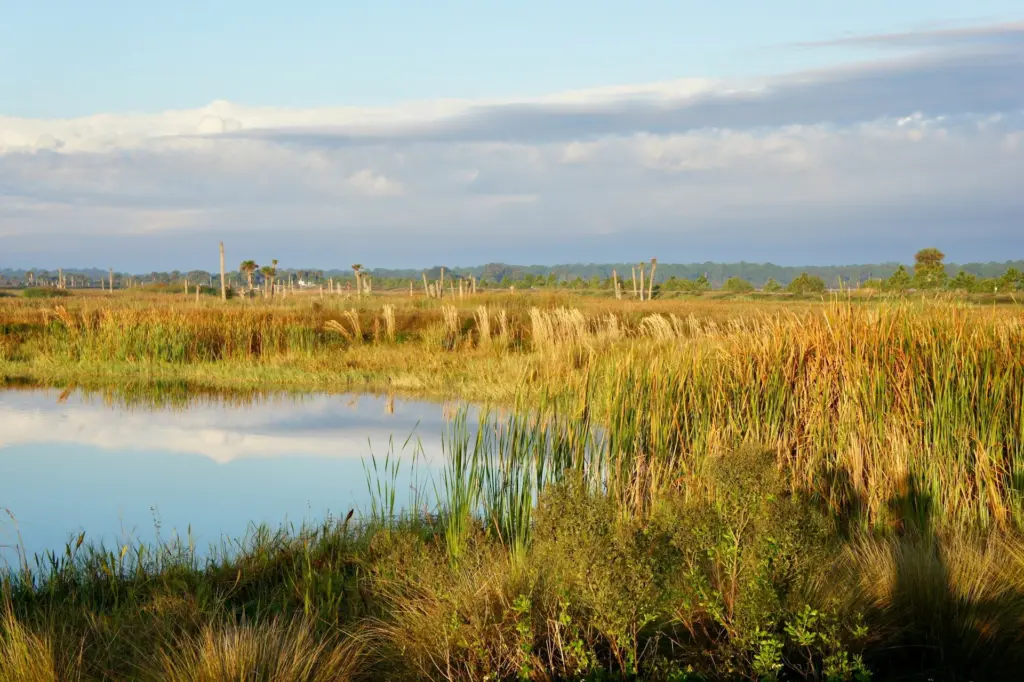
The PERMIT Act would redefine “navigable waters” – a term key to defining the waters that are protected by the Clean Water Act – and exclude waste treatment systems, streams that flow only in direct response to precipitation, prior converted cropland, groundwater and other features decided on by the U.S. Army Corps of Engineers.
The Republican-sponsored bill passed almost entirely on party lines, with six Democrats and one Republican voting against their party.
Rep. Sam Graves, R-Missouri, who cosponsored the bill with Rep. Mike Collins, R-Georgia, said the permitting “regime” of the Clean Water Act is “broken.”
Graves pointed to the length of time it takes for certain permits regulated by the act to be approved and said states can “weaponize” the act to stop infrastructure projects like a pipeline.
Graves said the bill would implement reforms that would stop the act from “being weaponized,” place clear timelines on judicial review, increase transparency on the development of water quality standards and codify “long standing bipartisan exemptions” from the definition of Waters of the United States, or the waters that are protected by the Clean Water Act.
“Without reforming the Clean Water Act, America cannot efficiently build roads, build bridges or pipelines or ponds or dams, levees, airports, homes, farms and other infrastructure that we need,” Graves said. “This bill acknowledges that we can both protect our natural resources and allow for development that benefits everyone in this country.”
Republicans argued on the floor that the bill would increase efficiency, cut red tape, unlock economic growth and increase affordability across the country.
Rep. Hillary Scholten, D-Michigan, who led the opposition against the bill on the floor, agreed that the Clean Water Act and in particular its permitting regulations needed reform. But, she said, the PERMIT Act is “not it.”
Scholten said the bill would shift the cost of clean water from polluters to “rural America, tribes and disadvantaged communities.”
“We do need reform, but this bill is not what we need,” Scholten said. “It doesn’t just cut red tape, it cuts all the tape that has protected our clean water for 50 years since the Clean Water Act was signed into law.”
Scholten and other Democrats on the floor argued the bill would lead to more water pollution, higher water utility bills and decreased ability for a state to control the pollution within its boundaries.
Iowa groups tell congressional delegation bill would ‘gut’ Clean Water Act
“Efficiency is important; American industry will falter and families will suffer if unnecessary red tape gets in the way of innovation and building,” Rep. Kristen McDonald Rivet, also a Democrat from Michigan, said. “But as we cut red tape, we need to do so in a smart way, not in a way that will put clean water at risk.”
The bill would set timelines for judicial review of certain permits. Proponents of the bill said this would keep projects from being stalled by lawsuits, but opponents of the bill said it leaves too short a window for groups to understand all of the potential risks involved with a project.
Rep. Eric Burlison, R-Missouri, said the bill “delivers a long overdue blow to the radical environmental agenda, that has weaponized the Clean Water Act.”
“The PERMIT act slashes red tape,” Burlison said. “It ends bureaucratic overreach and restores freedom to build an America that works for its people again.”
Rep. Pramila Jayapal, D-Washington, said the bill’s 60-day review period for fill and dredge permits would be “unworkably short” for a community to understand the effects a project would have, or to mount any sort of “meaningful resistance” to a project.
“This is a false solution that attacks essential, clean water safeguards and undermines access to our courts,” Jayapal said.
Tarah Heinzen, the legal director with the environmental group Food & Water Watch, said the act is an “explicit assault” on one of the nation’s “most critical bedrock environmental laws.”
“The impact of this bill would be bleak: a return to the bad old days of unchecked industrial pollution, rivers on fire, contaminated drinking water, poisoned communities and people getting sick,” Heinzen said in a statement.
Rep. Dave Taylor, R-Ohio, said the bill also contained revisions to the National Pollutant Discharge Elimination System, or NPDES, that would provide “reasonable protections” for permit holders from “frivolous” lawsuits when they are in compliance with the terms of their permits.
Scholten said the bill is “nothing more than a dirty water bill dressed up in a fancy name” and urged the body to go “back to the table” and reject the bill as it is currently written.
Amendments
Seven amendments were introduced and adopted on the floor, including one introduced by U.S. Rep. Aaron Bean, R-Florida, that he said would codify dredge and fill permitting programs administered by the states of Florida, Michigan and New Jersey, and to “provide certainty” to the other states lined up to do the same.
Scholten opposed the amendment, along with other Republican-led amendments that would: expedite judicial review processes for discharge permits, amend the definition of prior converted cropland, require the identification of federal lands suitable for aquifer recharge projects and increase the available supply of wetland mitigation bank credits.
Rep. Zach Nunn, a Republican from Iowa, proposed an amendment which passed via voice vote to establish a voluntary pilot program to support state-led water quality improvement projects for nitrogen- and phosphorus-impaired waterways.
Nunn said the amendment would help water quality improvement projects move “forward smoothly and with support” and without imposing “new obligations on a producer or a private landowner.”
Nunn said the issue was especially important for his home state of Iowa, where rivers regularly have nitrogen concentrations well above the U.S. Environmental Protection Agency’s safe drinking water limits.
Scholten said the amendment, which did not include an appropriation for the pilot program, was “costly and redundant.” She worried without funding for the voluntary program, funding from other programs would be redirected.
Finally, Rep. Scott Peters, D-California, proposed an amendment that would allow the International Boundary and Water Commission to accept funds for wastewater treatment and flood control works, which passed without opposition from Republicans.
This story was originally produced by Iowa Capital Dispatch, which is part of States Newsroom, a nonprofit news network which includes Washington State Standard, and is supported by grants and a coalition of donors as a 501c(3) public charity.
Washington State Standard is part of States Newsroom, a nonprofit news network supported by grants and a coalition of donors as a 501c(3) public charity. Washington State Standard maintains editorial independence. Contact Editor Bill Lucia for questions: info@washingtonstatestandard.com.