OLYMPIA, WA – Declining gas tax revenue and skyrocketing construction costs have plagued Washington state’s transportation budget for years.
Those twin forces had left budget writers searching for options to fill a growing long-term shortfall. Without a solution, they warned of major road projects going unfinished.
To deal with this, lawmakers this year passed a slew of new and increased taxes and fees, including a rare increase in the state’s gas tax that will continue to rise alongside inflation.
Another big piece of their solution is to transfer a sliver of sales tax revenue that usually goes toward state operations to transportation efforts.
The switcheroo, accounting for 0.1% of the state’s 6.5% sales tax rate, is expected to raise about $300 million annually, a figure that is predicted to increase each year. It starts in the next biennium, so doesn’t affect the current budget, which runs through mid-2027.
In exchange, the transportation fund is moving money in the near-term toward the general fund, which accounts for most state spending.
The thinking is to help shore up the general fund now, while strengthening the transportation budget in future years.
Washington’s three budgets — operating, transportation and capital — technically need to be balanced across four years.
Lawmakers are now looking at another shortfall in the operating budget next year and will need to turn to cuts or revenue to balance the state’s finances. In doing so, they could renege on the sales tax transfer to the transportation budget before it’s even begun.
House Transportation Committee Chair Jake Fey, D-Tacoma, is frustrated at the thought of losing that newfound money. The revenue is key to making his budget sustainable. Without it, projects could take longer and it would “put us in more of a squeeze,” he said.
“It’s not the greatest time to do that because we don’t know what we’re going to get for bids for a lot of the megaprojects,” Fey said last month. “We know that ferries is short on the capital side to do everything that we thought could be done back in 2022.”
He also pointed out there’s no solution to pay for the court-ordered removal of fish-blocking culverts beyond 2031.
When Fey discussed rumblings about the possible undoing of the transfer last month, he said he hadn’t heard from fellow lawmakers about it directly, but multiple lobbyists had mentioned the idea. Fixing the operating budget gap is expected to consume the Legislature in the legislative session that will begin next month.
The $15.5 billion, two-year transportation funding plan earmarks money for state ferries, highway megaprojects, culverts and much more.
And after the revenue measures passed this year, state transportation doesn’t have veins left untapped to raise more money to replace the sales tax if it’s lost, Fey said.
Senate Transportation Committee Chair Marko Liias, D-Everett, talked to House and Senate leadership and his takeaway was that the idea “doesn’t sound like it’s specifically on the table.” But if it came to fruition, it would be “spreading the misery of unsustainability,” he said.
The House’s chief operating budget writer confirmed the idea is, in fact, on the table.
“We’re looking at all of the various resources that are at our disposal,” said Rep. Timm Ormsby, D-Spokane. “I think it’s just prudent to take inventory of those resources. I’m not handicapping anything at this point.”
His Senate counterpart said she isn’t surprised the idea is coming up.
“It was not popular among all lawmakers when we did it,” Sen. June Robinson, D-Everett, said last month.
Advocates at the time worried it would shortchange public school funding, which the state constitution calls the government’s “paramount duty.”
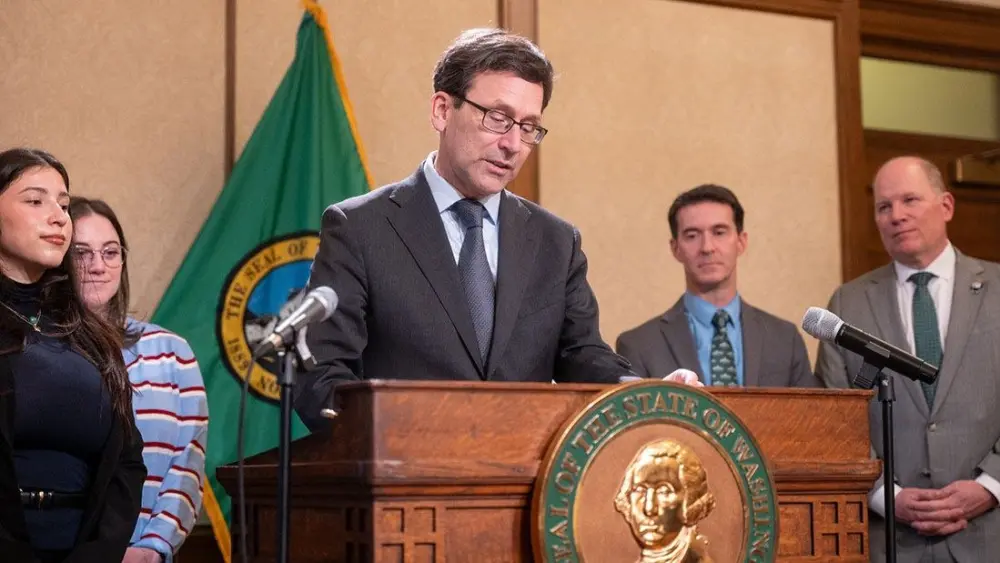
Gov. Bob Ferguson is expected to soon release his proposed supplemental budgets. They’ll act as frameworks for legislators to consider before deciding on adjustments to the two-year spending plan that took effect July 1. In the transportation sector, he’s expected to put a focus on preservation and maintenance of the state’s existing infrastructure over new projects.
Ferguson has said his plan will rely on cuts, not taxes, to balance after signing off on billions in new taxes this year. What that means for a transfer like the one being floated is unclear. A spokesperson for the first-term Democrat didn’t respond to a request for comment.
This story first appeared on Washington State Standard.