BOISE, ID – Cattle was “king” when it came to Idaho agriculture in 2025, but other farmers may be facing headwinds in 2026.
Tariffs, inflation and hot and dry weather are likely to continue to put pressure on Idaho farmers and producers heading into the new year, according to a number of experts who spoke Wednesday at the University of Idaho Ag Outlook Seminar in Boise.
Speakers at the event discussed economic conditions, weather forecasts, state and federal policy considerations and specific commodity outlooks.
Idaho’s agriculture cash at all-time high, largely driven by cattle and beef industry
Agriculture makes up around 17% of Idaho total’s economic output.
In total, cash receipts from Idaho agriculture in 2025 are predicted to reach an all-time of $12.1 billion, up 2% from last year. For the first time since 2003, the cattle industry brought in higher receipts than milk.
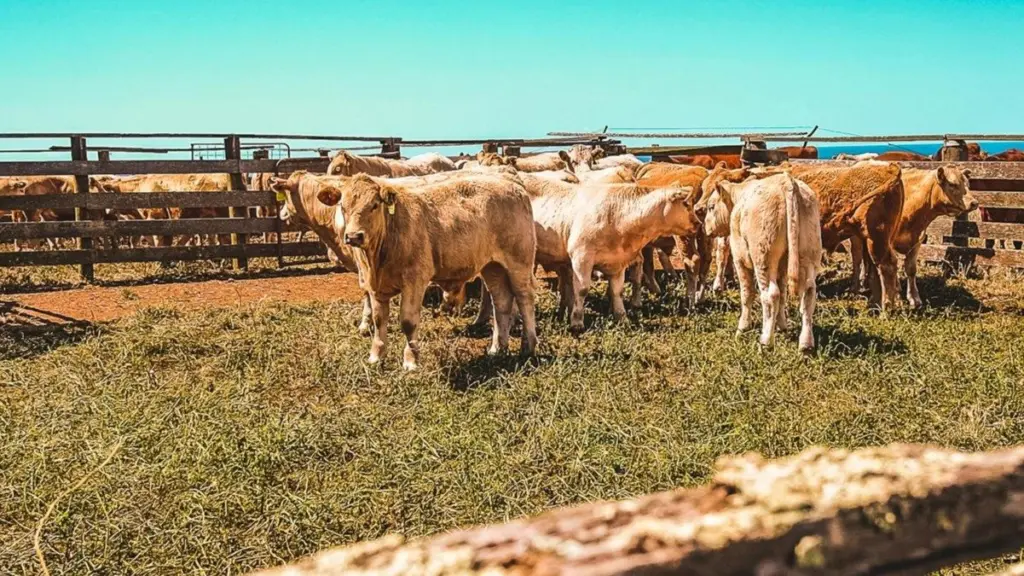
“Whether it’s Idaho or the country, it’s a tale of two ag economies,” said Brett Wilder, U of I assistant professor and area extension educator covering farm business management. “One, is cattle is king right now. If you’re in the beef cattle industry, you’re probably the only one feeling really good about your financial situation. If you are in any other sector of agriculture, oftentimes, probably find yourself sitting at the table wondering what the seed bill is going to be, repairs, fertilizers. … expenses are high.”
Cattle and calves generated around $3.89 billion in cash receipts in 2025, which was about 32% of Idaho’s total and an 18% increase from the previous year.
However, crops like wheat, potatoes, sugar beets, and barley were all down from the year before. Sugar beet prices are expected to continue to drop, Wilder said, with an expected additional 30% to 40% drop in cash receipts. He said this was largely due to demand lessening for sugar, too much supply, and lots of sugar coming from other parts of the world.
“When you think about what is the state of Idaho’s ag economy, we’re at record highs in cash receipts. Things look really good, but when you get under the hood, there’s a lot to unpack,” Wilder said.
Since 2009, the inflation-adjusted cash receipts for cattle have risen 180%, he said.
Some typical farm expenses were down. Spending on feed decreased 6% and fertilizer decreased 8%, he said. Labor costs rose around 6%, storage and transportation rose 9%, and interest expense went up 5%.
Idaho farmers and ranchers are expected to have spent $717 million on interest by the end of the year, Wilder said, which is up 78% since 2021.
“If you’re a small producer, starting producer, leveraged producer, you’re carrying the majority of that burden,” he said.
Leveraged producers are those who borrow funds for their operation.
All told, net farm income was up 6% from last year, he said, to about $2.7 billion.
Idaho’s trade was strong in 2025, will be watched closely in 2026
Wilder said Idaho is expected to finish 2025 with a record high in agriculture exports of $3 billion. Of all Idaho’s agricultural cash receipts, exports make up about a quarter, Wilder said.
Many of those exports were completed under preexisting contracts and negotiations that occurred in 2024, he said.
Going into 2026, it’s hard to say what will happen. U.S. trade with other countries has been volatile, as President Donald Trump has escalated trade wars with a number of countries using high tariffs, including Canada.
Canada accounts for 32% of Idaho’s agricultural exports. Mexico accounts for another 19%.
Although the rates have changed over time, the U.S. and Canada for a time went back and forth with high tariff rates — which are taxes on imports. Most of Canada’s counter-tariffs have been removed under an agreement that went into effect in September. Similar tariffs and counter tariffs were threatened with Mexico, but most were removed under the same September agreement.
Most of Idaho’s exports are dairy products, accounting for 22%.
“Geopolitics and trade are absolutely going to be front and center,” Wilder said of 2026.
Asked if the U.S. trade relationship with Canada had been damaged to the point where it might affect Idaho agricultural exports, Wilder responded, “We’re still seeing trade move forward, but what that’s going to look like going forward will likely change.”
Doug Robison, Idaho president of Agwest Farm Credit, said Wednesday he predicts tariffs will “continue to be a headwind for agriculture and agricultural commodities over probably the foreseeable year.”
Idaho entering winter with high precipitation, low snowpack
Although much of the Western U.S. is experiencing high rainfalls from the “atmospheric river,” high temperatures have meant that it hasn’t resulted in mountain snowpack, said Troy Lindquist, senior service hydrologist with the National Weather Service office in Boise.
“We’re just flirting with record-low snow pack,” Lindquist said.
Average temperatures across the Pacific Northwest have been six to 10 degrees above normal the last few weeks. The state also experienced low precipitation this spring, which is contributing to low snowpack levels.
It’s early in Idaho’s typical snow accumulation season, he said, so there’s a chance for the outlook to improve. Nearly every basin in the state is about 50% or less of its normal snow pack, he said. The Snake River headwaters area is an exception, sitting at about 70% of normal.
However, drought conditions that had been improving from the extreme conditions that had been occurring in September, especially in North Idaho.
The region is expected to experience “weak La Niña” conditions, he said. Historically, these conditions, brought on by cooler-than-average ocean temperatures in the Equatorial Pacific, are associated with cooler-than-average temperatures. However, actual weather outcomes during these conditions have varied considerably over the years, Lindquist said.
Sometimes, higher-than-average precipitation is also a result of these conditions, especially in northern Idaho.
Weather forecasts through early January are showing a continuation of “active” weather patterns, with high precipitation, Lindquist said. There’s an equal chance of temperature coming in above, below or at normal, he said.
In a more extended forecast of January through March, cooler-than-average temperatures are anticipated, especially in North Idaho. Northern and eastern parts of the state may also see above-normal precipitation, he said.
Most of the state is expected to see more precipitation in February through April, with the exception of southwest Idaho.
Heading into summer, forecasts show above average temperatures and below normal precipitation. Idaho had the fourth warmest “water year,” which ran Oct. 1, 2024, to Sept. 30, 2025, on record.
“Climatologically, we’re just seeing pretty persistent above normal temperatures across the region,” he said, “especially during the summertime.”
This story first appeared on Idaho Capital Sun.