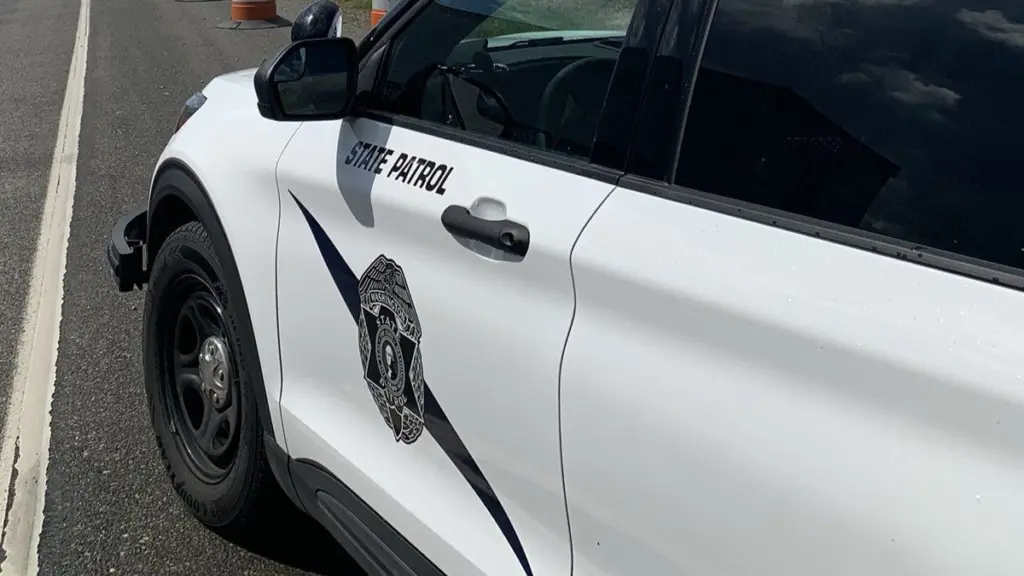
OLYMPIA, WA – Washington state troopers stop and search drivers of color more often than white Washingtonians, new data shows.
Washington State Patrol’s total traffic stops statewide dropped slightly in 2024, but remained well ahead of 2022 figures. Infractions issued climbed significantly in that period. The findings come as police accountability advocates have pressed state lawmakers unsuccessfully for new restrictions on when police in Washington can pull drivers over.
“Traffic stops really remain one of the most common forms of police-civilian contact, and it’s also one of the riskiest,” said Jazmyn Clark, the Smart Justice policy program director at the American Civil Liberties Union’s Washington chapter. “For many people of color, a traffic stop is often the most dangerous moment of police interaction.”
Black and Hispanic drivers were much more likely to be stopped last year than white drivers, according to state patrol data presented to lawmakers this month, with the rate of stops for Black drivers nearly double the rate for white motorists.
Black drivers were pulled over 154.6 times per 1,000; Hispanic drivers 102.8 per 1,000; and white drivers 82.5 per 1,000, according to the data. Two years ago, those numbers were 146.7, 89.3 and 73.2, respectively.
Vancouver police killed Nickeia Hunter’s brother, Carlos, during a traffic stop in 2019. Hunter, an advocate from the Coalition for Police Accountability, called the state patrol data “beyond troublesome.”
Speaking to the Joint Transportation Committee this month, state patrol Capt. Deion Glover told lawmakers that the agency “remains committed to fair, unbiased and professional policing statewide. That’s our goal.”
Analyzing traffic stop data from 2015 to 2019, a Washington State University study in 2021 found “no evidence of systemic bias in the decision to stop” drivers.
Disparities with searches, too
Disparities carry over to searches, as well. While Native Americans are less likely to be stopped, they are much more likely to be searched by troopers.
Native Americans were four times more likely than whites to be subjected to a high-discretion search in 2024. These searches refer to when troopers use their judgment to search a person or their car while remaining within constitutional bounds. They’re rare. Last year, there were only 320 statewide, but that’s up from 246 two years prior. About half of them over the past three years turned up contraband, Glover said.
“We really have to have some reasonable suspicion or high level of thought that this person is involved in some type of criminal activity,” Glover said.
Black and Hispanic drivers were also more likely to be searched than their white counterparts, but not to the same degree as Native Americans.
The use of low-discretion searches, used in the case of arrest warrants, vehicle impounds and arrests, also indicated disparities. Black drivers were nearly four times as likely as white drivers last year to face these types of searches, which are also on the rise, with more than 9,000 in 2024.
Push for new restrictions falters
This racial data isn’t perfect, as troopers track the demographics of people they pull over based on their own perception, Glover noted. He said the agency recognizes it has work to do.
“Those are definitely some numbers that we need to work on and dig into and learn why are these disparities happening,” Glover said.
For years, police accountability advocates have pushed legislation to limit when police can stop motorists. Under the proposed Traffic Safety for All Act, law enforcement in Washington would have been barred from stopping drivers solely for nonmoving violations, like expired tabs or a broken headlight, that advocates say disproportionately affect people of color.
Clark, with the ACLU, said “there is likely no other reform that would be more effective” at reducing racial disparities in traffic stops.
“The biggest driver of disparities is what officers are legally allowed to stop for, and when the law allows for broad discretion, bias is going to show up,” Clark said.
But the measure hasn’t made progress in the Legislature. Police officials have opposed the idea amid a dramatic increase in traffic deaths on Washington’s roads. And supporters say they are setting the idea aside for 2026.
Training and other efforts
In the wake of mass racial justice protests in 2020, state lawmakers passed a suite of police accountability measures.
More recently, they’ve shied away from the issue, especially after their move to restrict when police can pursue drivers drew such staunch pushback they had to roll the law back.
Glover noted cadets and troopers are required to take ethics and bias training. The state patrol has also recently done a four-hour “tribal liaison training” on working with tribal governments.
“This training supports better decision making by our troopers and helps reduce disparities amongst traffic stops and other issues as they’re out there working,” Glover told lawmakers.
The agency also has outreach programs to strengthen relationships with the state’s Latino and Indigenous communities.
In 2021, consultants found the state patrol had failed to diversify its ranks, with one key reason being that the department’s psychologist was failing more job candidates of color than white applicants. Glover said “95%” of the recommendations from that report have been implemented.
A proviso in the state’s transportation budget passed earlier this year required the state patrol to report the data to the Legislature in hopes of finding ways to address the longstanding demographic disparities.
This story first appeared on Washington State Standard.