This story was first published in the December edition of Conservation The Idaho Way newsletter by the Idaho Soil and Water Conservation Commission.
MOSCOW, ID – Contractors recently completed a 29-acre fuels reduction project in Virgil Phillips Farm Park, near Moscow, that should make the park more resilient to wildfires.
The project is a partnership between the Latah Soil and Water Conservation District and Latah County. The farm and park, donated to the City of Moscow many years ago, is managed by Latah County. It’s located about five miles north of town on the northwest shoulder of Moscow Mountain, west of U.S. Highway 95.
“The conservation district got us moving on the project,” said Tom Lamar, a Latah County commissioner. “It seems like it turned out really well.”
The 160-acre park is popular with locals. It features a number of hiking trails that lead through a variety habitats including forested lands, open fields and wetlands. The park includes several intermittent streams and two ponds. It is home to a variety of wildlife species such as moose, elk, deer, black bear, birds and amphibians. Visitors can enjoy historic and newly planted orchards in the park as well.
Latah County recently completed an updated Community Wildfire Protection Plan in 2023, which identified high fire risk areas in the county and strategies to improve resilience. Forested areas in the Urban-Rural Interface were identified as being especially vulnerable to wildfires. With recent population growth, more people are interested in finding rural homes in the Moscow Mountain area.
“Recent relatively large fire events clearly illustrate the mounting urban-interface issue facing Latah County,” the Community Wildfire Protection Plan said. “Population growth rates have been greatest in the western part of the County around Moscow, Viola, and Potlatch. Agricultural land is being subdivided and people are moving to the more rural parts of the County.
“The growing appreciation for seclusion has led to significant development in many of the lower elevation forests. Frequently, this development is in the dry ponderosa pine/Douglas-fir, forest types where grass, needles, and brush surface litter create forest fuel conditions that are at a high propensity for fire occurrence,” the Community Wildfire Protection Plan report said.
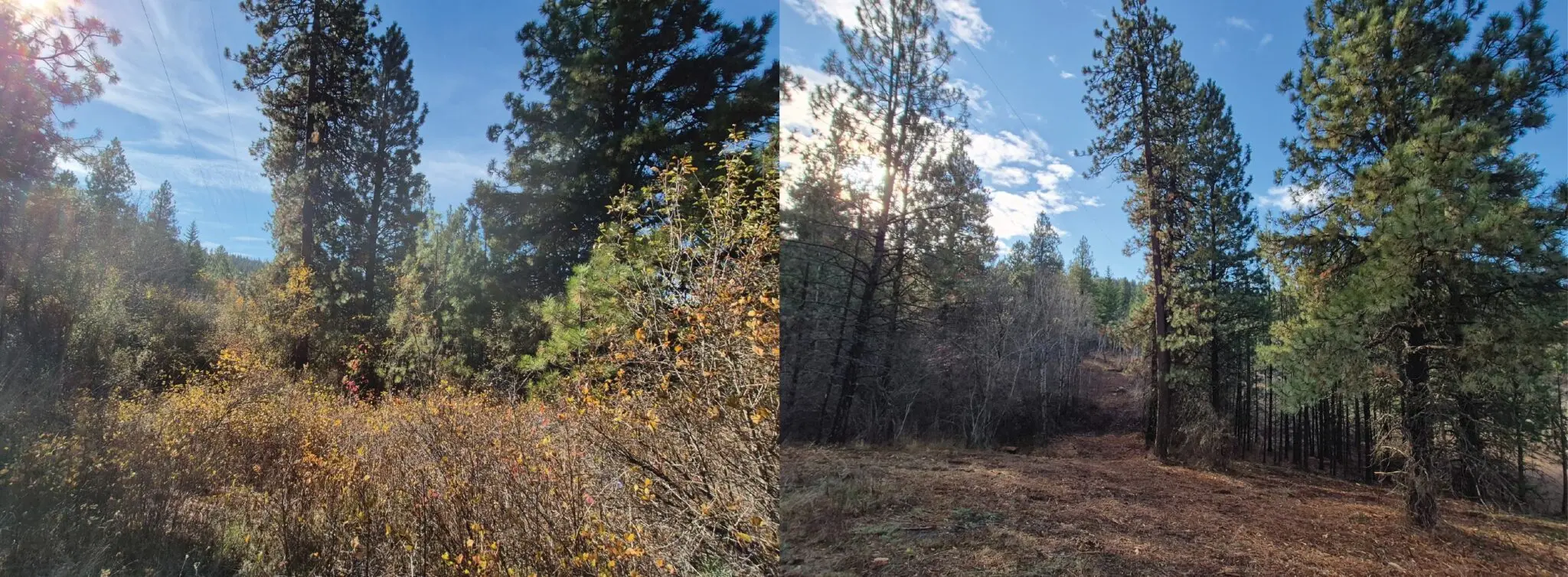
These are before-and-after pictures of a treated area in the 160-acre park. (Photos courtesy of Latah County)
That type of forest eco-type is exactly the kind of environment found at the Virgil Phillips Farm Park.
“Wildfires are always a concern,” said Ryan Lawrence, district manager of the Latah Soil and Water Conservation District. “The Clearwater Complex fires were really a wake-up call. Our summers are getting hotter and drier. You always wonder, where will the next fire be?”
The Clearwater complex fires in 2015 were lightning-caused events that destroyed 48 homes and 70 outbuildings and consumed 68,127 acres of private, state and federal land. A number of other fires have occurred between 2015 and 2021 in the county, according to the Community Wildfire Protection Plan report.
There were two fires that occurred in Latah County in 2025 – the 80-acre Lamb Fire near Troy and the White Pine Fire near the Giant White Pine campground in September.
Out of the recent fires that have occurred, most were caused by either humans or lightning, the report said. The historical frequency of fires in the local area ranges from once every 35 years to 200 years, depending on elevation.
By completing the Community Wildfire Protection Plan report, Latah County became eligible for grant funding for fuel-reduction projects, said Mauri Knott, senior planner for the county. “It’s been years since we got funding for fire prevention projects,” she said. “The Phillips Farm project created an opportunity to do some fuel-reduction work, education outreach and create some momentum for future projects.”
The Latah SWCD applied for $70,000 in funding from Avista Corporation and Title 3 federal funds to cover the project costs. With the money in hand, Latah County hired Northwest Management to create a detailed forest management plan for the park. The fuels-reduction work was completed in Fall 2025.
In a fact sheet about the project, the Latah District said, “The Virgil Phillips Farm has been designated as a priority area for fuels-reduction treatment due to the timbered borders along the wildlife-urban interface, where small acreage developments and public access significantly elevate the threat of wildfires.
“Phillips Farm and adjacent private lands will be treated through vegetation removal to slow the spread of a fire, create fire breaks to improve access for firefighters to respond, improve forest health and protect homes.”
The following practices were implemented:
- Forest thinning by removing trees of poor quality, those infested with insects or disease, and small-diameter conifer trees to maintain an open forest structure and avoid crown fires.
- Removing ladder fuels through limbing lower branches to reduce the spread of ground fire into the canopy.
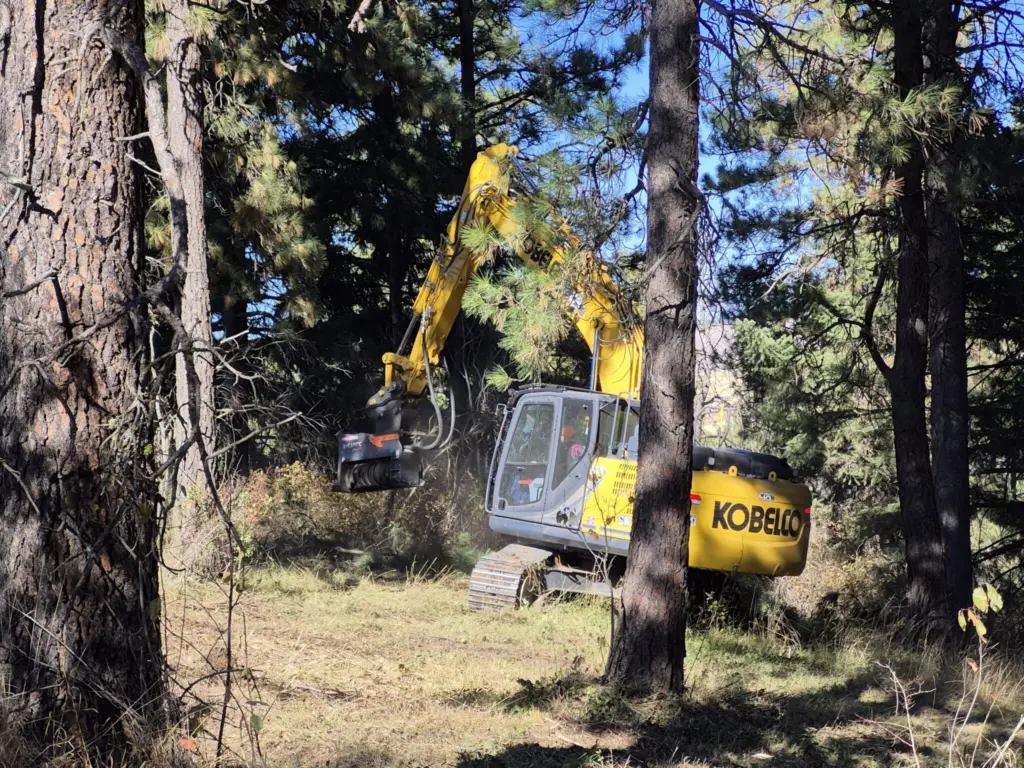
- Masticate understory growth and slash resulting from tree and limb removal.
Officials with Northwest Management said they thought the project went well.
“I think we hit the objectives,” said Tucker Flaten, a forester for Northwest Management, based in Moscow. “Our main concern was the fuel conditions. We wanted to create opportunities for fire crews to break up fuel continuity.”
They also looked at the spacing between trees to ensure that if there were a fire in the area and a tanker plane was flying overhead to drop retardant on the blaze, the retardant could reach the ground,” he said.
The treatments mainly took out trees less than 10” in diameter and a lot of brush, he said.
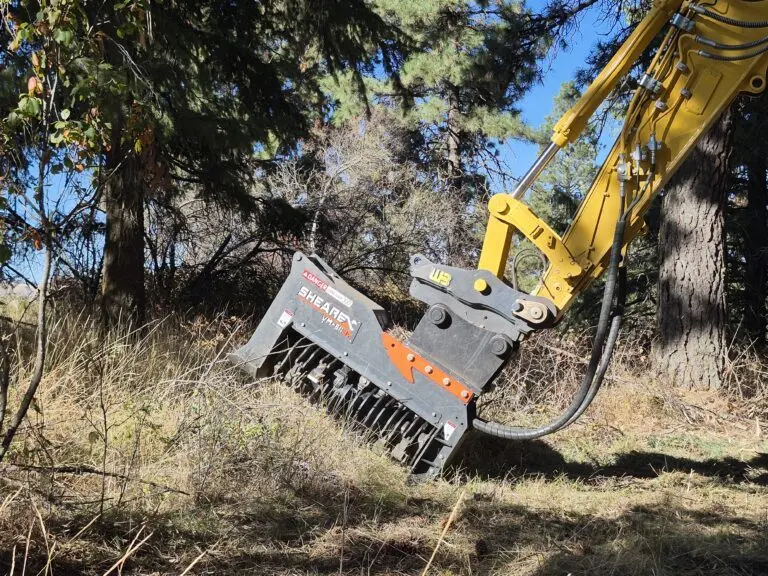
(Photo courtesy of Latah County)
Latah Commissioner Lamar was worried that too much brush and ground vegetation would be removed, potentially harming smaller critters that depend on that habitat for survival. But after touring the property, he thought things looked A-OK.
“My biggest question was about the impact to the ecosystem that relies on the understory for survival – the habitat on the forest floor,” he said. “But in touring the property, I realized that they weren’t doing 100 percent of the brushing treatment and mastication across the landscape. They were leaving some of that low-lying habitat for edge effect for wildlife.
“They did a good job. Tucker was great – he understood how to do the fuels-reduction treatments so they would reduce the fire hazard keep doing more projects,” Lawrence said.
He sees the Virgil Phillips Farm Park project as a “demonstration” project that will help educate the local community about the need for fuels-reduction projects. Two public tours of the farm project have given local residents a chance to see the results. Information signage will be placed in the park to inform visitors about the benefits of fuels reduction work and forest health.
Steve Stuebner writes for Conservation the Idaho Way on a regular basis.
Idaho Capital Sun is part of States Newsroom, a nonprofit news network supported by grants and a coalition of donors as a 501c(3) public charity. Idaho Capital Sun maintains editorial independence. Contact Editor Christina Lords for questions: info@idahocapitalsun.com.