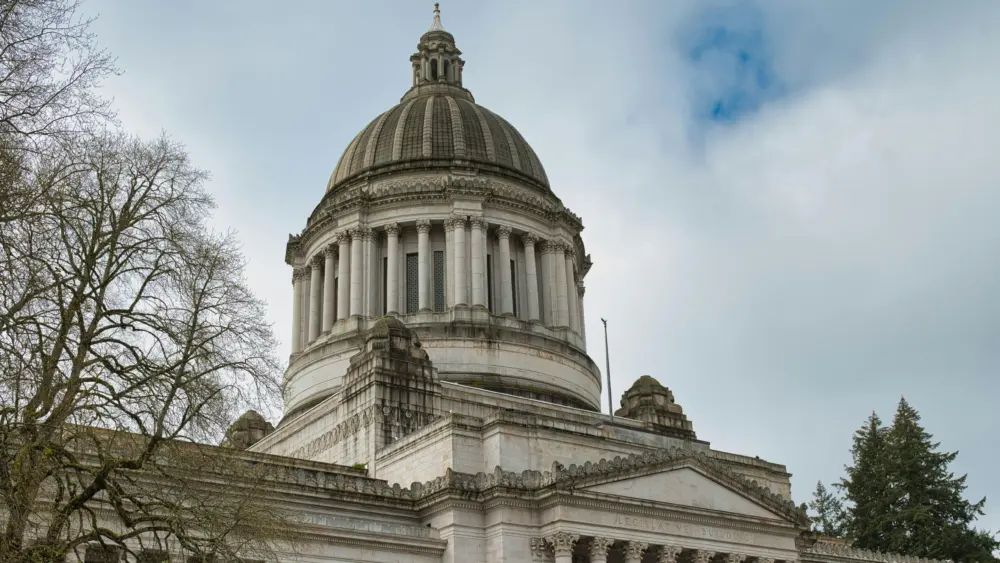
OLYMPIA, WA – Reviews are in for Washington Gov. Bob Ferguson’s debut budget blueprint. They are mostly two thumbs down.
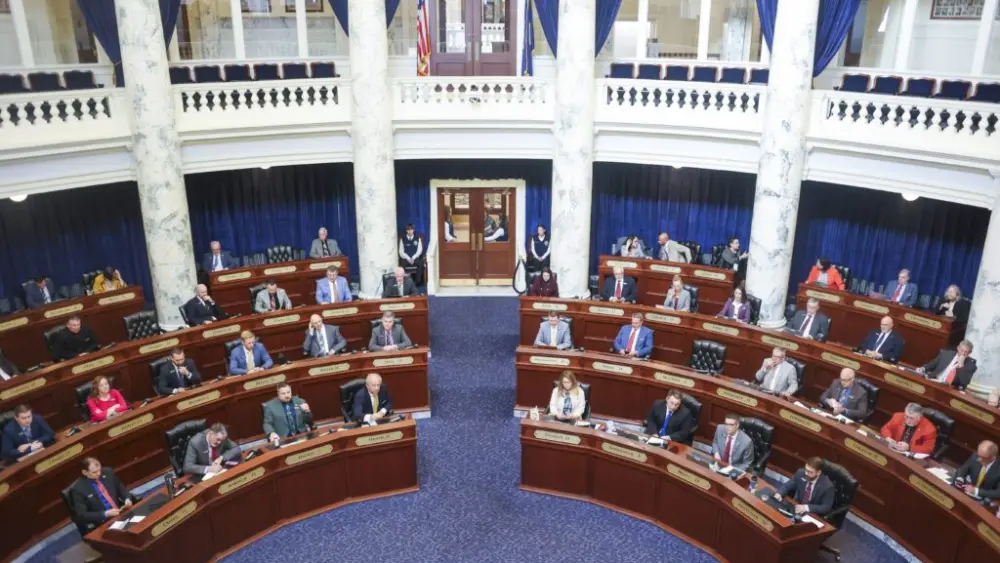
In the course of six hours of public hearings over three days last week, dozens of people criticized the governor’s approach to closing a projected $2.3 billion shortfall.
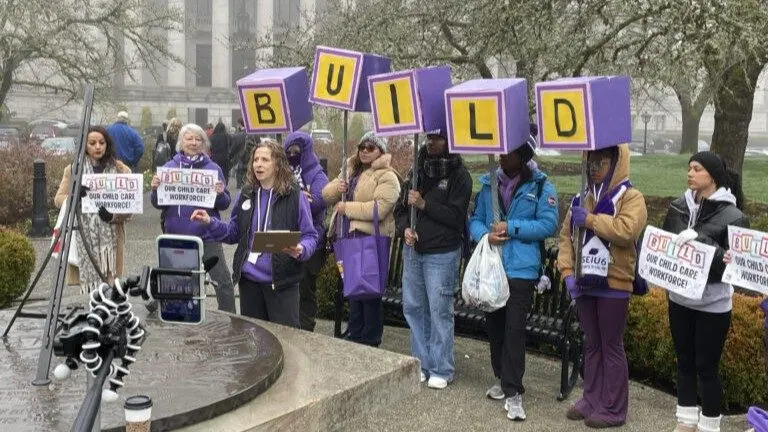
They booed his push to cap access to a coveted child care program, cut funding for public schools and colleges, and redirect climate dollars away from pollution reduction and toward tax credits for low-income working families.
There was applause for Ferguson’s embrace of an income tax on millionaire-earners. But because it could be years before it might generate revenue, testifiers urged members of the House and Senate budget-writing committees to find ways to raise money sooner.
A recurring theme was the lasting negative effects of further paring public resources after the widespread reductions made last year to plug a budget hole that Ferguson pegged at $16 billion over four years.
Tyler Muench of the Office of the Superintendent of Public Instruction said “significant cuts” proposed to popular programs like Running Start and cancellation of a planned funding boost for rural school districts carry longer-term consequences.
“OSPI cannot continue to absorb cuts and still deliver services that Washingtonians expect and deserve,” he said.
Ferguson’s budget director foresaw the negative response and empathized with lawmakers who are crafting their own spending plans in the House and Senate.
“It’s a very difficult set of budget decisions that we dealt with and that you all will have in front of you as well,” said K.D. Chapman-See, Ferguson’s chief budget writer, in presenting the governor’s proposal at hearings in the House Appropriations and Senate Ways and Means committees.
The big picture
Ferguson, a Democrat in his first term as governor, released his budget proposal Dec. 23. It makes adjustments to the two-year budget he signed in May and that took effect July 1, 2025.
The governor and legislative Democrats balanced the budget with a combination of billions in cuts and more than $9 billion in new and higher taxes.
Since last spring, the state has collected less in taxes than expected while dealing with greater demand for services, rising expenses due to inflation and costly new federal requirements under congressional Republicans’ so-called “Big Beautiful Bill.”
The state is facing another shortfall. This one is $2.3 billion in the current operating budget, which runs through mid-2027. Ferguson proposes to patch it by trimming $800 million in spending, withdrawing $1 billion from the state’s rainy day reserve fund, and using revenues from the state’s auctions of air pollution allowances to shore up other programs.
Chapman-See said tapping into the rainy day fund, formally known as the budget stabilization account, was “a really, really difficult decision” for the governor. It got to the point where they were discussing cuts to critical services that he was not comfortable making, she said.
The reductions he settled on are what drew fire at the hearings.
Changes in child care programming account for nearly 40% of the reductions, advocates say.
Ferguson wants to close enrollment to the Working Connections Child Care program that provides lower-income families with subsidies to pay for care. There were 44,333 enrolled as of last February, with an active caseload of 33,465 as of November 2024, the Department of Children, Youth and Families reported in the summer.
The governor wants to halt new sign-ups until the caseload drops to 33,000. It is estimated that this will save $217 million.
He also wants to freeze the level of state funding to child care centers, rather than proceed with a previously approved increase. That is a $41 million cut for providers.
“Child care should never be a discretionary line item as it is the work that makes all the other work possible,” said Alex Galeana, executive director of the Children’s Campaign Fund. “Please reject these reductions and stand by children and families.”
Ferguson’s plan calls for 3% cuts in funding to Washington State University and the University of Washington, and 1.5% for community and technical colleges.
Jacqui Cain, president of the American Federation of Teachers in Washington, said across-the-board cuts would have “immediate consequences. Even modest cuts lead to hiring delays, fewer course offerings, and increased workloads.”
She also called on lawmakers to restore a provision concerning the Workforce Education Investment Account, which derives its money from a tax imposed on very large high-tech firms.
Ferguson and Democratic lawmakers made a change last year to allow the dollars, which will total hundreds of millions in this budget cycle, to be used to supplant spending from the general fund. It is limited to this budget. Absent that revision, those dollars were used to supplement higher education spending.
Not using the dollars as originally intended could lead to hiring freezes, program cuts and less financial aid, critics warned.
Chris Mulick, senior director of state relations for Washington State University, said a proposed 3% cut in the Cougars’ financial hide would be the fifth straight year of reductions.
“Just in the past six months, we’ve cut administration, academic programming, and public service while eliminating several hundred jobs,” he said.
Mulick then delivered uncharacteristically sharp remarks on what he said is a proposed quadrupling of WSU’s premium for the state’s self-insurance liability coverage “without any corresponding increase in claims or payouts.”
To cover the increase, he said, the governor counts on new tuition revenue “that never existed in the first place,” and that had at one point been earmarked for other spending.
“These are the same phantom tuition dollars that were supposed to have partially funded university COLAs but didn’t,” he said, referring to cost-of-living adjustments for employees. “It’s absolute make-believe and it sharply increases our already outlying cut to well beyond 5%. Please don’t do this.”
Some of the strongest criticism came from foes of Ferguson’s desire to redirect $569 million of proceeds from carbon auctions under the Climate Commitment Act into the Working Families Tax Credit program.
“Our members are outraged at the proposal,” said Robin Everett, deputy director for the Sierra Club’s Beyond Coal Campaign. They recognize the budget challenge and “share the goal of keeping our lowest income folks afloat during difficult times. But we also can’t ignore the climate crisis that is unfolding,” she said.
Use of the money for the tax credits is allowed under the law that created the climate program.
While the idea may be “technically legal, it is profoundly out of step” with the spirit of the law, Everett said. “Gutting this program will set a deeply troubling precedent.”
Not everyone’s unhappy
Those with kudos for Ferguson’s handiwork urged lawmakers to follow his lead.
Dawn Rains, chief executive officer of Treehouse, said a $7 million cut last year forced the nonprofit to end services to 400 students in foster care aimed at helping them graduate high school.
A patchwork of private and one-time funding helped keep the group going. But that approach “is neither sustainable nor equitable,” she said.
The governor’s budget restores $3.5 million, a sum that “would stabilize and expand a proven program” for some of Washington’s most vulnerable students, she said.
An $8.5 million cut to a program supporting access to abortion-related services was one of the more controversial budget moves last year. Restoring those dollars to the Abortion Access Project is the top priority of Planned Parenthood Alliance Advocates — and it is in the proposed budget.
The five abortion care agencies in the state supported by the program provided 80% of the total abortions in 2022, according to the Department of Health’s Center for Health Statistics. These clinics are located in 20 out of the 39 counties in Washington state. Planned Parenthood is the largest recipient of funds from the program.
“Without full restoration, patients will likely see reduced services, limited appointment times, higher out-of-pocket costs, fewer management options, and less secure health centers, and even clinic closures,” said Nicole Kern, government relations manager for the alliance.
How much of Ferguson’s proposal survives will become clearer when majority Democrats in the House and Senate release their respective spending blueprints. Those will come out following the next revenue forecast on Feb. 16.
The 60-day session is scheduled to end March 12.
Washington State Standard is part of States Newsroom, a nonprofit news network supported by grants and a coalition of donors as a 501c(3) public charity. Washington State Standard maintains editorial independence. Contact Editor Bill Lucia for questions: info@washingtonstatestandard.com.