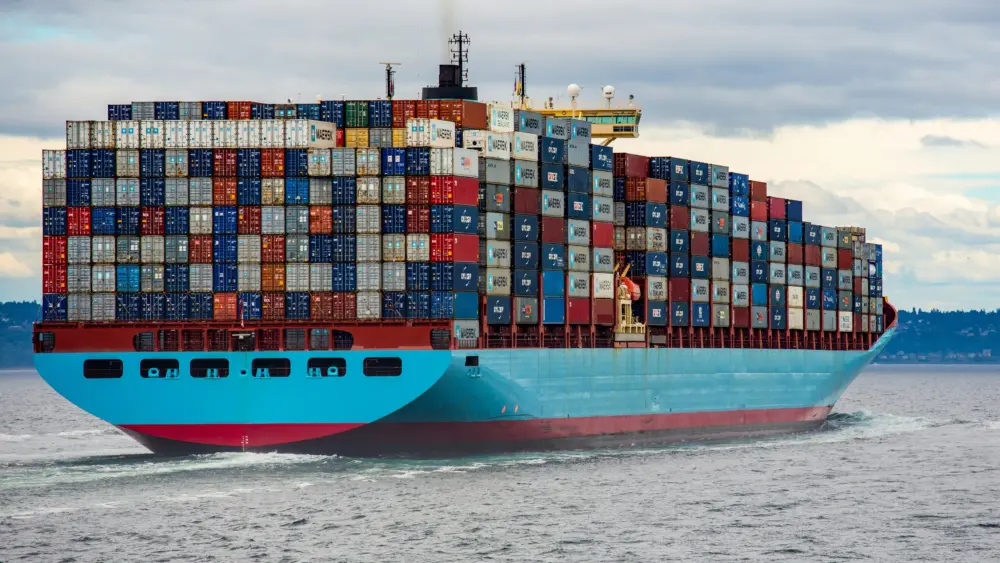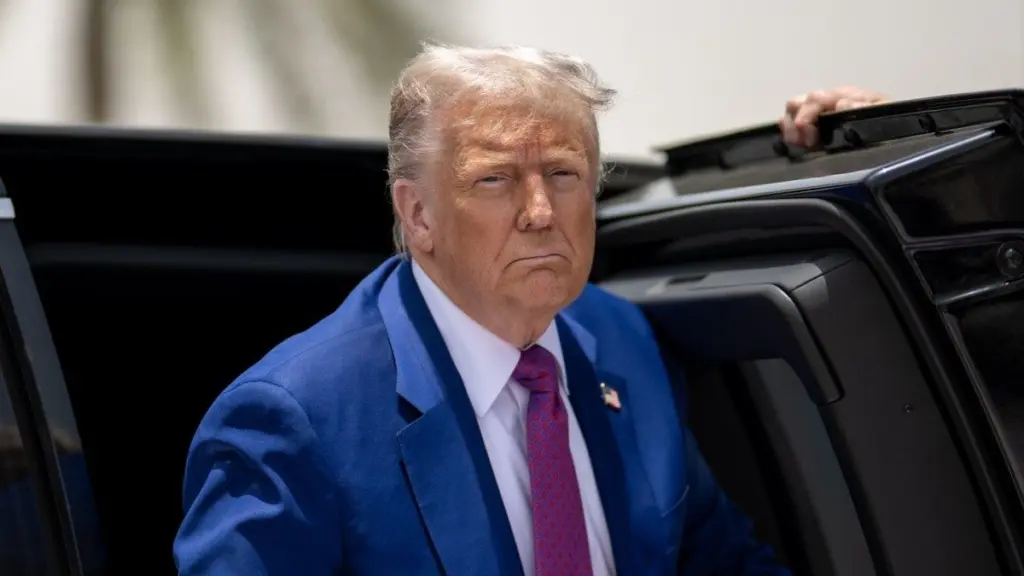
WASHINGTON, D.C – President Donald Trump warned Canada that all its exports to the U.S. could face 100% tariffs if Canada finalizes a deal with China.
Trump slammed Canadian Prime Minister Mark Carney, who has publicly pivoted away from the U.S. since early 2025 when Trump hit America’s northern neighbor with tariffs over drugs and illegal immigration.
Since then, Carney has discussed the “rupture” between the two neighbors and sought out deals with countries around the world, including China.
Trump wasn’t happy, referring to the Canadian leader as “governor.” Trump did the same thing to Carney’s predecessor, Justin Trudeau. Trump has repeatedly suggested that Canada join the U.S. as its 51st state.
“If Governor Carney thinks he is going to make Canada a ‘Drop Off Port’ for China to send goods and products into the United States, he is sorely mistaken,” Trump wrote in a social media post on Saturday.
Trump warned that aligning with China could hurt Canada.
“China will eat Canada alive, completely devour it, including the destruction of their businesses, social fabric, and general way of life,” Trump wrote. “If Canada makes a deal with China, it will immediately be hit with a 100% Tariff against all Canadian goods and products coming into the U.S.A.”
Trump lated added: “The last thing the World needs is to have China take over Canada. It’s NOT going to happen, or even come close to happening!”
Last week in Beijing, Carney and Chinese officials announced a deal to ease tariffs they had put on each other’s products. China reduced tariffs on Canadian agricultural products, and Canada agreed to import 49,000 Chinese electric cars at a 6.1% tariff.
The deal represents less than 3% of the new-vehicle market in Canada, according to the Prime Minister’s office. However, Carney said it was a starting point.
“It is expected that within three years, this agreement will drive considerable new Chinese joint-venture investment in Canada with trusted partners to protect and create new auto manufacturing careers for Canadian workers, and ensure a robust build-out of Canada’s EV supply chain,” Carney said at the time.
Trump initially brushed off the deal, saying it was “good.” That changed Saturday.
The American Automotive Policy Council and the Canadian Vehicle Manufacturers’ Association – representing Ford, General Motors, and Stellantis in both countries – raised concerns about Canada’s deal with China, saying it had the “potential to undermine Canada’s auto sector and presents risks to the future of the integrated North American auto supply chain.”
Canada’s economy is directly tied to the U.S. Most of its exports go to the U.S. Trump imposed 35% tariffs on Canadian goods in early 2025, except for products covered by the 2020 trade deal, the United States–Mexico–Canada Agreement.
Those tariffs hit Canada’s economy hard. Canadian exports dropped, business investment slowed, and tariff uncertainty dragged the nation’s economy, according to a recent report from the International Monetary Fund.
Last week in Davos, Switzerland, Carney gave a pointed speech to world leaders.
“Let me be direct: We are in the midst of a rupture, not a transition,” he said at the World Economic Forum. “But more recently, great powers have begun using economic integration as weapons. Tariffs as leverage. Financial infrastructure as coercion. Supply chains as vulnerabilities to be exploited. You cannot live within the lie of mutual benefit through integration when integration becomes the source of your subordination.”
Trump has made tariffs a central part of his agenda during his second term. Last April, Trump imposed import taxes of at least 10% on every U.S. trading partner. Since then, the president has used the 1977 law, the International Emergency Economic Powers Act, as a cudgel to get other nations to do what he wants.
A group of states and small businesses challenged Trump’s tariffs under the 1977 law, winning in two lower courts before the administration appealed to the Supreme Court. The high court agreed to hear the case on an expedited basis.
Americans are picking up the tab for Trump’s tariffs. Research shows Americans are paying 96% of the cost of Trump’s tariffs. Nearly all tariff costs fall on American importers and consumers, according to a report from the Kiel Institute for the World Economy, a German think tank. The authors said that for every $100 in tariff revenue the U.S. government collects, $96 comes “out of American pockets” and $4 comes from lower foreign exporter profits.