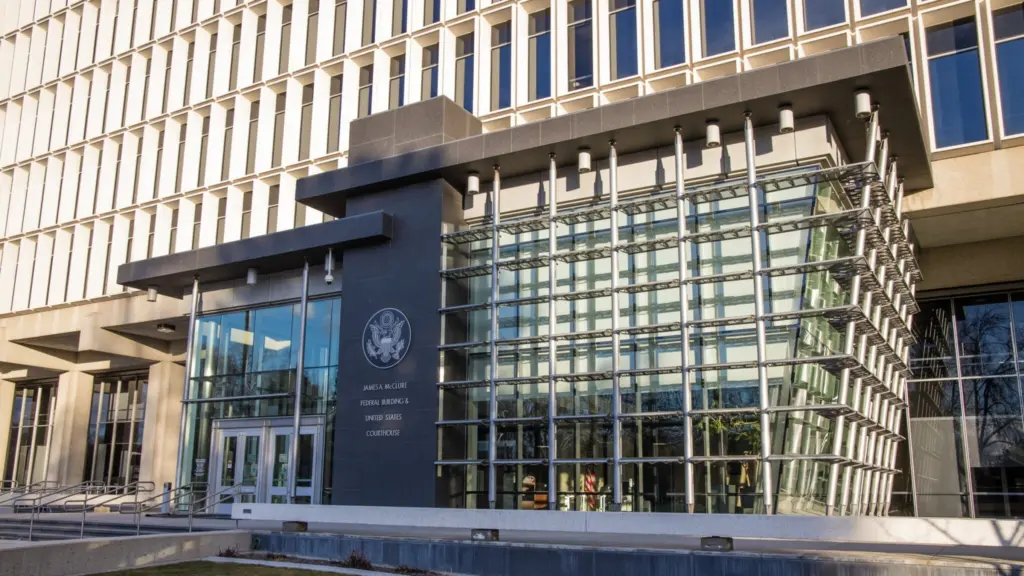
BOISE, ID – A federal judge in Idaho on Friday largely rejected the state’s attempts to dismiss a lawsuit challenging a 2025 state immigration law.
The legal battle against House Bill 83 will continue with most of the arguments against its constitutionality intact, although the judge tossed out one of the plaintiffs’ challenges.
U.S. District of Idaho Judge Amanda Brailsford on Jan. 23 ruled on new motions to dismiss a lawsuit led by the ACLU of Idaho against HB 83. The law was approved by the Idaho Legislature and signed by Gov. Brad Little in 2025 and created new state-level immigration crimes of “illegal entry” and “illegal re-entry.”
ACLU of Idaho sues state for new immigration enforcement bill just signed into law
The crimes would target those who aren’t authorized to live in the U.S. who enter Idaho or who re-enter Idaho after a prior deportation, and would apply to those who are convicted or suspected of committing another crime.
The lawsuit was filed in March on behalf of people who are undocumented who live or work in Idaho and organizations that support Idaho residents who are undocumented. Brailsford previously issued an injunction, which blocked parts of the law from going into effect while the case makes its way through court, the Idaho Capital Sun reported. The block remains in effect.
ACLU argues new crimes outlined in House Bill 83 are unconstitutional
Attorneys with the ACLU have argued the crimes created in House Bill 83 were unconstitutional for three primary reasons: they superseded what is typically solely the federal government’s role to enforce federal immigration crimes; the definitions in the law are overly vague and violate rights to due process; and they violate the U.S. Constitution’s Commerce Clause, by regulating people’s entry into Idaho and movement across state and national borders.
Idaho Attorney General Raúl Labrador filed court documents in May, asking the judge to dismiss the lawsuit. He largely rejected the ACLU’s claims against the law’s constitutionality and the legal standing for the individuals or organizations to bring the challenge at all.
In the ruling, Brailsford accepted one of Labrador’s arguments that the ACLU couldn’t adequately show a violation of the Commerce Clause, and she dismissed that claim.
Labrador also challenged the other constitutionality claims made by the ACLU, but Brailsford rejected the rest of his motions. As the lawsuit moves forward, the court will evaluate whether the law is overly vague and whether it supersedes federal authority.
Brailsford wrote that much of the arguments made in Labrador’s later requests to dismiss mirrored arguments she’d already rejected in her ruling on a hearing held April 10 on the injunction.
Idaho Attorney General’s Office challenges standing of plaintiffs in ACLU lawsuit
Labrador also challenged the standing of the undocumented residents and the nonprofits named as plaintiffs in the lawsuit.
In court filings, the attorney general’s office argues that most of the individual plaintiffs would only have standing if they’d violated the illegal entry law by entering Idaho through the Canadian border or directly from another country via aircraft. Brailsford disagreed with this interpretation of the law.
“In support, Defendants characterize Illegal Entry as applying in only ‘two circumstances,’ i.e., where an alien enters Idaho from Canada or from a foreign country via aircraft but not through a port of entry,” Brailsford wrote. “This characterization of Illegal Entry, however, ignores the statute’s plain language, which provides that an alien commits Illegal Entry if he ‘enters or attempts to enter this state at any location other than a lawful port of entry.’”
“Obviously, ‘any location’ is broader than the Canadian border or an airport,” she continued. “Defendants’ strained interpretation of Illegal Entry does not defeat Plaintiffs’ standing to challenge Illegal Entry.”
The judge also upheld the standing of the nonprofits, Idaho Organization of Resource Council and the Alliance of Idaho. However, Brailsford indicated the Alliance’s standing may be tenuous.
“… the Court concludes Alliance has alleged standing. Standing, however, ‘must be supported at each stage of the litigation in the same manner as any other essential elements of the case …,” she wrote.
Based on the individual circumstances of the undocumented plaintiffs, Brailsford ruled that two of them had legal standing to challenge the “illegal reentry” crime, but agreed with Labrador that the remaining three do not.
Idaho Capital Sun is part of States Newsroom, a nonprofit news network supported by grants and a coalition of donors as a 501c(3) public charity. Idaho Capital Sun maintains editorial independence. Contact Editor Christina Lords for questions: info@idahocapitalsun.com.