BOISE, ID – Amid a lawsuit challenging Idaho’s 2025 immigration crime law, a new bill was introduced attempting to address one of the main arguments against its constitutionality.
“The issue we’re always trying to navigate here is preemption,” Sen. Todd Lakey, R-Nampa, said Wednesday at a Senate Judiciary and Rules Committee meeting.
Preemption refers to the concept that federal law supersedes a lower government’s law. The nation’s immigration laws are typically solely under federal authority and “preempt” state laws.
Lakey’s bill amends a law approved during the 2025 session that has since been blocked from going into effect during an ongoing lawsuit. He said Wednesday the bill “strengthens” its connection to federal laws.
The committee voted to introduce the bill, which will allow it to return for a full public hearing.
How would the bill affect House Bill 83?
The Idaho Legislature last year passed House Bill 83, which included the state-level immigration crimes of “illegal entry” and “illegal re-entry” into Idaho. The law would target those in the state without authorization or were convicted of, charged with or suspected of committing another crime.
The ACLU of Idaho, on behalf of undocumented people who live or work in Idaho and nonprofits that serve undocumented people, immediately challenged the law, and a judge quickly blocked the “illegal entry” and “illegal reentry” portions from going into effect.
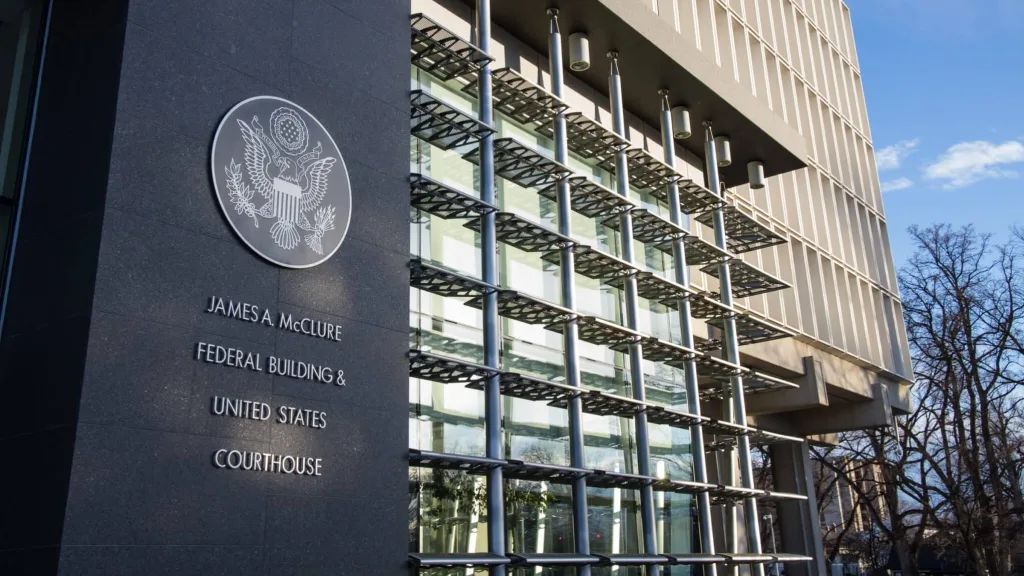
A federal judge on Jan. 23 rejected Idaho Attorney General Raúl Labrador’s motion to dismiss the case, the Idaho Capital Sun reported.
Lakey’s proposed bill would change the definition of illegal entry to specify that the crime applies when the unauthorized person “knowingly” enters the state, attempts to enter the state or is at any time present in the state after having entered the U.S. in violation of federal immigration crimes.
The law as currently written says someone is guilty of illegal entry if they are undocumented in Idaho and entered the state “at any location other than a lawful port of entry or through another manner of lawful entry.” In the court challenge, ACLU attorneys have argued this definition is unconstitutionally vague.
The state’s lawyers and the judge have, at times, interpreted this definition differently, with the state saying it meant those who enter Idaho from Canada or from a foreign country via aircraft but not through a port of entry.
U.S. District of Idaho Judge Amanda Brailsford wrote in her Jan. 23 opinion, “This characterization of Illegal Entry, however, ignores the statute’s plain language, which provides that an alien commits Illegal Entry if he ‘enters or attempts to enter this state at any location other than a lawful port of entry.’”
Lakey’s bill would also create new “affirmative defenses,” meaning arguments someone could use in court if charged with this crime. The new defense would be that the federal government had affirmatively provided permission for the person to remain in the U.S. under federal laws and regulations.
The bill would also add an affirmative defense to the “illegal reentry” crime for those that the U.S. attorney general or secretary of the U.S. Department of Homeland Security had “expressly consented” to their entry, reentry or presence in the U.S. It would also be a defense if the federal government granted permission to remain in the U.S. “under a provision of the immigration and nationality act or other federal statute.”
Sen. Brian Lenney, R-Nampa, questioned the new affirmative defenses.
“I think something like this under the wrong (presidential) administration could be used the wrong way,” Lenney said.
Lenney asked if the bill was to make the law “more legally palatable.”
Lakey responded that he had worked with the attorney general’s office to strengthen the state’s “position in regard to the preemption.”
Senate Minority Leader Melissa Wintrow, D-Boise, said she’d vote to introduce the bill so it could get a full hearing, but noted that she didn’t support the original law.
”I may not want to strengthen your bill,” Wintrow said.
HB 83 was modeled after Texas immigration law with similar constitutional concerns
Bill sponsors for HB 83 in 2025, including Lakey and Rep. Jaron Crane, R-Nampa, had said the bill was modeled after a Texas immigration law.
The Texas law, SB 4, has been blocked from going into effect since it passed in 2023 while it is under consideration by the Fifth U.S. Circuit Court of Appeals, the Texas Tribune reported.
Lakey said last year that he and Crane had worked to avoid the more “challenging provisions” of the Texas law, the Idaho Press reported, including the challenge that it superseded federal authority.
ACLU of Idaho Legal Director Paul Carlos Southwick said in a press release at the time that HB 83 was still a “copycat” of Texas’ law.
“That court held that Congress has precluded any state regulation regarding immigration, ‘even if it is parallel to federal standards,’” Southwick said at the time. “For these reasons, H.B. 83 is a doomed piece of legislation that will not hold up in court.”
Idaho Capital Sun is part of States Newsroom, a nonprofit news network supported by grants and a coalition of donors as a 501c(3) public charity. Idaho Capital Sun maintains editorial independence. Contact Editor Christina Lords for questions: info@idahocapitalsun.com.