BOISE, ID – The Idaho Legislature’s budget committee got its first look Tuesday at plans for additional new budget cuts that the state’s top budget official warns could lead to structural damage in state government programs and services.
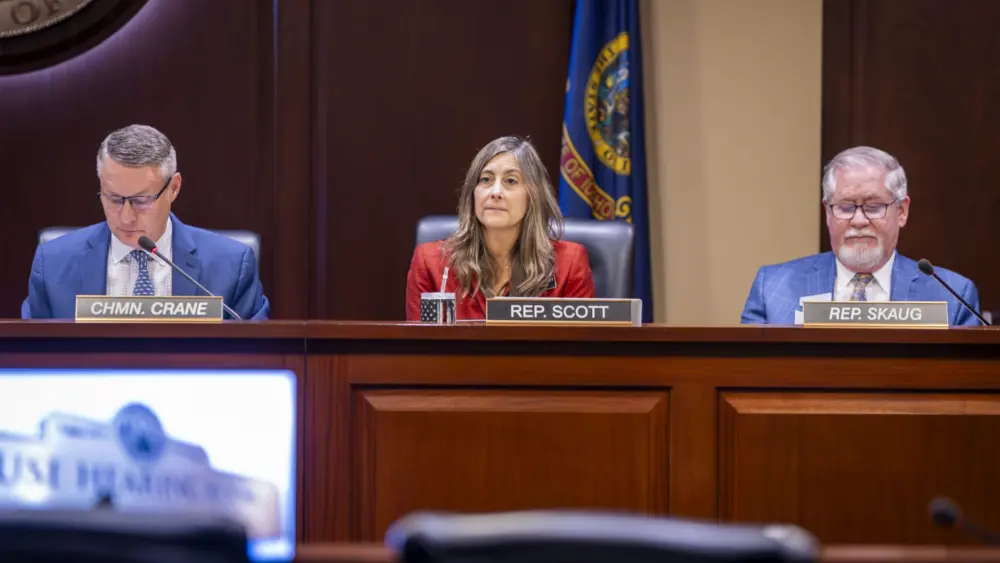
Last week, leaders of the Idaho Legislature’s Joint Finance-Appropriations Committee, or JFAC, asked state agencies and departments to submit plans to cut their budgets by up to an additional 2% on top of the 3% cuts that Gov. Brad Little implemented last summer to avoid a budget shortfall.
On Tuesday, officials said Idaho’s K-12 public school system, Idaho State Police, Idaho Department of Correction and the trustee and benefits portion of the Medicaid program’s budget will be exempt from the new cuts – even though they were specifically asked to submit plans for the cuts.
JFAC released plans for the additional new cuts on Tuesday, which show those cuts could lead to furloughs or staff reductions among state employees, jeopardize the future of medical training programs, disrupt Idaho’s camping and recreation season, jeopardize appellate public defender representation guaranteed under the U.S. Constitution and more.
JFAC members reviewed some of the plans Tuesday but did not vote on them. Instead, budget committee leaders said they plan to vote on a package of cuts and other statewide decisions on Friday morning.
Idaho governor’s budget chief says more cuts to state budget ‘would have long-term impacts’
But Idaho Division of Financial Management Administrator Lori Wolff, who serves as Little’s budget chief, told reporters Tuesday afternoon that the budget committee does not need to make those additional new across-the-board cuts.
Wolff said Little submitted a plan with his State of the State address in January that balances the state budget through a combination of short-term cuts to things like transportation funding and Medicaid, coupled with funding transfers and moving interest earnings around.
Wolff said officials in Little’s office realized last summer that pushing additional across-the-board cuts beyond Little’s 3% mark could do lasting damage to the state.
“I’m certain that when we put this budget together we knew that if we cut too deep we would have long term impacts, and those long term impacts mean economic growth gets stalled out,” Wolff said Tuesday afternoon. “We’re looking for trying not to have structural damage, because all we’re going to do is push those costs onto communities and to counties and to cities, which is going to then, in turn, impact property taxes and affordability at the local level.”
On the other hand, JFAC’s co-chairs, Sen. Scott Grow and Rep. Josh Tanner, both R-Eagle, said the additional new cuts are necessary due to state revenue uncertainty and uncertainty with the cost of complying with federal tax cuts championed by President Donald Trump in the federal One Big Beautiful Bill Act. Rep. Jeff Ehlers, R-Meridian, the sponsor of the tax conformity bill, estimated that tax conformity would cost $155 million in the current fiscal year, and $175 million next fiscal year.
“There’s so much uncertainty in that number, we are trying to be conservative as we go forward here,” Grow said Tuesday morning.
JFAC’s longest-serving member, Sen. Janie Ward-Engelking, D-Boise, said Tuesday she opposes the new cuts. She also blamed the Idaho Legislature for creating the current budget crunch by passing too big of tax cuts and setting too high of a revenue projection last year.
“This looks like death by a thousand cuts,” Ward-Engelking said Tuesday.
“I don’t know that this leaves the lights on (for state agencies),” she added.
How would additional new state budget cuts affect Idaho
Officials with the Idaho State Board of Education’s Graduate Medical Education Committee wrote to JFAC officials that they believe Idaho’s graduate medical education program, or GME, cannot sustain additional new cuts.
“We cannot start defaulting on promises made to those resident physicians we are
recruiting and to those involved in their training,” members of the Graduate Medical Education Committee wrote. “This uncertainty in funding will kill emerging interest in GME development in Idaho, which is desperately needed to continue physician training, recruitment and retention in our State.”
For context, Idaho ranks 50th in the country in terms of the number of physicians per capita, and the members of the Graduate Medical Education Committee said the combination of the state’s growing population and the physician shortage point toward a growing crisis in doctor availability and access to care for the people of Idaho.
One report delivered to JFAC members earlier in the 2026 legislative session concluded that Idaho would need to add an additional 1,400 medical professionals today just to catch up to the national average.
“Further decreases in funding will also destabilize the important relationship between the State of Idaho and its physician training programs,” the Idaho State Board of Education’s Graduate Medical Education Committee wrote to JFAC.
Other officials are worried too.
Idaho State Appellate Public Defender Erik Lehtinen wrote that he believes his office could withstand cuts in the current fiscal year 2026, but may not have the same favorable financial conditions to withstand cuts next year in fiscal year 2027.
Lehtinen said the office was established to provide legal representation to indigent defendants whose cases are on appeal before Idaho’s appellate courts. Lehtinen said the U.S. Constitution requires the state provide legal counsel to defendants who cannot afford an attorney.
“Therefore, further cuts in FY 2027 risk impairing the SAPD’s ability to provide effective appellate representation to its clients, as is required by the United States Constitution,” Lehtinen wrote to a state budget analyst on Friday.
Idaho State Public Defender Eric Fredericksen also worried additional new budget cuts would create operational challenges and legal risks impacting citizens’ constitutional rights in court.
Other agencies also expressed concerns about how cuts would impact the public.
Officials with the Idaho Department of Parks and Recreation, or IDPR for short, worried additional new cuts would disrupt the upcoming summer recreation season or even lead to closures or reduced hours.
“IDPR is continuing to recover from the 80% reduction in General Fund from FY 2011 all while addressing the sustained increase in visitation due to COVID,” officials wrote. “The goal is not to close any park facilities indefinitely or reduce hours of operations, unfortunately further cuts could result in that becoming a reality. … As of January 27, 2026, only 14% of IDPR’s General Fund OE remains unspent. Budget reductions would disrupt preparations for the busy camping and recreation season ahead.”
What cuts will JFAC vote on Friday?
JFAC did not take any action on the proposed list of budget cuts on Tuesday.
Instead, JFAC members plan to vote Friday on a package of cuts called the 2026 Idaho Budget Rescission Act.
According to state budget documents shared with JFAC members, there appear to be three options to consider on Friday, ranging from 3% to 5%.
- The approximately 3% budget cuts that Gov. Brad Little enacted last summer to avoid a budget shortfall. Idaho’s K-12 public school system is exempt from these cuts.
- An approximately 4% budget cut, which includes Little’s 3% cuts plus an additional across-the-board cut of 1% for most state agencies and departments.
- An approximately 5% budget cut, which includes Little’s 3% cuts plus an additional across-the-board cut of 2% for most state agencies and departments.
Wolff said she has not seen the Idaho Legislature employ this type of approach to budget cuts.
“We have not seen this ever done before,” Wolff said Tuesday.
Although JFAC members have spreadsheets and documents describing the cuts and their impact, JFAC will not be bringing all of the state agency and department directors forward to go through the cuts and their impact before Friday’s vote.
Because of that, Wolff hopes JFAC members do their due diligence and understand the impacts those cuts will have on Idahoans, the programs and services they access and state employees.
“The important thing will be it’s not just a number on the bottom of the spreadsheet, but there are a lot of implications within that number that hopefully are very transparent too,” Wolff said.
This story first appeared on Idaho Capital Sun.