OLYMPIA, WA – Legislation to regulate the use of automated license plate readers amid concerns over federal immigration agents accessing data the devices collect, passed the Washington state Senate on Wednesday.
It was a bipartisan, 40-9, vote with only Republicans opposed.
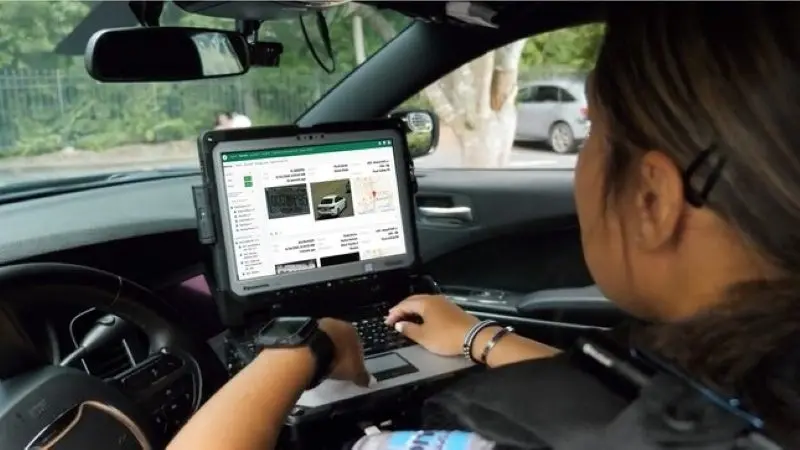
Many local police departments have adopted the emerging surveillance technology in recent years. The readers are mounted everywhere from street poles to police patrol cars. They can sweep up massive amounts of information, taking pictures of vehicles and using artificial intelligence to analyze the data.
Police can use the information to track vehicles that could be tied to criminal investigations. But most of the images are never looked at.
An October report out of the University of Washington found multiple local police departments authorized U.S. Border Patrol to use their license plate reader databases. In other cases, Border Patrol had backdoor access without express permission. And in some instances, police conducted searches on behalf of the federal agency.
But while at least 16 other states have enacted regulations on the plate readers, Washington has not.
Senate Bill 6002 would add sideboards to the use of these surveillance cameras, many of which come from the Georgia-based company Flock.
“It’s an opportunity for us to say to all Washingtonians that we’re going to care about what your privacy concerns are, we’re going to expect to meet the expectations of trust and transparency and accountability,” said Sen. Yasmin Trudeau, D-Tacoma, and the legislation’s lead sponsor.
“What we have now is the strongest bill in the country that is completely workable,” she continued.
Under the bill, reader data would have to be deleted within 21 days, unless it’s needed for police evidence. That retention period was originally set at 72 hours, but that was increased in a Senate committee. These periods vary across states that have these regulations. New Hampshire law, for example, says data must be deleted within three minutes of capture. In Georgia, agencies have 30 months to destroy it.
Flock’s standard retention policy is 30 days, after which the data is deleted.
The legislation would largely prohibit police from sharing the information except for court proceedings, with some exceptions. The readers wouldn’t be allowed to be used for civil immigration enforcement, or to be deployed near schools, churches, courts or food banks.
Law enforcement agencies would have to keep logs of when their reader data was accessed for five years.
The legislation says police can only use the cameras to compare the data to watch lists for stolen vehicles, missing or endangered persons, vehicles registered to people with felony warrants and investigations related to vehicles involved in a felony. They could also be used for tolling, parking enforcement and measuring vehicles at weigh stations.
Sen. Keith Wagoner, R-Sedro-Woolley, supported the legislation but would like to expand the list of crimes the readers can be used for, like misdemeanor domestic violence and driving under the influence.
By July 1, 2027, the state attorney general would need to develop model policies for the use of automated license plate readers. Agencies would have to adopt them by December that year.
Sen. Jeff Holy, R-Cheney, called the legislation a “pragmatic approach to solving the problem.” He said the collaboration between Democrats and Republicans on the bill was “unheard of.”
Not all Republicans were convinced. Sen. Leonard Christian, R-Spokane Valley, said drivers shouldn’t expect privacy on public roads.
Flock declined to comment.
Fears of license plate readers go beyond immigration.
Last year, authorities in Texas searched thousands of the cameras, as far as Washington state and Illinois, looking for a woman believed to have had a self-administered abortion.
Some cities are also rethinking their use of the cameras over concerns they’ll be overloaded with public disclosure requests for reader data, which could also allow anyone to learn the whereabouts of another person’s car. Some fear the footage could then be used to stalk or harass.
“Without this bill, anybody can access that information,” Trudeau said. “It is literally the wild, wild West when it comes to data protection.”
The measure now moves to the House for consideration.
This story first appeared on Washington State Standard.