MONTANA – Calling the proposed decision to rescind bison grazing permits on federal land “unlawful, factually incorrect, and procedurally deficient,” nonprofit conservation group American Prairie on Friday filed a protest with the Bureau of Land Management.
Another protest filing filed last week by the Coalition of Large Tribes — a group representing more than 50 Native American Tribes — warned of the unintended consequences the BLM decision could have on tribal buffalo herds.
In January, the Department of the Interior released the proposed decision to cancel grazing permits across seven allotments of land in Phillips County that American Prairie has utilized for its bison herd for years.
“This proposal is an unprecedented reversal of BLM’s own decision-making after more than 40 years of treating bison as eligible livestock under federal grazing law,” Alison Fox, CEO of American Prairie, said in a press release. “BLM lawfully approved these permits after a thorough environmental review and defended them for years. Abruptly rescinding them now — under political pressure — creates immense uncertainty and sends a chilling signal to Tribes, ranchers, and conservation partners who depend on fair and predictable public land management.”
The nonprofit group has a mission to conserve prairie land in Montana, creating one of the largest nature reserves in the country adjacent to existing public land including the Charles M. Russell National Wildlife Refuge and Upper Missouri River Breaks National Monument. The nonprofit itself has a habitat base of more than 500,000 acres in the state, comprising roughly 150,000 deeded acres and 387,000 leased public areas.
It’s the leased acreage that has become a flashpoint for the group in recent years, as Montana’s politicians have considered a key goal of American Prairie — bison reintroduction — to be at odds with the state’s agricultural industry.
Since 2005, American Prairie has been authorized to graze bison on two of its federal land allotments, with the BLM authorizing four more grazing permits in 2022 across a total 63,000 acres.
But opponents of the bison grazing have said the bedrock 1934 Taylor Grazing Act does not allow for so-called conservation grazing, where animals are put on the land for multiple purposes including ecological benefits as opposed to specifically for agriculture.
Among mounting pressure from Montana Gov. Greg Gianforte and the four Republican members of the state’s Congressional delegation, Interior Secretary Doug Burgum assumed control of the case last year, and in January the BLM issued its proposed decision to revoke American Prairie’s grazing leases.
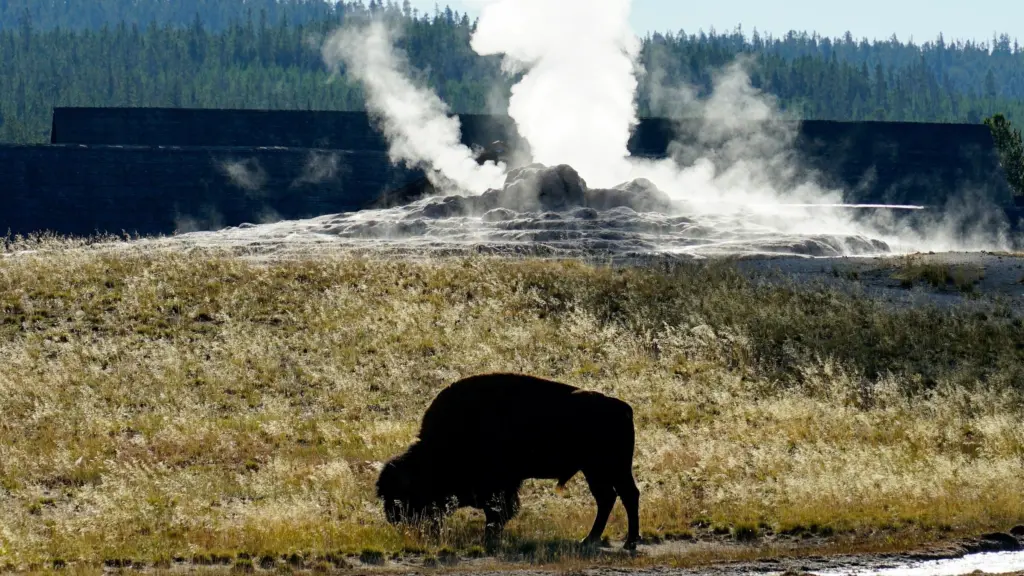
In the protest letter, American Prairie said its bison herds have grown to more than 900 animals and the organization has invested more than $350,000 in BLM-approved fencing improvements.
“If the BLM Proposed Decision is implemented, and American Prairie cannot graze bison on the approved leases, the organization will incur significant damages, including a disruption in its ability to fulfill commitments to supply bison to other operators, the cost of moving hundreds of bison to scattered private properties, and purchasing supplemental feed, among other expenses,” American Prairie said.
The protest highlights the BLM’s focus on excluding bison from the definition of domestic livestock for grazing purposes, and says the agency has granted bison grazing leases for more than four decades.
“Reversing position on BLM’s longstanding interpretation of the word ‘livestock’ to exclude bison managed in these ways would undermine 41 current grazing permits for bison ranchers across six western states,” the protest states. It adds that there would be additional impact on tribal bison herds and “any related bison co-stewardship or surplus programs.”
According to the Coalition of Large Tribe’s protest letter, the BLM decision, as currently written, makes it “unlikely that any tribal government or tribal citizen buffalo herd would ever be eligible for BLM grazing leases.”
The Tribes’ protest also states that some tribes in Montana would see immediate impacts, including the Fort Belknap Indian Community and Chippewa Cree Tribe, which receive bison from American Prairie to diversify their herds and at times sublease grazing land from the nonprofit.
Two tribes outside Montana, Fort Bidwell Indian Community and the Pit River Tribe, both in California, are currently working to secure BLM leases for grazing tribal bison herds, and the decision “would likely prohibit those grazing leases,” according to the letter.
“This BLM decision puts at risk not just American Prairie’s bison grazing, but the management of bison herds across the country, including tribal herds,” said Jenny Harbine, managing attorney for Earthjustice’s Northern Rockies Office, which filed the protest on American Prairie’s behalf. “This shortsighted political decision would reverse decades of precedent and harm public land management moving forward. The agency must withdraw its proposal and restore the grazing permits.”
American Prairie is also being represented by Helena-based Cochenour Law.
26-02-06-american-prairie-protest
Daily Montanan is part of States Newsroom, a nonprofit news network supported by grants and a coalition of donors as a 501c(3) public charity. Daily Montanan maintains editorial independence. Contact Editor Darrell Ehrlick for questions: info@dailymontanan.com.