WASHINGTON, D.C. – Consumer prices could climb higher as more of President Donald Trump’s tariffs are implemented, according to new research.
A National Bureau of Economic Research paper finds that nearly the entire tariff burden is passed on in the form of higher prices, directly impacting American businesses and consumers.
Brent Neiman, a professor of economics at the University of Chicago Booth School of Business, and Gita Gopinath, a professor of economics at Harvard University, wrote that the full impact of Trump’s tariffs have yet to be seen.
“A key reason why the price impact of the tariffs remains below many forecasts made in April is that the implemented policy remains much smaller than the announced policy,” they wrote in the paper. ” … “The 2025 tariff shock is not yet as large as the policy announcements suggest, but its costs are largely borne by the United States, as exporters have, on average, not dropped their prices.”
That’s in part because of delays in implementation and exemptions, Neiman and Gopinath wrote.
“Increases in statutory tariff rates are easy to announce and quick to disseminate to the public. However, the actual tariff rates paid by importers are often substantially lower due to exemptions and may only bind after a long delay,” they noted.
Both manufacturers and consumers will pay more, according to the authors.
“The actual tariff rates on U.S. imports are not nearly as large as policy announcements suggest, but they are still historically large and reshaping U.S. trade patterns,” they wrote. “Pass-through to import prices is high, China’s share of U.S. imports has collapsed, and U.S. manufacturers face higher input costs.”
This aligns with other studies, such as one from the Kiel Institute for the World Economy, indicating that Americans are paying almost the entire tariff cost, directly challenging Trump’s claim that foreign nations would bear the burden.
A December 2025 study from Duke’s Department of Economics found that consumers ultimately paid more than the tariff cost on European wines during a 2019–21 trade dispute. The upshot was that Americans paid higher costs than the federal government collected in tariff revenue.
However, Goldman Sachs economists projected in October that American consumers will pay 55% of the tariff costs, U.S. businesses will pay 22% and foreign exporters will pay 18%.
Peter Navarro, a top trade adviser to Trump, has said it is about bargaining power: “In real markets, the burden falls on whoever can’t afford to lose access to the U.S. consumer.”
The White House has said foreign exporters who depend on access to the American economy will ultimately pay the cost of Trump’s tariffs.
In November, the Congressional Budget Office revised its tariff projections after noting that foreign businesses were absorbing about 5% of the tariff costs through lower prices. Also in November, Trump issued an executive order exempting more than 200 food products from tariffs over concerns about higher grocery prices.
Trump has made tariffs a central part of his domestic and foreign agendas during his second term. Last April, Trump imposed import taxes of at least 10% on every U.S. trading partner. Since then, the president has suspended, changed, increased, decreased, and reimposed tariffs under the 1977 International Emergency Economic Powers Act.
A group of states and small businesses challenged Trump’s tariffs under the 1977 law, winning in two lower courts before the administration appealed to the U.S. Supreme Court. The high court agreed to hear the case on an expedited basis.
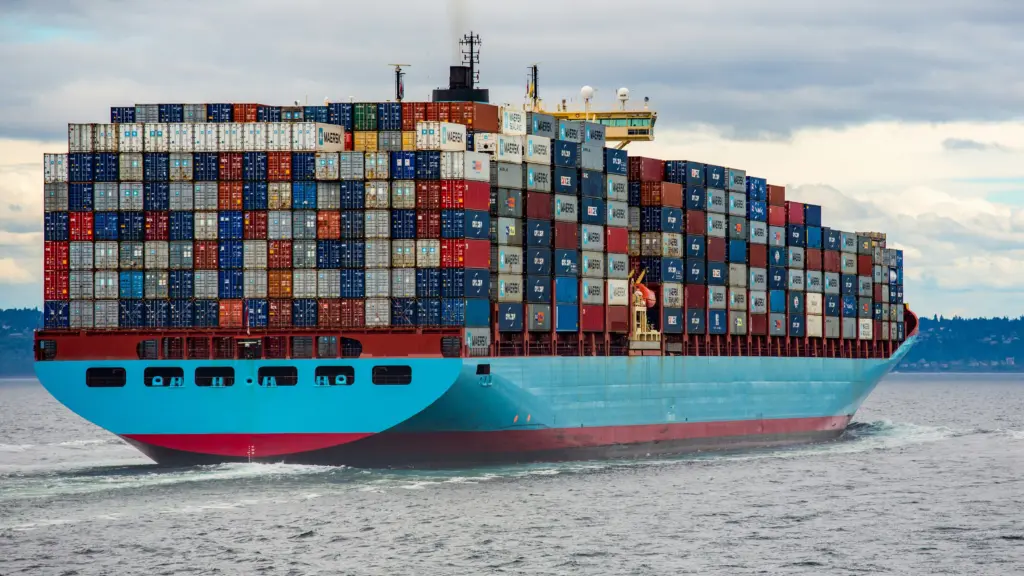
A tariff is a tax on imported products.