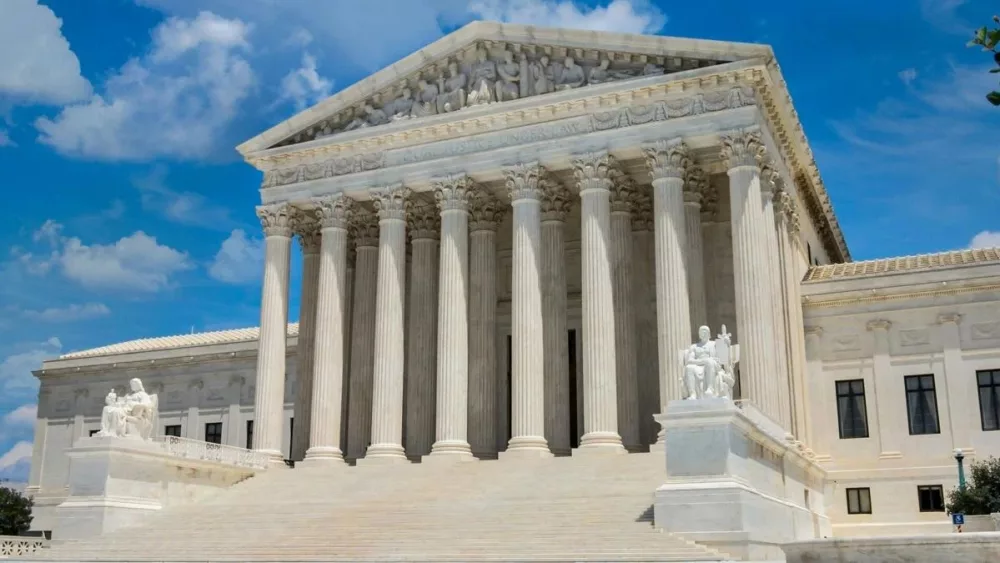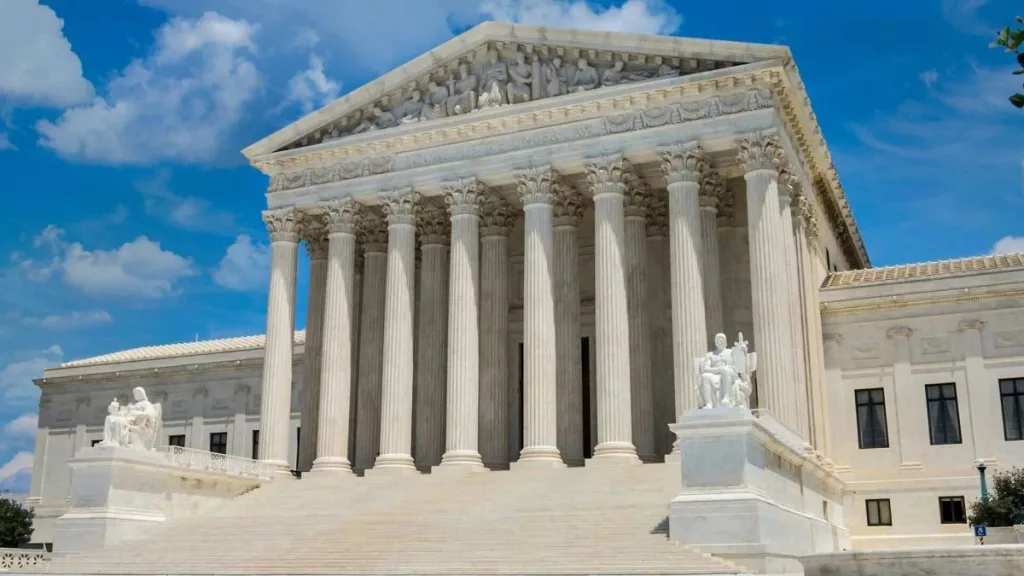
WASHINGTON, D.C. – Justices on the U.S. Supreme Court announced several days in the next week where they may release decisions in certain cases.
The high court said it may announce opinions on Feb. 20, Feb. 23, Feb. 24 and Feb. 25. It is possible for revisions or late changes to effect what, if any, decisions are released on a certain day but the justices rarely retract an opinion announcement.
After justices hear oral arguments in a case, they hold a conference to vote on their decision. After voting, the most senior justice in the majority will assign who writes the majority opinion in the court.
If Chief Justice John Roberts votes in the majority, he will assign who is in charge of writing the majority opinion. The most senior judge of those who dissent will write the court’s dissenting opinion.
Several high profile cases remain on the high court’s docket that could be decided within the next week. Here are some of those cases.
Tariffs
An issue that is likely top of mind for the Trump administration are challenges to the president’s tariff authority. Trump has made tariffs a central part of his economic plan since his return to the White House.
Trump cited the 1977 International Emergency Economic Powers Act to bring forth tariffs on countries around the world. In April 2025, he imposed a blanket 10% import tax on every U.S. trading partner.
A coalition of states and business leaders sued the Trump administration under the 1977 law and won in two lower courts before the White House appealed to the Supreme Court.
Learning Resources Inc. v. Trump is one of the challenges to the president’s authority. Lawyers for the coalition of states and businesses argue that the constitution vests control over economic issues like tariffs to Congress, not the president.
“Congress is jealously protective of its ‘power over the purse,'” the lawyers wrote in a brief to the court. “The Founders were wary of its use by the President given the history of colonial resistance to Crown-imposed duties levied without consent.”
However, the Trump administration argued that Congress gave the president specific authority to regulate tariffs and economic activity in his capacity as head of the executive branch.
Campaign finance
Justices on the high court could also release a consequential decision with a significant effect on campaign finance as the midterm elections approach.
In December, justices on the court heard arguments in National Republican Senatorial Committee v. Federal Election Commission, a case that could strike down limits on political party spending. The case would determine how much political parties can spend in coordination with candidates for expenditures like advertising.
Advocates in the case have urged justices on the court to understand the issue as one regarding the First Amendment. Lawyers argued coordination between PACs and candidates should not be restricted under federal election guidelines.
“The challenged limits flout the First Amendment because they burden core constitutional rights of political parties and candidates alike without being narrowly tailored to advance the government’s only permissible interest in regulating political speech – preventing quid pro quo corruption,” lawyers for the NRSC wrote.
The challenge arose from then-Sen. JD Vance’s campaign. PAC leaders, including Travis Trawick of FullPAC, said the case could unleash billions more into campaigns and help fund down ballot races.
According to AdImpact, spending in the 2026 midterm elections is projected to reach over $10.8 billion. However, Trawick said this figure does not account for money that could be unleashed after the Supreme Court’s decision.
Justices on the court could also issue a consequential decision in Louisiana v. Callais, a case that could determine to what extent states can engage in redistricting.
The case centers around two majority-Black congressional districts in Louisiana. Civil rights advocates argue the map “cracked and packed” Black voters into the districts and gave them less electoral opportunity.
This claim would go against the Voting Rights Act, which prevents districting decisions from being made on the basis of race.
“Politics came only after the race-based decision to create another Black-majority district,” lawyers wrote to the court.
As states across the country race to engage in mid-decade redistricting, a decision by the high court would have significant effects on the 2026 midterm elections.