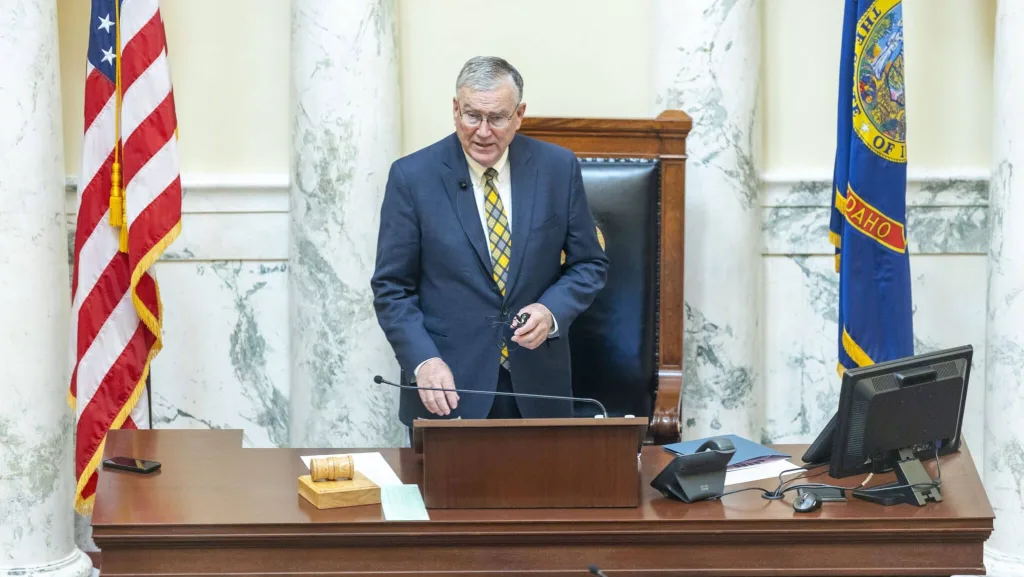
BOISE, ID – Idaho’s lieutenant governor is urging lawmakers to protect investments in education and infrastructure as they weigh budget cuts this session.
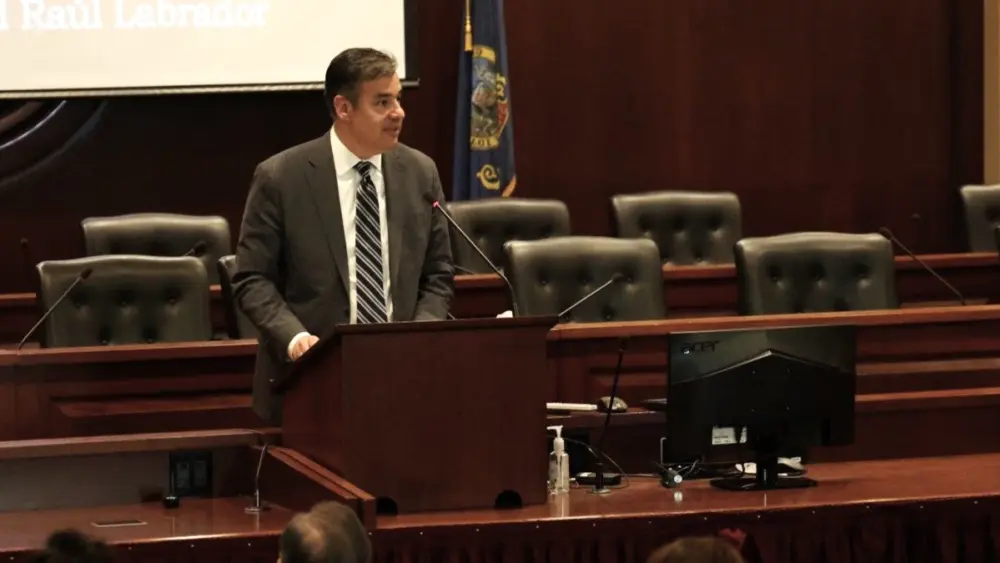
Lt. Gov. Scott Bedke told those gathered at a Boise Metro Chamber of Commerce meeting Wednesday the Legislature is facing what’s an “arguably self-inflicted problem” this year of a projected budget shortfall.
The Idaho Legislature has reduced state revenue by an estimated $4 billion from the last five years of income tax cuts, an Idaho Center for Fiscal Policy report found, which includes a total of $400 million revenue reduction from income, property and sales tax changes last year.
“It demands a response,” Bedke said. “So here’s what I want you to understand, we have a shared problem, not a shared weakness. It’s an invitation to govern.”
Gov. Brad Little last summer directed nearly all state agencies to cut their budgets by 3% for the current fiscal year, which ends June 30, and beyond.
This year, the state budget-writers have pursued additional across-the-board cuts, totaling $131 million in the current fiscal year and $143 million in fiscal year 2027.
Bedke underscores Idaho Launch scholarships as a priority
The governor and the budget-writing Joint Finance-Appropriations Committee have mostly exempted K-12 public schools from the budget holdbacks.
“Education is the single largest investment that we will make every year, approximately half of our general fund budget,” Bedke said, “and it should be, because it is the single determinant of what Idaho will look like 20 years from now.”
He highlighted a particular investment, Idaho Launch, an $80 million program created by the Legislature in 2023 that provides grants to Idaho high school seniors to pursue higher education or workforce training or apprenticeships.
The program has been a top priority and centerpiece policy of Little’s administration. It also has faced scrutiny from members of the Legislature, including House Speaker Mike Moyle, and it was originally funded through a very narrow vote in the House.
“There’s still a gap between what our economy needs and what the education pipeline is producing,” Bedke said. “Closing that gap is good for students and good for business, and we want to keep pushing that.”
Recent water investments must be protected, Bedke says
As the state faces very low snowpack and water reservoir levels, Bedke said, it’s critical that Idaho doesn’t go back on previous investments.
Last year, the Legislature approved $30 million for water infrastructure projects, including aquifer recharge and support for the 2024 major water right settlement agreement among East Idaho water users.
“It’s not a charity exercise,” Bedke said of the $30 million. “It’s a strategic exercise. You can’t appropriate your way out of a depleted water table. You have to manage the resources before the crisis, rather than after.”
Bedke said that agreement, which avoided curtailment is “where we needed to be based on the planning” but “it looks like we’re going to stress test the system this year.”
Where is the budget-setting process now?
Bedke ultimately doesn’t get much say in the direction the Legislature takes. As lieutenant governor, he presides over the Senate but only gets to cast a vote if there’s a tie to break.
However, he is wary of the additional budget cuts sought by the Joint Finance-Appropriation Committee, or JFAC. Especially considering the committee chose to adopt a projected revenue that’s higher than what Little based his budget proposal on.
“On every legislator’s desk, they have a copy of a budget that balances and it predicts less revenue than the Legislature’s number,” Bedke said in an interview, referring to the governor’s proposed budget. “… and it presumes getting over the hump in a year or two rather than doing ongoing, deep cuts.”
“That approach has served us well in the past,” Bedke continued, “and I think we should return to it.”
The current-fiscal year budget cuts to nearly every agency need to be approved by both chambers through Senate Bill 1331. That bill will be taken up by the Senate, and, if passed, later go to the House, and to the governor for signature or veto if approved by both chambers.
The fiscal year 2027 cuts are baked into the maintenance budgets for each agency, which include only previously approved spending and no new requests. The bills that include those budgets were approved by JFAC Feb.13 and had not been given a bill number as of Wednesday. Once they do they will go to either the House or Senate for a vote.
The budget writers on JFAC are still in the process of doing “enhancement” budgets, and will have the option of adding funding if they choose. Those budget bills will also need to be approved by both chambers of the Legislature and Little.
The budget-setting schedule for agencies that have potential enhancements to consider is available online here.
Idaho Capital Sun is part of States Newsroom, a nonprofit news network supported by grants and a coalition of donors as a 501c(3) public charity. Idaho Capital Sun maintains editorial independence. Contact Editor Christina Lords for questions: info@idahocapitalsun.com.