UTAH – After a report showed that nearly half of Utah K-3 students read below grade level, Gov. Spencer Cox included improving that number among his top priorities this year. A bill advancing in the Legislature may help him achieve that goal — but later.
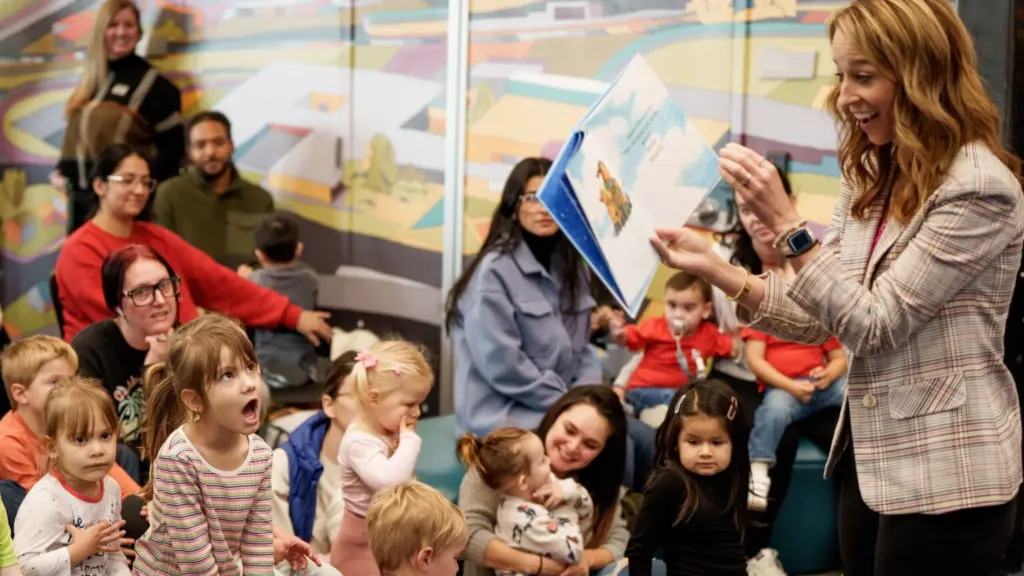
A bill Ogden Republican Sen. Ann Millner is sponsoring to boost early literacy in the state by increasing reading assessments to three times a year starting in kindergarten and allocating $16 million to school districts to provide paraeducators to support literacy.
GET THE MORNING HEADLINES.
If students are below the state benchmark, they would start an individualized reading plan to help them catch up. But also, the policy means that more students may be obligated to repeat school years.
“The goal here is to help every child read. It is so fundamental to their success, we know they’re more likely to graduate from high school, we know that they are less likely to end up in the social welfare system or in the criminal justice system if they can read,” Millner told the House Education Committee on Friday.
The panel voted 9-2 in favor of the legislation and it now goes to the House floor for consideration.
Almost half of Utah’s third graders don’t read at grade level, report says
Each school district would have the choice on how to best implement the reading plans; however, the idea behind the bill is that tutors are available either during class time, after class or during weekends or summer programs.
At the end of third grade, students reading well below the state’s standards may not be approved to pass to fourth grade, Millner said. However, there would be some exceptions for good causes and an appeal process for parents.
The concept of having more third-graders repeat the school year worried some, including Salt Lake City Democratic Rep. Carol Moss, a retired teacher — who, ultimately, ended up voting in support of the bill.
“By third grade kids’ socialization is more intense, and I think there’s going to be stigma. I’m glad to see you have exceptions,” Moss said. “It’s going to stigmatize kids, and particularly you pointed out, English-language learners might get exceptions. Why not have it earlier?”
Third grade, Millner said, is crucial since that’s when children move from learning to read to reading to learn. But, the goal is to encourage earlier interventions, trying to be flexible for everyone.
“What this bill says is we’re going to stay in communication with parents,” Millner said. “If a child is below benchmark, we’re going to sit down with that parent, we’re going to use parent teacher conferences and other things to have conversations. We’re going to try to help parents see the things they can do. We will be able to have paraprofessionals that can support them in tutoring.”
And, she added, retaining children in the third grade until they reach reading proficiency won’t happen until 2030.

The legislation also eliminates a goal Utah was not on track to achieve — increasing third grade reading proficiency to 70% of students statewide. According to a report by the Kem C. Gardner Policy Institute, only 50.3% of Utah third graders had grade-level proficiency in 2025.
The report also shows that reading proficiency levels were widely different across the state, ranging from below 30% to above 70%. The biggest disparities were among English-language learners, students with disabilities, Hispanic and Latino students, and economically disadvantaged students, who demonstrated lower proficiency rates.
Now, the state updated its goal and expects to have 80% of third-grade students reading on grade level by 2030.
Cox recommended in his budget proposal to allocate $80 million to fund paraeducator grant programs, including $60 million for “targeted behavioral interventions in K-3 classrooms” and $20 million for reading support in elementary schools that are below the 70% goal.
Millner’s bill proposes spending an ongoing $16 million from the Income Tax Fund to support reading interventions, an amount the Executive Appropriations Committee also recommended. The money would be distributed according to schools’ needs, Millner said.
YOU MAKE OUR WORK POSSIBLE.
Utah News Dispatch is part of States Newsroom, a nonprofit news network supported by grants and a coalition of donors as a 501c(3) public charity. Utah News Dispatch maintains editorial independence. Contact Editor McKenzie Romero for questions: info@utahnewsdispatch.com.