BOISE, ID – The Idaho House on Friday passed a bill that would let Attorney General Raúl Labrador seek to temporarily disqualify local elected officials and government employees from holding office or working for the government if they “willfully” violate state law.
House Bill 896 would let the state attorney general enforce state laws that enact bans. The bill would allow the attorney general to sue a government agency, official or employee if they fail to correct the alleged violation after being issued a warning.
The bill would exempt state lawmakers and judges from lawsuits to enforce state law by the attorney general. The Legislature routinely blocks local governments from enacting certain policies, or requires local governments to do certain things, through preemption laws, the Idaho Capital Sun reported.
After little debate, the House passed the bill on a party-line vote Friday, with all nine House Democrats opposing the bill and all 60 House Republicans present supporting it.
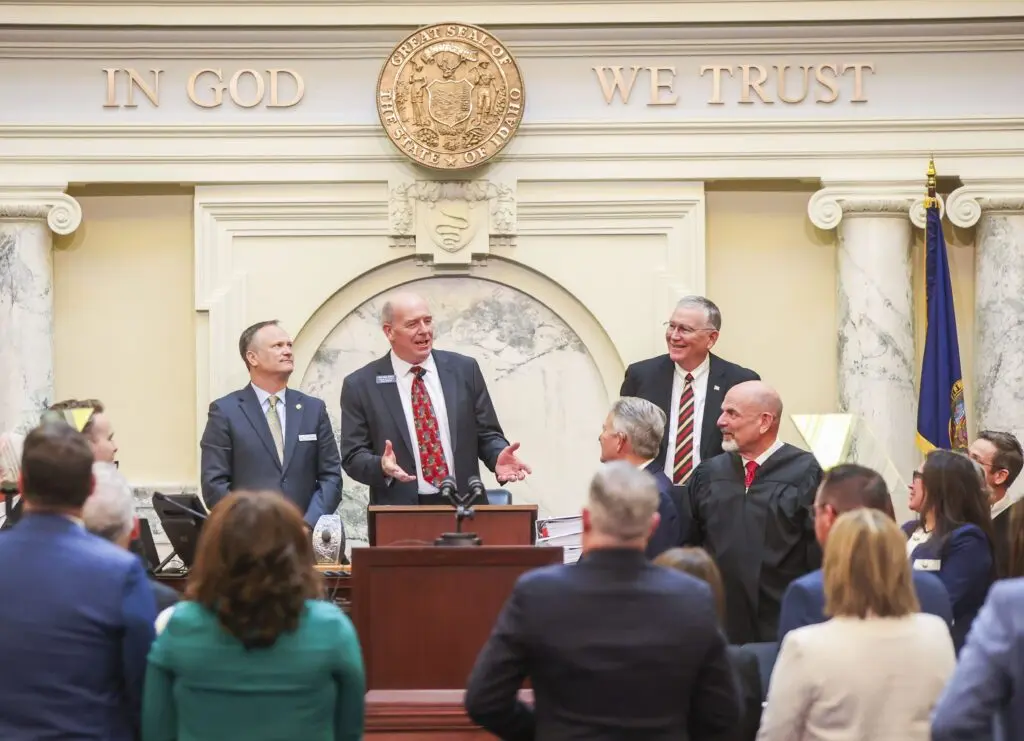
The bill is sponsored by the House’s top two Republicans: House Speaker Mike Moyle, R-Star, and House Majority Leader Jason Monks, R-Meridian.
Last year, the city of Boise declared an LGBTQ+ pride flag as an official city flag to work around a state law banning the display.
“This is a bill that shouldn’t be necessary. It really shouldn’t. But unfortunately we are in a place in our state where laws that we passed just are not being followed,” said Rep. John Shirts, R-Weiser, who presented the bill.
Rep. John Gannon, D-Boise, said the bill politicizes the enforcement of state laws.
“That to me is problematic in injecting politics into, too much, into our … public enforcement of our laws and our proceedings,” Gannon said. “That’s why we have three branches of government.”
The bill now heads to the Senate. To become law, Idaho bills must pass the House and Senate, and avoid the governor’s veto.
Here’s how the bill to enforce laws would work
Only the governor, the House speaker, the Senate president pro tempore, or the chairman of a board of county commissioners could refer cases to the attorney general under the bill.
A long trend: How the Idaho Legislature has removed local governments’ powers
The attorney general could notify elected officials, government employees or agencies of an alleged violation if the attorney general “has reason to believe” that they violated a state law. Then there could be a 14-day “curing” period, which is when an official or entity that admits to a violation can correct it before being sued.
If alleged violations are denied, not fixed or not responded to by the official or agency, the attorney general can sue and seek a court order directing compliance with the state law. Officials that violate court orders directing compliance with state law can be charged with contempt.
The bill does not clearly spell out what disqualification would be, such as whether it would be a process to impeach and remove elected officials from public office, or whether they would serve the remainder of their terms before being ineligible to run for elected office.
An earlier version of Moyle’s bill would’ve let the state freeze funding for local governments if the state’s attorney general suspected they violated state law.
Idaho Capital Sun is part of States Newsroom, a nonprofit news network supported by grants and a coalition of donors as a 501c(3) public charity. Idaho Capital Sun maintains editorial independence. Contact Editor Christina Lords for questions: info@idahocapitalsun.com.