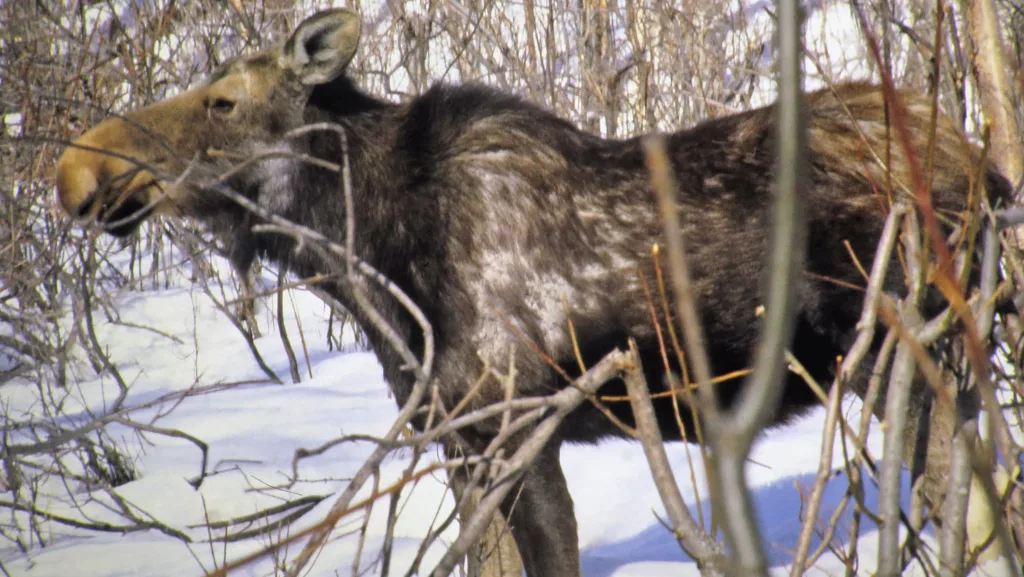
BOISE, ID – Idaho Fish and Game is advising the public that moose appearing patchy or unhealthy this time of year are often experiencing a normal seasonal condition caused by winter ticks, not disease.
According to a recent agency release, reports have increased in North Idaho of moose with hair loss or “mange-like” appearances. In most cases, those symptoms are the result of winter ticks, which attach in large numbers beginning in the fall and become more noticeable through the winter months.
As moose attempt to relieve irritation, they scratch and rub against trees and brush, causing clumps of hair to fall out and leaving visible bald patches. While the condition can look severe, it is a natural part of the ecosystem, Fish and Game said.
The agency noted the issue may be more noticeable in recent years, likely due to shorter winters that allow more ticks to survive. Adult moose can generally tolerate heavy tick loads, but calves are more vulnerable and may suffer from blood loss and reduced body condition.
There is currently no way for wildlife managers to control tick numbers on individual animals or in the environment, officials said.
Fish and Game is reminding residents to keep their distance from moose, avoid feeding wildlife, and keep pets leashed. Moose can be unpredictable and may become aggressive if they feel threatened, particularly cows with calves.
In most situations, wildlife is allowed to move through populated areas on its own, though Fish and Game may intervene if public safety is at risk.
Residents with questions can contact the Panhandle Regional office at 208-769-1414.