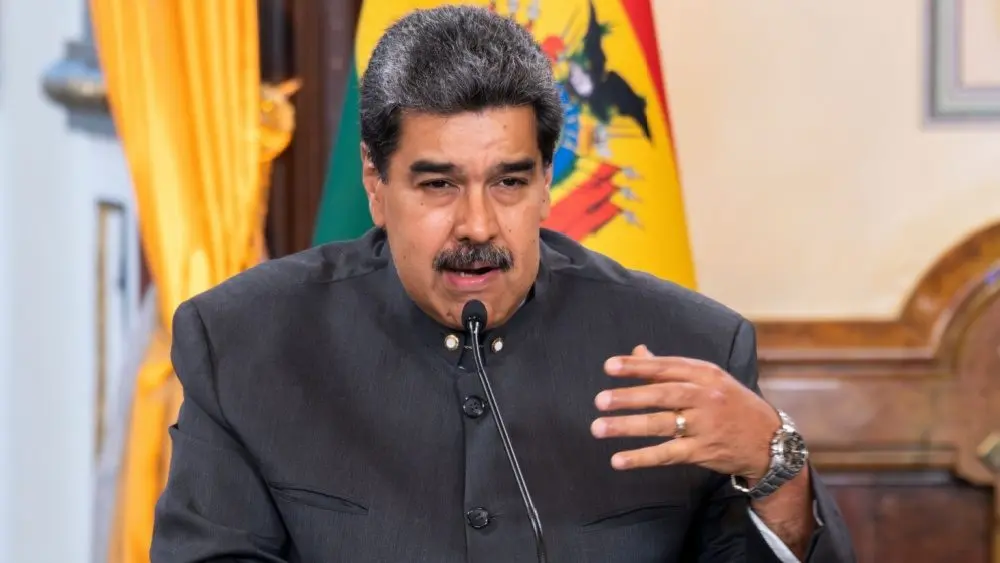
NEW YORK, NY – Ousted Venezuelan leader Nicolás Maduro and his wife, Cilia Flores, returned to a federal courtroom in Manhattan on Thursday as their high-profile criminal case in the United States continued to unfold. The pair, who were taken into U.S. custody during a pre-dawn military operation in Caracas in January, have both pleaded not guilty to a series of charges, including drug trafficking and “narco-terrorism.”
Maduro appeared wearing prison attire and ankle restraints, and briefly acknowledged the courtroom, greeting attendees with “good morning.” Throughout the proceedings, he and Flores listened through translation headsets, following the arguments closely. Presiding over the hearing, Judge Alvin Hellerstein made it clear the case would proceed, rejecting defense efforts to have the charges thrown out. “I’m not going to dismiss the case,” he said, though he raised concerns about whether Maduro would have adequate legal representation.
At the center of the dispute is whether Maduro can access Venezuelan government funds—currently restricted by U.S. sanctions—to pay for his defense. His attorney, Barry Pollack, argued that blocking those funds undermines his client’s right to a fair trial, warning that relying on court-appointed lawyers could limit the quality of representation in such a complex and costly case. Maduro echoed that concern in a sworn statement, saying, “I understand that the government of Venezuela is prepared to fund my legal defense and it is my expectation that it will,” adding, “I have relied on this expectation and cannot afford to pay for my own legal defense.”
Assistant U.S. Attorney Kyle Wirshba, however, pushed back and argued that Maduro should not be allowed to tap into state funds, particularly given allegations that he misused national wealth. “A defendant has no right to spend a third party’s money,” he said. Judge Hellerstein acknowledged the unusual nature of the case and the high costs involved, noting that defending Maduro could strain public resources. While he questioned whether national security concerns still justify restricting access to funds, he did not immediately rule on the issue.
The charges against Maduro stem from longstanding allegations that he and several associates worked with drug trafficking networks to funnel large quantities of cocaine into the U.S. Federal prosecutors claim he used his position to enable and protect these operations, describing him as a central figure in a corrupt system that facilitated international drug flows. An initial U.S. indictment was filed in 2020 against Maduro and other Venezuelan officials, with a more recent indictment expanded the charges, naming additional co-defendants and outlining accusations of conspiracy, drug importation, and weapons offenses. Maduro has denied all allegations.
Meanwhile, President Trump weighed in from Washington, suggesting the current charges may only represent part of a broader pattern of alleged wrongdoing. He described Maduro as a “major purveyor of drugs coming into our country” and said, “I hope that charge will be brought at some point,” adding that more legal action could follow.
Editorial credit: StringerAL / Shutterstock.com