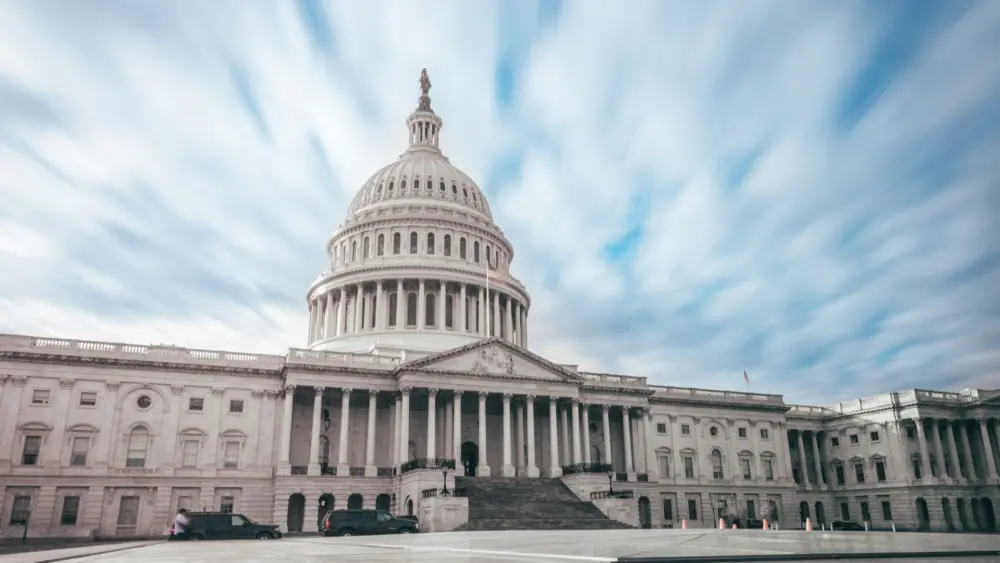
WASHINGTON D.C.– Congress’ failure to reach an agreement to continue funding the Department of Homeland is not only impacting TSA workers, it’s also impacting local law enforcement agencies that rely on federal grants.
Texas law enforcement officials argue that state lawmakers cannot rely on federal money and a long-term approach is needed to fund ongoing border security operations.
DHS has experienced a partial shutdown since Feb. 14, with Democrats expressing outrage over how U.S. Immigration and Customs Enforcement operations were run under former DHS Secretary Kristi Noem. Multiple agencies are impacted, including the Coast Guard, TSA, FEMA, U.S. Citizenship and Immigration Services, U.S. Secret Service, Immigration and Customs Enforcement, Customs and Border Protection and the Cybersecurity and Infrastructure Security Agency.
Although March 28 marks day 46 for many DHS employees not receiving a paycheck, Border Patrol and ICE agents are still being paid due to provisions in the “Big Beautiful Bill” signed into law by President Donald Trump last July.
In Texas, TSA agents have been selling blood plasma to make ends meet, and major airports are operating with nearly 50% fewer TSA agents, The Center Square reported.
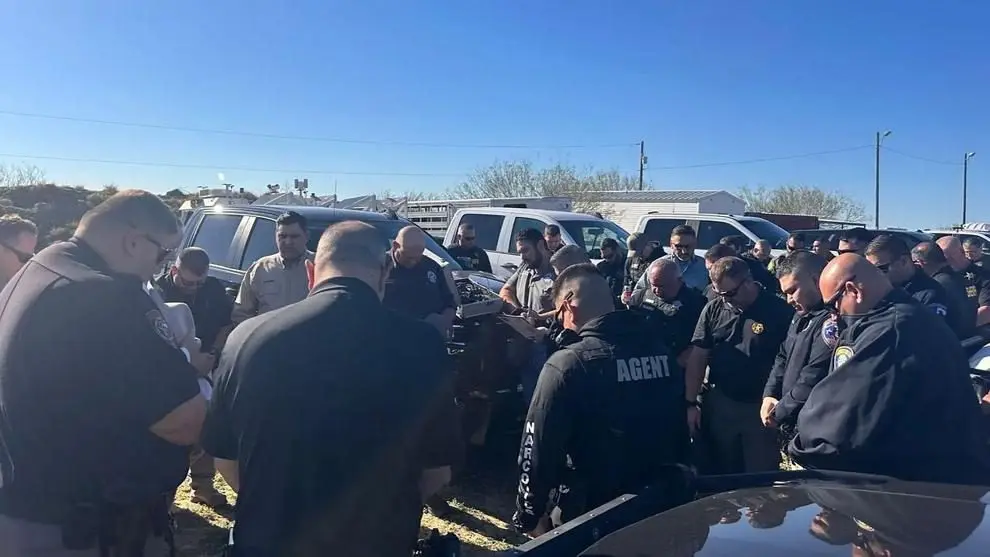
Lack of federal funding is also impacting Texas law enforcement agencies that receive federal grants. They include port security, emergency preparedness and response, cybersecurity, ICE 287(g) programs and Operation Stonegarden, a vital resource for Texas border sheriffs.
Texas law enforcement officers are entering their fifth year in Texas’ border security mission, Operation Lone Star, and the fourth year of a multiagency OLS Task Force initiative.
Due to a stipulation with the state’s OLS grant, recipients are required to use federal grants before they use OLS grants. But when federal grant money doesn’t come in, as it hasn’t for some in this case, OLS funds are used, and they’re already gone for some.
Several Texas sheriffs have received emails stating their federal grant funding is being held up because of the partial DHS shutdown, including Jackson County Sheriff Rick Boone.
“I was wondering when we are going to see the ripple effect. Here it is,” he told The Center Square.
With no Stonegarden funds and no more OLS funds, Boone says his OLS deputies won’t be able to work overtime or prioritize interdiction. ICE 287(g) funds for those participating in all three programs also haven’t come in. Terrell County Sherriff Thad Cleveland says he hasn’t received his 287(g) funds. Lavaca County Sheriff Steve Greenwell said the previous shutdown impacted his grant funding. The sheriffs are OLS Task Force members.
In Kinney County, Sheriff Brad Coe had to let three deputies go to fund jail and transportation costs due to lack of OLS funding, The Center Square reported.
With the Texas Department of Criminal Justice no longer housing OLS arrests and limited or no OLS funds, sheriffs find themselves “between a rock and hard place,” they told The Center Square. A lack of federal funds exacerbates the issue.
Part of the problem is the state legislature’s and Congress’ “lack an understanding of the nature of the criminal justice system and what we do,” Goliad County Sheriff Roy Boyd told The Center Square.
“We are fortunate because Gov. Greg Abbott has sustained funding. But you can’t fund operations for short periods of time and then quit funding. If that happens, we will never be able to complete investigations and tasks we set out to complete that we’ve encountered as a result of the OLS initiative. You can’t sporadically fund programs and turn them off. This doesn’t help law enforcement fight crime.”
“Political decisions have real world implications for people out in the field doing the work,” he added. In 2020, the sheriff’s office handled 8,888 calls a year. In 2025, it handled 15,739 calls. “We almost doubled our call volume from 2020 to 2025 and we’re not getting additional manpower,” he said.
If OLS funding were to dry up, Boyd said he’d lose one-third of his deputies and their criminal investigations and multijurisdictional operations would be grounded to a halt.
“It doesn’t matter whether the numbers drop at the border,” he added. “We still have cartel presence throughout Texas and the United States. There’s still a lot of work to be done. There are still tens of millions of illegal aliens that are beholden to the cartels that are that are here. The only way for us to dismantle the cartel business model is to make a long hard push and that could take years.
“The cartel has people in every community. It doesn’t matter how small. It doesn’t matter how large. They’re still selling drugs like they’ve always sold drugs. Our interdiction efforts are still ongoing. Our intelligence efforts are still ongoing. Ongoing funds are needed to fund staff and resources to sustain this operation.”
Brooks County Sheriff Benny Martinez told The Center Square, “We like to work. We aren’t politicians. We know what’s in the best interest of defending the rule of law regardless of the politics and we cannot lose that.”
“We are looking at saving generations down the road: protecting them from drug and sex trafficking. The norm of society is changing but the rule of law doesn’t change. We need support to continue combatting crime and enforcing the rule of law.”