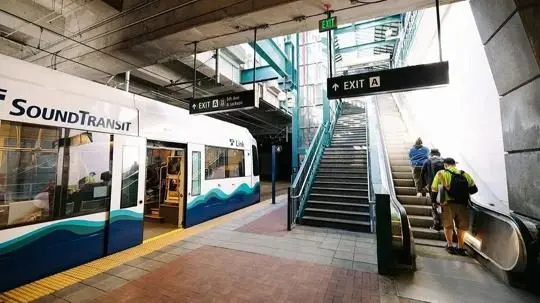
SEATTLE, WA – Seattle’s long delayed light rail link with the Eastside communities of Bellevue and Redmond opens on Saturday, part of an ambitious plan to build mass transit throughout the Puget Sound that is becoming more difficult to achieve because of funding shortfalls.
While the rail link is three years late, other part of the estimated $180 billion system, may never get built because the transit system is nearly $35 billion short of funding.
The transit line connecting downtown Seattle to West Seattle — the next link scheduled to open in 2032 — is the subject of intense debate by Sound Transit board members as to whether it should be scrapped or reduced.
Transit stations in the Ballard section of Seattle, in Everett, Tacoma and a whole transit line between Kirkland and Issaquah, are also in danger of being cut.
Numerous construction issues plagued the Sound Transit Seattle Eastside link including contractors incorrectly installing thousands of raised concrete structures that support the train tracks on both sides of a floating bridge over Lake Washington. Ultimately, the whole project had to be redone.
A strike by concrete delivery personnel from Dec. 2021 to April 2022 and supply chain issues from the COVID-19 pandemic also led to delays.
New line expects 50k riders
Sound Transit estimates 50,000 riders will take the 20-minute journey weekdays between the Eastside and Seattle.
“Building light rail has been a two-decade journey and it hasn’t been easy,” said King County Councilmember Claudia Balducci in a statement. Balducci, who is also a member of the South Transit Board, said the persistent efforts of hundreds of people helped bring the light rail to reality.
At a Sound Transit Board meeting in mid-March, board members, most who are elected officials from their own jurisdictions, argued over which stations and lines should be finished before money runs out.
The final decision on which stations and lines live or die is expected to be made at a Sound Transit meeting in May but the date hasn’t been announced.
The debate is even being fought on diversity and class lines.
Everett Mayor Cassie Franklin said at the board retreat that her community was more deserving of stations because its residents were more diverse and had less income than those in West Seattle.
Sound Transit’s primary funding mechanism is a $53.8 billion voter-approved initiative from 2016 through long-term bonds.
Residents of Seattle, the rest of King County, Snohomish County and Pierce County are paying higher property taxes, income tax and auto registration fees to cover the bond repayments.