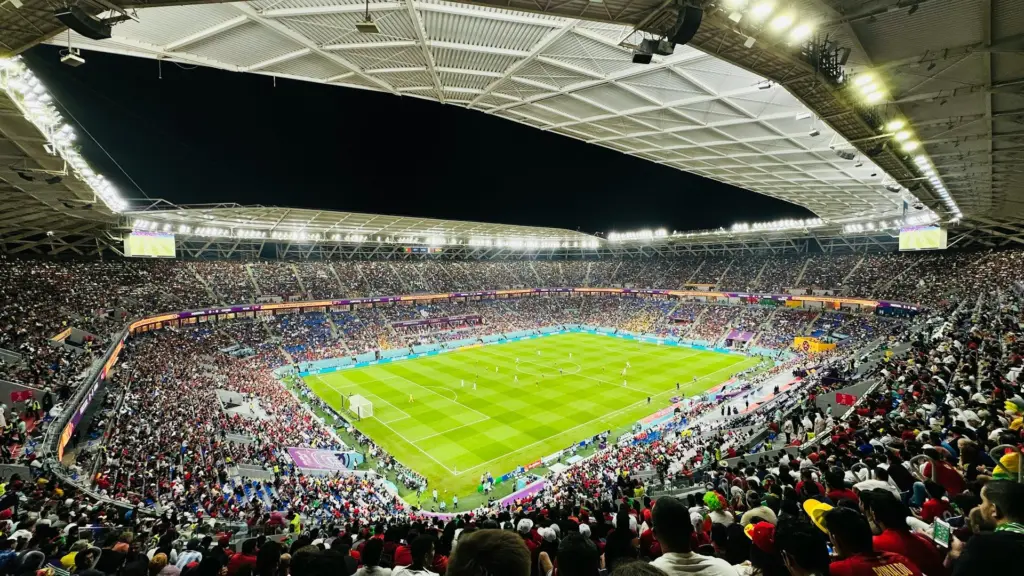
WASHINGTON, D.C. – In June, 11 U.S. cities will welcome millions of fans for soccer’s World Cup. Staging the planet’s most popular sporting event is never easy, but this year the conflict in the Middle East and the congressional impasse over funding for the U.S. Department of Homeland Security are creating additional complications.
Officials in the host cities say they are excited to welcome the world and to benefit from the economic activity of soccer’s premier event. New York City, for example, has invested more than $35 million in its preparations, but its host committee predicts that 1.2 million visiting fans will pump $3.3 billion into the regional economy.
“We are quite well prepared for the influx, and preparations have been ongoing over the past two years, both in the category of preparedness, but also in the category of how we can make sure every New Yorker benefits,” said Maya Handa, who was appointed by Mayor Zohran Mamdani as New York City’s World Cup czar earlier this year.
“So we are incredibly excited about the boost that this is going to provide to our hospitality industry. We also are preparing to support small businesses as they experience a surge of customers and visitors.”
I’m worried every day about public safety threats.
– Kansas City, Mo., Mayor Quinton Lucas, a Democrat
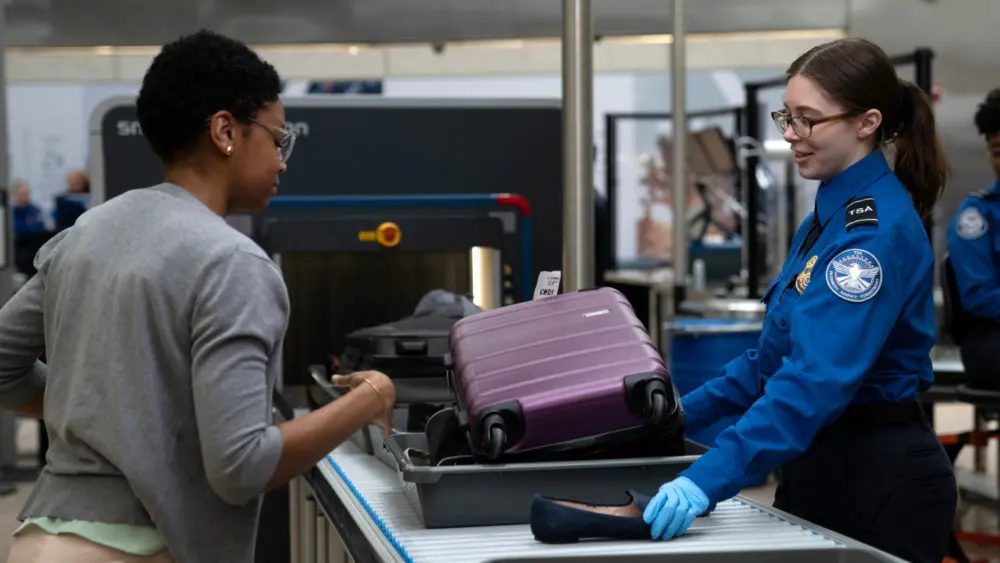
But an ongoing standoff in Congress over funding for the Department of Homeland Security delayed the distribution of $625 million in federal dollars to help the host cities offset security costs. The conflict in the Middle East, and the fear that Iran will retaliate with a terrorist attack in the United States, has only heightened security concerns.
“I’m worried every day about public safety threats,” said Kansas City, Missouri, Mayor Quinton Lucas, a Democrat. “I also recognize that you can’t control for everything. … We’ll go through a lot of steps to make sure we’re as ready as possible.”
In addition to security, states and cities must prepare to face more typical challenges of such events, such as protecting people from extreme heat, upgrading transit systems, and ensuring the welfare of homeless people who might be displaced.
Economic boost?
The World Cup will feature 48 national teams playing games across the U.S., Canada and Mexico. The U.S. will be hosting 78 matches in Atlanta, Boston, Dallas, Houston, Kansas City, Los Angeles, Miami, New York City (in partnership with East Rutherford, New Jersey), Philadelphia, the San Francisco Bay Area and Seattle.
The Trump administration said it’s expecting between 5 million and 7 million international visitors to come for the games. The Fédération Internationale de Football Association (FIFA), the governing body for the event, said those fans could add approximately $9.6 billion to U.S. GDP and help create about 105,000 jobs.
Victor Matheson, a sports economist at the College of the Holy Cross in Worcester, Massachusetts, said he’s skeptical of those numbers.
Unlike the Olympics, which typically require host cities to invest in new sports venues and other infrastructure, the World Cup cities already have the stadiums where the games will take place. But Matheson said he wouldn’t be surprised if the costs exceed what the host cities are anticipating and the expected economic benefits disappoint.
“You also worry, in general, as a community whether your regular economic activity is going to get crowded out,” Matheson said. “Is the lawyer’s office or the dry cleaners that’s close to a stadium going to be able to operate when you’ve got crowds and congestion associated with a mega event?”
Matheson also noted that the Trump administration’s immigration crackdown, which includes new visa restrictions on the residents of some countries, might reduce the number of visitors, and thus the economic benefits of hosting the World Cup.
Sports stadium deals hand even more taxpayer money to billionaires
“A World Cup ticket does not guarantee a U.S. visa. Ticket holders need to meet all eligibility requirements under U.S. law. America’s safety and the security of our borders will always come first,” a U.S. State Department spokesperson told Stateline in an email.
Matheson said providing security will be especially expensive, not just because of the threat of terrorism but because soccer has a history of violence among fans. The delay in receiving federal security money has only increased the pressure on the host cities.
Kansas City, the smallest host, was expecting to get its security grant at the end of January, but it was still missing $59 million at the beginning of March.
On March 10, Republican U.S. Reps. Mark Alford of Missouri and Derek Schmidt of Kansas wrote to then-Homeland Security Secretary Kristi Noem, imploring her to release the money.
“This uncertainty is creating serious challenges for local officials who are responsible for preparing security operations for one of the largest global events ever hosted on American soil,” their letter stated.
Alford and Schmidt added that the conflict with Iran has “significantly elevated global security concerns, and intelligence officials have warned that Iranian retaliation or proxy activity could target U.S. interests.”
Missouri received its grant a week later. It will use the money to pay police overtime, hire additional personnel, pay for equipment and command posts, and contract with universities in the Kansas City area to provide housing for officers who are coming from outside the region, said Sgt. Phil DiMartino, a public information officer for the Kansas City Missouri Police Department.
The high cost of security also created angst in Boston. The games there actually will take place at Gillette Stadium in nearby Foxborough, Massachusetts. For months, the town sparred with the Boston host committee over who would put up $8 million in World Cup security costs. It took an infusion of cash from Robert Kraft, the owner of the NFL’s New England Patriots, who play at Gillette, to end the impasse.
Other concerns
Unlike most of the other host cities, Kansas City does not have a subway or light rail system. Instead, it will rely on a $13.3 million federal grant to buy and rehabilitate buses and bus facilities to prepare for an expected influx of 650,000 visitors.
But Santiago Vidal Calvo, a policy analyst at the right-leaning Manhattan Institute, worries that even New York City, with its robust subway and bus system, might be overwhelmed.
“The subway system in New York City has already collapsed as we know it. Even on business days, 3 million people is very difficult for us,” Calvo said. He added that many people coming for the World Cup might be first-time visitors to the U.S. who will extend their trips. That means they’ll be using the transportation systems for weeks, not just two or three days.
“I think that this has been one of the biggest failures of planning before the World Cup here in the U.S.,” Calvo said. “We have failed to understand tourism behavior.”
‘Pure emotion’ frequently drives debates on sports stadium deals
The host cities and states also need to ensure that there is enough lodging available for visitors, and to prepare to welcome people who have different dining and entertainment expectations.
Alford, the Missouri congressman, said he’s been talking to restaurants and small businesses in his district, to get them prepared to welcome people from around the world.
“(The fans) of some of these teams, like Argentina, who’s going to be here, they stay up late at night, they eat late. We have to have the staffing necessary to support these customers who come in and dine at 11 o’clock or midnight,” Alford said.
“There’s cultural differences. Tipping is one of them. You know, a lot of these people coming from different parts of the world are not accustomed to tipping. So I think some adjustments to expectations are being set by management.”
Kansas state legislators last week sent a bill to Democratic Gov. Laura Kelly that would give municipalities the authority to allow liquor stores, restaurants and bars to stay open 23 hours a day, seven days a week during the World Cup games. The bill also would make it easier for homeowners to rent out their properties to tourists during the games.
In New York, a similar bill would allow outdoor drinking zones for the duration of the World Cup.
Meanwhile in Los Angeles, city and county officials are making plans to house homeless people who won’t be allowed to camp near venues where World Cup games and related events are taking place.
Carter Hewgley, who oversees municipal relations at the Los Angeles County Department of Homeless Services and Housing, said the agency is already starting to secure contracts with hotels to provide shelter to homeless people who might be displaced by the games or priced out of hotel rooms by surge pricing.
“Undoubtedly, these are national special security events. So there are areas around lots of different venues where people cannot be,” Hewgley said.
Stateline reporter Shalina Chatlani can be reached at schatlani@stateline.org.
Stateline is part of States Newsroom, a nonprofit news network supported by grants and a coalition of donors as a 501c(3) public charity. Stateline maintains editorial independence. Contact Editor Scott S. Greenberger for questions: info@stateline.org.