Units 64 and 69 added to mandatory testing list as wildlife officials continue monitoring chronic wasting disease
BOISE, ID — Deer hunters in several parts of Idaho will face mandatory chronic wasting disease testing requirements during the 2026 hunting season, including new requirements in Units 64 and 69 near Idaho Falls.
The Idaho Department of Fish and Game announced that mandatory testing will apply to deer harvested in seven hunting units: a portion of Unit 1 and all of Units 14, 18, 23, 63A, 64 and 69. The agency relies heavily on samples from hunter-harvested animals to track the disease and determine its prevalence across the state.
The requirements have also been lifted in some areas. Units 24 and 32A were removed from mandatory testing after two consecutive years without a CWD detection. Testing remains mandatory in Unit 23, where a mule deer buck tested positive in fall 2023.
Stricter rules in CWD management zones
Units 14, 18 and a portion of Unit 1 are designated as CWD Management Zones for 2026. All harvested deer in those areas must be tested, and hunters face additional restrictions intended to reduce the possibility of spreading the disease.
Hunters generally cannot transport a whole deer, elk or moose carcass out of a CWD Management Zone. Exceptions allow certain heads or lymph nodes to be transported to Fish and Game for testing, along with meat. Heads or lymph nodes must be submitted for testing within 10 days of harvest.
Hunters who keep quarters are advised to double-bag bones and other non-edible portions and dispose of the material in a landfill after processing the meat.
Outside the management zones, deer harvested in Units 23, 63A, 64 and 69 are also subject to mandatory testing. However, those units do not have the same carcass transportation restrictions. Hunters there must submit a head or lymph node sample within 10 days.
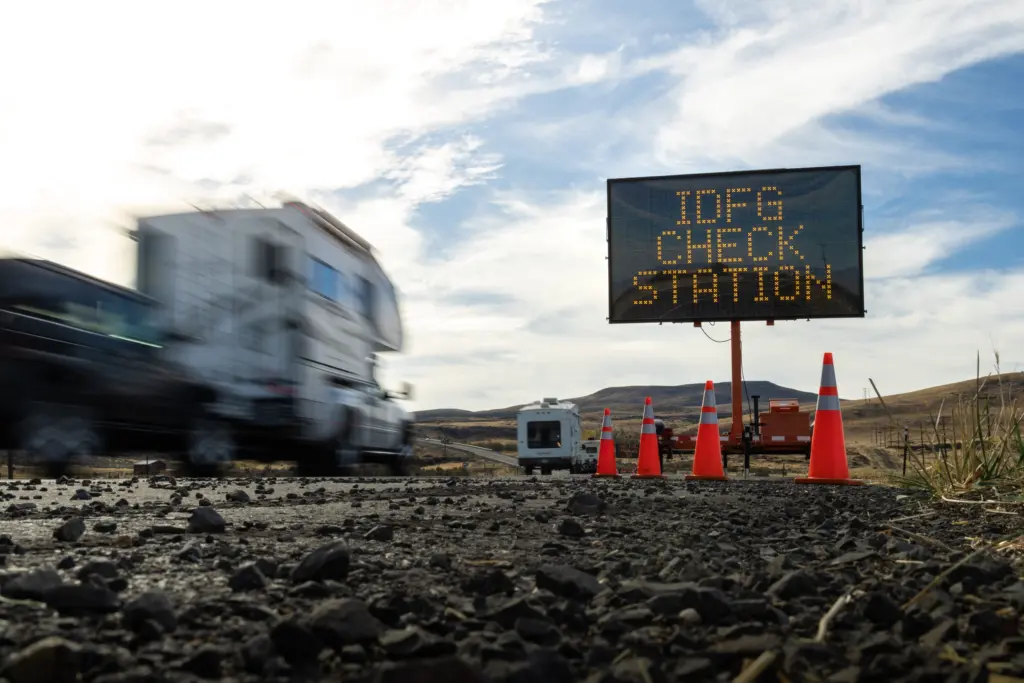
Fish and Game provides several ways to submit samples, including regional offices, check stations, sampling sites and remote collection locations such as freezers and head barrels. The agency will also accept voluntary deer and elk samples from other hunting units statewide.
Hunters remain key to monitoring disease
Chronic wasting disease is a fatal neurological disease affecting members of the deer family. According to Fish and Game, hunter participation is especially important because there is no live test the agency can use for its statewide monitoring program.
The agency’s goal is to keep the percentage of infected deer and elk low and limit the disease’s geographic spread. Fish and Game says CWD cannot be eradicated once established because it can remain in the environment for decades.
The rules also extend beyond Idaho’s borders. It is illegal to bring into Idaho carcasses or certain animal parts from deer, elk, moose or caribou harvested in another state, Canadian province or country with a documented CWD case. Hunters taking Idaho-harvested animals elsewhere are advised to check the regulations in every state they plan to travel through.
With hunting seasons approaching, Fish and Game is asking hunters to know whether their hunting unit requires testing and, in management zones, understand carcass transportation rules before heading into the field.