BOISE, ID – It may seem like you’re helping, but handouts for wintering deer and elk ultimately harm the animals and people.
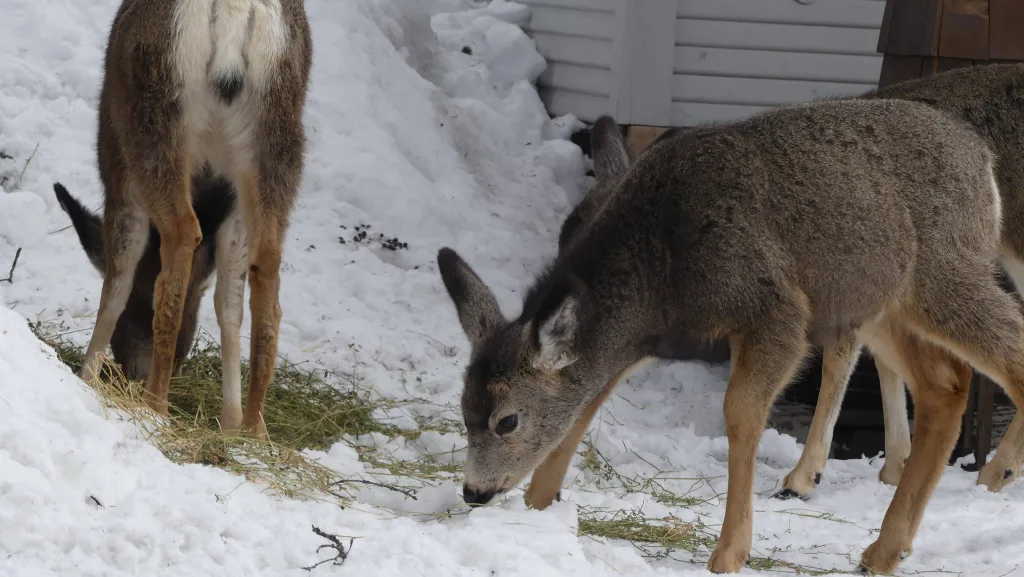
Seeing a herd of deer outside your door or a head of elk may seem idyllic, and during winter they can almost seem tame. But truth is they’re wild animals that need to remain wild animals, and feeding them can quickly create a variety of problems.
Here’s how a simple well-meaning act can lead to a neighborhood-wide conflict.
The same sad story repeats each winter
A neighbor will leave feed on their property all winter. The wintering deer catch wind of this 24-hour eatery and tell their out-of-town friends. The numbers grow, and pretty soon, other wildlife — including coyotes and cougars — hear about this backyard buffet as well.
The deer and elk eat what’s available and start patrolling the neighborhoods for more readily-available grub, while predators start sourcing their own food — including household pets — as residential conflicts arise from “wild” animals suddenly becoming full-time residents in neighborhoods.
Regardless of how cute, fuzzy, or “hungry” those deer and elk look this time of year, please remember: Generally speaking, they are adapted to winter conditions, or if the conditions don’t allow, migrate to milder climates. They do not need a tray of feed laid out in the backyard in order to survive the winter. They’ve done it for thousands of winters before, and they’ll do it again this winter.
Come one, come all
Folks usually have good intentions and are only trying to help. But feeding wildlife typically does more harm than good.
Deer and elk can face health issues when well-intended — but ill-informed — people choose to feed residential wildlife. Feed left out for one deer or elk can quickly lead to more. Large quantities of wildlife in small areas can increase the chances of diseases spreading among the population.
Deer and elk digestive systems have also naturally adapted to different types of forage for different types of year. During winter, they’re adapted to digest dried, low-nutrient forage. Adding unnatural, rich food to their diet can create serious digestive problems, bloat and even death.
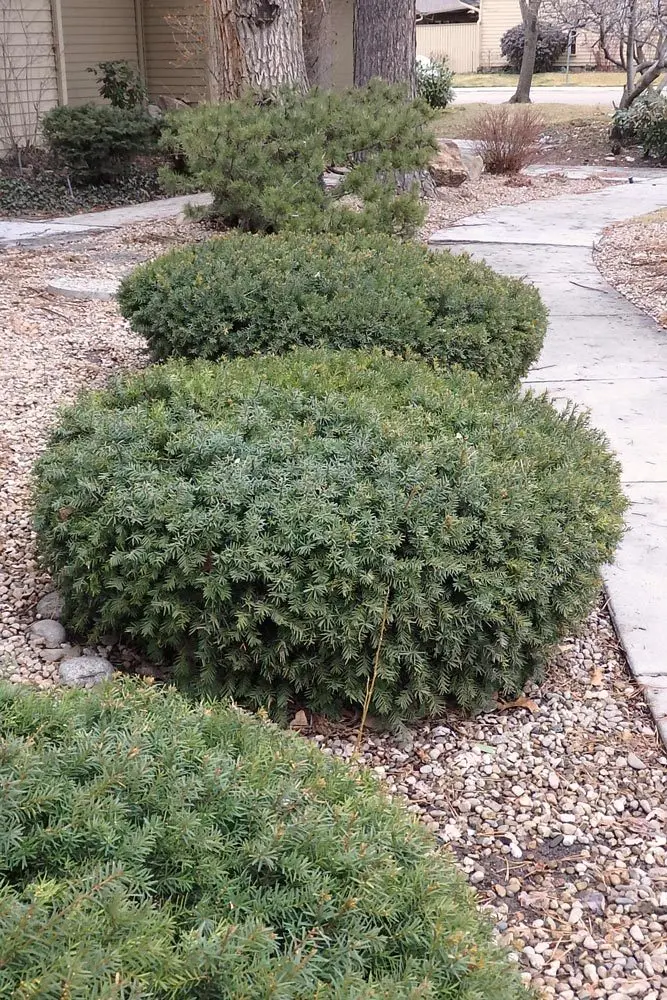
Feeding deer and elk in neighborhoods can also attract them to deadly plants commonly used in landscaping, as was the case in January 2022 in the Wood River Valley. Despite Blaine County’s ordinance restricting the planting of these poisonous plants, five elk were found dead in residential areas after they consumed toxic yew plants. Two of those elk were calves. In 2015-16, the same noxious yew plant killed at least 20 elk in the same area.
As more deer and elk congregate in towns, the chances of vehicle collisions also increase. Deer and elk aren’t the best at reading crosswalk signs while they roam town searching for food sources. Hitting a large deer or even larger elk could ruin a person’s day, not to mention the animal’s day. Motorists should drive cautiously when they’re traveling through areas where wildlife may be present.
Feeding a few deer can very quickly lead to many more looking for handouts, concentrating unnaturally high numbers in small areas, which increases the chances of diseases and parasites spreading among the population. Densely congregated deer and elk create conditions ideal for disease outbreaks.
The impacts of social media
It’s a sad reality, but staging wildlife photos and videos is becoming more and more of an online trend. People on social media carelessly lure in wildlife with food, and take a selfie with the critter while it munches. Photos and videos can go viral, inflating a person’s ego enough to do it again for even more social media engagement.
Pretty soon, the animal becomes used to being fed and repeatedly returns expecting another handout, and more animals may follow. This kind of behavior ultimately spells trouble for wildlife. An animal that’s lost its fear of humans can create a whole web of problems for people, their pets, and sadly, the animal itself. At some point, Fish and Game has to intervene. Relocation might be the best-case scenario, but in most cases, euthanizing the animal is the only solution if the animal ends up threatening or harming a person or pet.
Issues all across the state
After passing a no-feeding ordinance in September 2023, the city of McCall is dealing with a long-standing problem with town deer. As the name implies, town deer spend most of their time living in town to take advantage of a town’s ample food supply, snow-free roads and sidewalks.
These animals should be migrating, but since they can survive winter in town, they reside there year-round. As plowed roads become main travel routes for deer, car accidents are common, and injured deer must be euthanized.
Deer also attract predators
For some, the spectacle of wild deer appearing “tame” as they stroll down the sidewalk and graze in a neighbor’s front yard is the perfect photo-op, causing some townsfolk or tourists to encourage this unnatural behavior. But time and time again, this proves to be detrimental for not just deer, but predators, too, as Fish and Game’s Southwest Regional Wildlife Manager Regan Berkley explains.
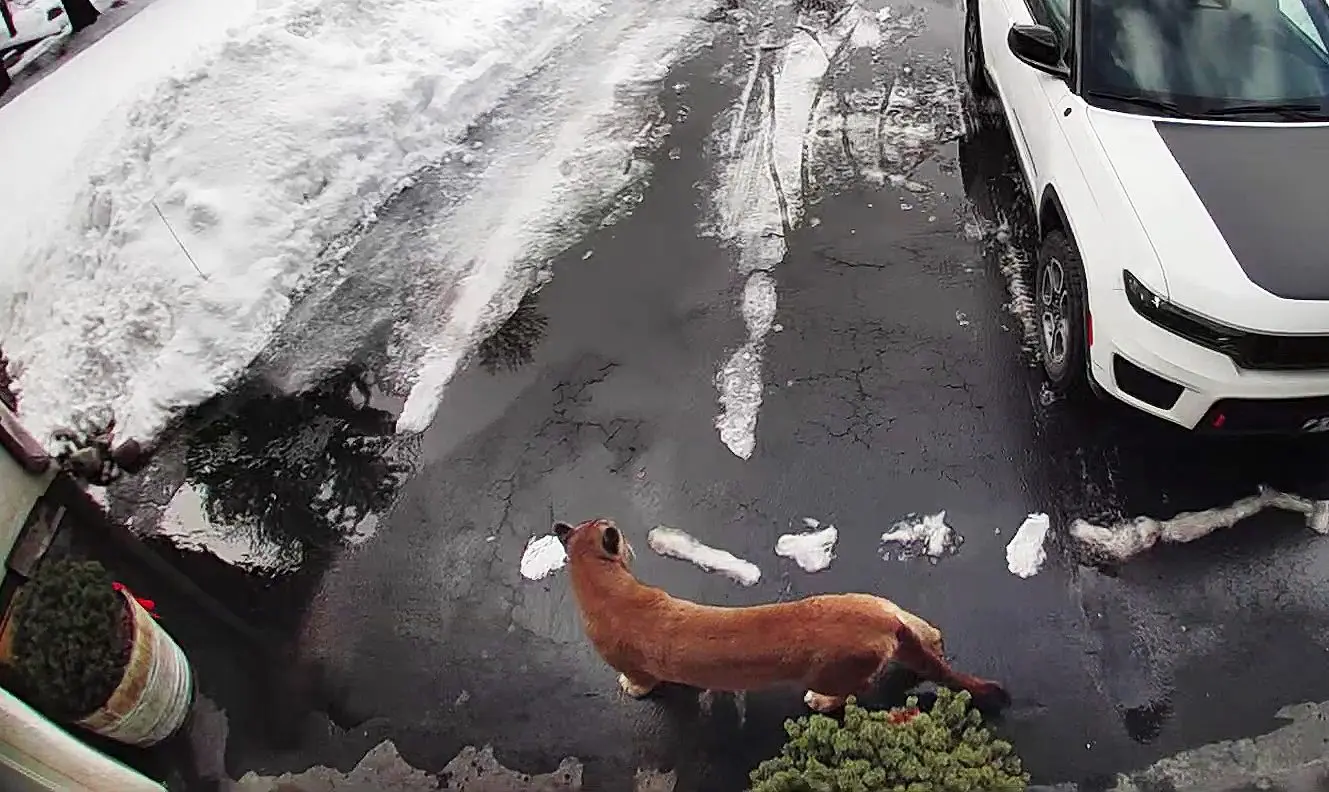
“The more deer that concentrate in an area, the higher likelihood of predators moving into that area,” Berkley said. “A few winters ago, we saw increased mountain lion sightings witnessed by numerous people or their doorbell cams.”
Once a mountain lion, coyote or any other large predator discovers a buffet of town deer, it doesn’t take long for them to move within city limits, sometimes right up to one’s backdoor.
“Any time we have mountain lions in close proximity to people, our primary concern is for public safety,” said Berkley. “Our level of concern rises when lions start to exhibit nontypical behavior, such as being active in the middle of the day and losing their fear of humans, or preying on domestic pets, which is why continuing to receive reports from the public is so important.”
What seems harmless is often the opposite
Fish and Game always recommends against private feeding of deer and elk, and in many Idaho communities, it’s illegal. Artificially altering wildlife’s behavior almost always produces unintended and often negative consequences.
“Keeping all wildlife wild is the responsibility of all of us as humans living in wildlife habitat,” Berkley said.
The story repeats farther north in the Panhandle and Clearwater, where the sight of white-tailed deer, turkey and moose meandering through town is commonplace.
Knock on just about any door and you’ll hear stories of wildlife decimating freshly planted ornamental landscaping, or devouring the entire crop from a garden. While nearly all people love wildlife, wild animals living in neighborhoods creates conflicts between neighbors who don’t want their expensive landscaping or hard-earned fruits and vegetables turned into deer food.
Some towns have resorted to other alternatives to deal with the destructive influx of hooved, feathery and hairy residents. In recent years, the City of Hayden Lake has pursued trapping and euthanizing resident white-tailed deer in town.
Trapping and relocating town deer is typically not an option due to possible disease transmission into wild populations. A relocation effort to remove town deer was halted in the City of Cascade because the deer were infested with lice that would be transmitted to wild deer if the town deer were released into the wild.
Fish and Game feeds only during emergency situations
In very rare cases, Fish and Game managers will supplement a deer or elk’s diet with winter feed in emergency situations. Extreme winters can sometimes cause winter forage to become limited or unavailable, sometimes for prolonged periods of time.
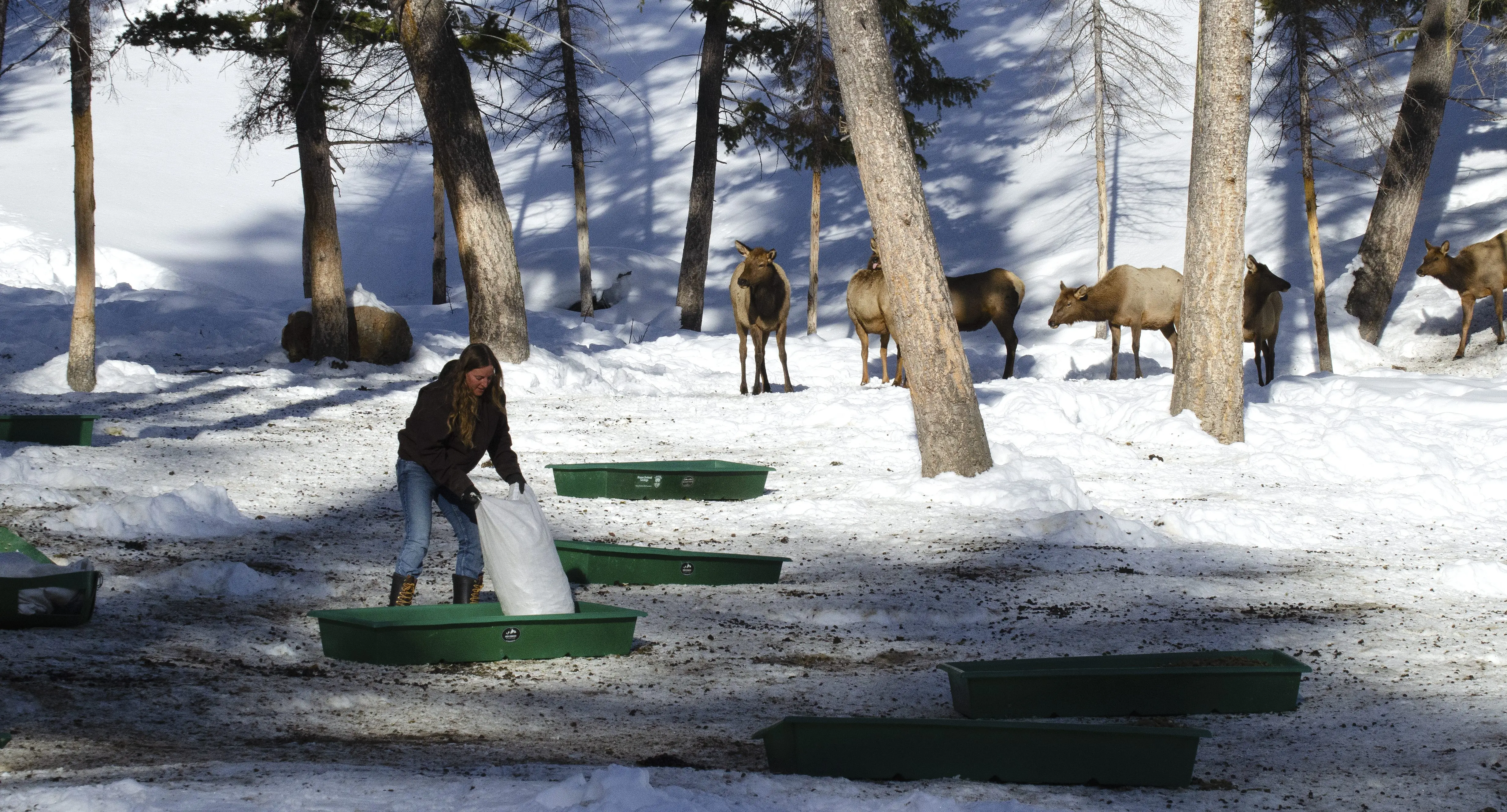
Fish and Game will also feed wintering deer and elk on an emergency basis in order to prevent conflicts between big game and agricultural operations, as well as a means of luring big game herds away from congested freeways or onramps.
However instances such as these are uncommon. Most winters, snow depths and temperatures do not pose a threat to big game herds.
Moral of the story
If you wish to help wintering wildlife this year, rather than feeding, take out your binoculars and observe them from a distance. Appreciate the fact that you live in a place that provides deer and elk a suitable habitat during certain parts of the year. You will do more good for the deer and elk by not feeding them.