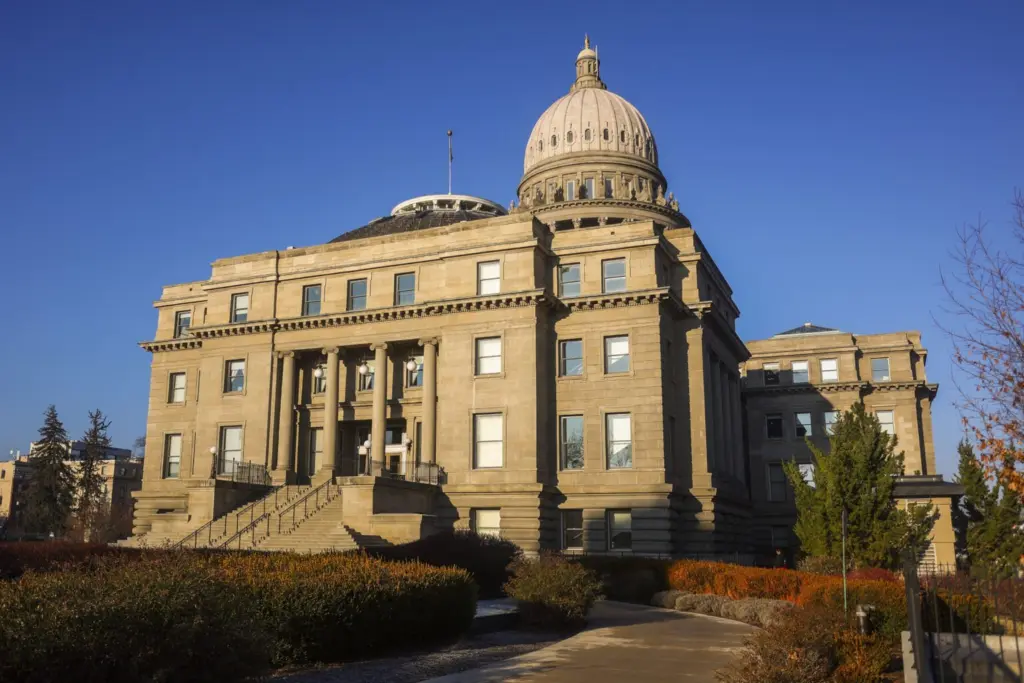
BOISE, ID – Idaho may adopt nearly all the tax deductions that were included in the federal “One Big Beautiful Bill Act,” under a legislative proposal made Friday. Lawmakers estimated it will cost the state $155 million each year the deductions are in effect.
The Legislature every year must adopt an annual tax conformity bill, because Idaho essentially uses the federal tax code as a template for its own. The annual bill often just changes the tax year date or makes other small technical changes.
“This is a much bigger bill this year,” Rep. Jeff Ehlers, R-Meridian, said in the House Revenue and Taxation Committee on Friday.
There are about 39 tax code changes from the massive federal tax and spending bill — such as no taxes on a worker’s tips, no taxes on some workers’ overtime, and various business deductions — most of which have financial implications for the state.
How Idaho conforms to ‘big, beautiful’ bill amid budget woes will be central to 2026 Legislature
Ehlers presented a bill that would adopt nearly all the changes. Idaho had previously “de-coupled,” or chose to not adopt federal tax changes related to bonus depreciation, which is an immediate business tax write-off for certain long-lasting assets, so his bill did not include those changes.
Ehlers estimated the changes will cost $155 million annually, which is the same as what the governor projected in his budget proposal.
Idaho had entered the year facing a projected budget deficit, and although revenues have largely been projected to stabilize in the last state revenue report, lawmakers are still weighing major cuts to keep the budget balanced.
Rep. John Gannon, D-Boise, questioned Ehlers’ cost estimate, noting that other states’ estimates have been much higher, as well as the analysis by the nonprofit Tax Foundation.
Idaho officials have cited estimates on the cost of adopting all the tax changes that ranged from $115 million to around $400 million, the Idaho Capital Sun reported.
“We have to get the fiscal impact down first before we can proceed, so that we know exactly what the impact is,” Gannon said.
The timing of tax conformity may impact Idaho Tax Commission
Ehlers’ bill also adopts the same retroactive timing of the federal changes. For personal taxes, people may deduct expenses going back to Jan. 1, 2025. For the business research and experimentation deduction, the changes are retroactive to 2022.
This would not only have a more immediate impact on the state’s revenue, but it also would have a more immediate impact on the state agency that administers tax policy.
In a summary document created by the Idaho State Tax Commission, obtained by the Sun through a public records request, the agency said adoption on 2025 taxes will mean the commission must “immediately redesign forms, direct software vendor updates, and provide revised training for tax professionals.”
“This will also result in taxpayers having to file amended returns,” the summary document said.
The document said that if the state chose instead to adopt the changes effective Jan. 1, 2026, the commission would have nine months to a year to complete those tasks.
“The agency will have time to communicate the changes to taxpayers, and fewer taxpayers will have to file amended returns,” the document said.
Asked why he chose to use the retroactive to 2025 date, Ehlers noted that some of the changes expire in 2028, such as the no taxes on tips or overtime.
“If we don’t allow them to take it in 2025, then they’re missing one of the four years,” Ehlers said in an interview. “So that’s like 25% of the benefit; they’re only going to take it for the three years. So, we wanted to make sure that they got the full four years of the One Big Beautiful Bill.”
The business deductions that go back to 2022 also did not concern Ehlers. He said that the revenue dips the state saw in November were likely due to businesses already changing behavior under the assumption that the state would adopt that tax deduction. Staff from the Division of Financial Management echoed this prediction during a previous hearing on the state’s economic outlook and revenue.
He said he was confident the Tax Commission could adjust to the changes in time for people to pay their 2025 taxes.
“We’ve made it happen in the past in a (significantly) reduced timeline,” Ehlers said. “We’ve done it every year, and we can do it again this year.”
Idaho Capital Sun is part of States Newsroom, a nonprofit news network supported by grants and a coalition of donors as a 501c(3) public charity. Idaho Capital Sun maintains editorial independence. Contact Editor Christina Lords for questions: info@idahocapitalsun.com.