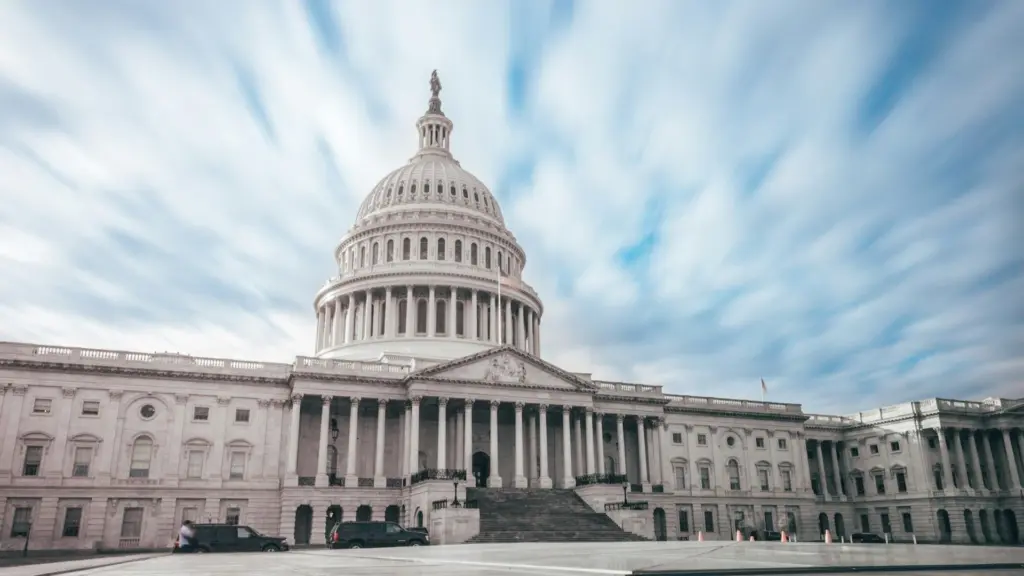
WASHINGTON D.C. — The federal government began a partial shutdown early Saturday, even though Senate Democrats and President Donald Trump reached a deal that allows lawmakers more time to negotiate new constraints on immigration enforcement.
The Senate voted 71-29 on Friday evening to pass the reworked government funding package before a midnight deadline. But the earliest the House could clear it for Trump’s signature is Monday evening, when members return from a recess.
The scheduling problem guarantees the current spending law, which Congress approved in November at the end of the last shutdown, will expire without a replacement.
However, the effects on the nation are not expected to be as dramatic as those during the historic 43-day shutdown last year. Since Congress has already passed half of the dozen annual appropriations bills, this shutdown will only affect part of the government, and possibly with moderate impacts since it may only last a few days until the House acts.
The unexpected hitch in progress toward passing the $1.2 trillion package came about after immigration agents killed a second person in Minneapolis and Senate Democrats demanded reforms be included in the Department of Homeland Security spending bill. Trump has agreed to two weeks of negotiations on the DHS bill, which includes funding for Immigration and Customs Enforcement, Customs and Border Protection and other immigration enforcement agencies.
Senate Appropriations Chairwoman Susan Collins, R-Maine, said the full-year measures are “fiscally responsible bills that reflect months of hard work and deliberation from members from both parties and both sides of the Capitol.”
“The package also continues funding for the Department of Homeland Security for two weeks to allow us additional time to evaluate further changes in ICE procedures beyond those that we have already included in this bill,” she said.
Once the package becomes law, she said, 96% of government will be funded for the fiscal year that began back on Oct. 1.
Washington Democratic Sen. Patty Murray, ranking member on the Appropriations Committee, said approving the five full-year bills and a stopgap for the Homeland Security Department represented “a simple, commonsense path forward.”
“It is good news we have a deal to fund these key programs families count on while work continues on serious DHS accountability over the next two weeks,” Murray said. “It could not be more clear that ICE and CBP are out of control and that we cannot just wait for the same president who caused this mess to address it.”
Senators from North Carolina, South Carolina tangle
South Carolina Republican Sen. Lindsey Graham said in a floor speech several hours before voting began that he would hold up quick consideration of the funding package until leaders agreed to schedule floor votes on two separate proposals.
The first would establish some sort of criminal penalty for local or state officials who do not cooperate with federal immigration enforcement agents, often called sanctuary cities. The second would clear the way for conservative organizations to file lawsuits against former Justice Department special counsel Jack Smith for his investigation into efforts to overturn the 2020 election results.
“What is the right answer when a state or a mayor says, ‘I don’t like this federal law, I’m not going to do it because there’s good politics for me.’ I think you risk going to jail,” Graham said. “We cannot live in a country this way, where you get to pick and choose the laws you don’t like.”
A spokesperson for Graham later confirmed to States Newsroom that the senator didn’t want the votes Friday but “just sometime down the road.” Graham released a statement later in the afternoon that Senate Majority Leader John Thune, R-S.D., had agreed to schedule floor votes “at a time to be determined.”
North Carolina Republican Sen. Thom Tillis spoke directly after Graham and rebuked him for delaying the entire funding package.
Tillis called on senators from both political parties to start negotiations about “common sense sorts of ways to lower the temperature” on immigration enforcement.
He said officials should “hold people accountable when they’re harming ICE agents, and hold ICE agents accountable if they reacted in a way that’s not consistent with their law enforcement training.”
Tillis argued that Graham’s approach to pushing for amendment votes that are unlikely to succeed wouldn’t have any tangible, real-world impacts.
“One senator has a lot of power. And if you use it judiciously, you can be productive and make a difference,” Tillis said. “But if you use it in the heat of the moment, you can make a point that not a damn person is going to remember a month later.”
Some departments, judiciary affected
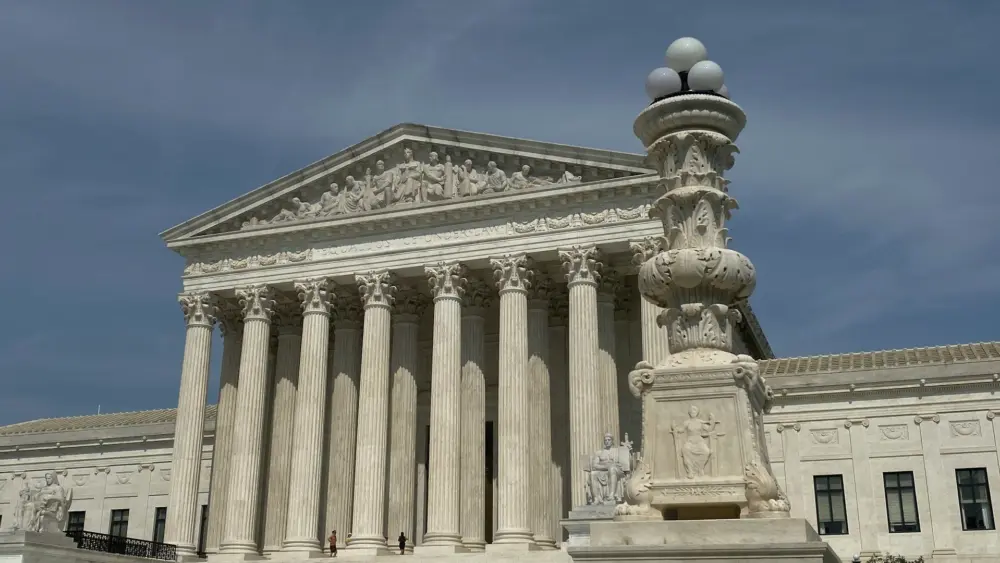
The departments of Defense, Education, Health and Human Services, Homeland Security, Housing and Urban Development, Labor, State, Transportation and Treasury will all experience the funding lapse. The Executive Office of the President, Supreme Court and judicial branch will also be affected.
All other federal programs will continue uninterrupted, since their spending bills have become law, including those at the departments of Agriculture, Commerce, Energy, Interior, Justice and Veterans Affairs, as well as military construction projects and funding for Congress.
A spokesperson for the Administrative Office of the U.S. Courts wrote in a statement earlier this week that “operations would continue using court fees and other available balances through Wednesday, February 4.
“The following day, on February 5, the Judiciary would begin operating under the terms of the Anti-Deficiency Act. Federal courts would continue operating, but would be limited to activities needed to support the exercise of the Judiciary’s constitutional functions and to address emergency circumstances.”
House Democrats demand changes in DHS bill
A spokesperson for the White House budget office said the departments and agencies affected by the funding lapse can use their contingency plans from the last shutdown unless they had “big changes.”
Those documents detail how many employees continue working without pay during a shutdown and how many are furloughed.
House Minority Leader Hakeem Jeffries said Democrats wouldn’t support the spending bill unless major reforms are made in the way immigration officers conduct enforcement.
“We’re going to have to evaluate what the real opportunity is to get dramatic changes at the Department of Homeland Security. It has to be bold,” he said during a morning press conference. “The Senate has to do its thing before we have anything to evaluate.”
Washington State Standard is part of States Newsroom, a nonprofit news network supported by grants and a coalition of donors as a 501c(3) public charity. Washington State Standard maintains editorial independence. Contact Editor Bill Lucia for questions: info@washingtonstatestandard.com.