BOISE, ID – A new proposed amendment to the Idaho Constitution would remove the requirement that state-owned endowment lands be managed for the maximum financial return for beneficiaries.
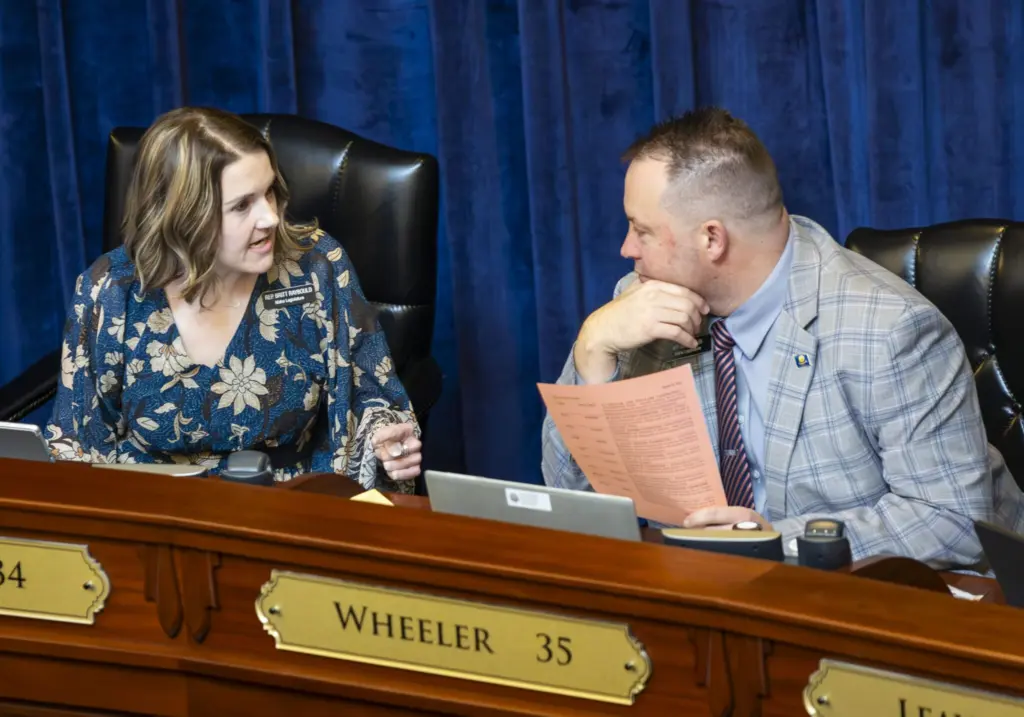
Rep. Britt Raybould, R-Rexburg, who is sponsoring the proposed constitutional amendment, House Joint Resolution 8, said the proposal would change how Idaho approaches managing state endowment lands and state-owned public lands.
Raybould said the requirement to manage state lands for the maximum financial benefit of beneficiaries places pressure on the Idaho State Board of Land Commissioners to sell such lands. In place of that requirement, the proposed amendment would prioritize ongoing revenue generation through things like timber harvest, mining or grazing leases, followed by preserving public access for recreation, hunting, trapping and fishing.
“The proposal before you is fairly straightforward from the standpoint of it essentially takes existing practices and reduces the stress on the state when it comes to having to do with the sale or exchange of these endowment or public lands,” Raybould told the House State Affairs Committee. “It prioritizes ongoing revenue generation, which can take the form as it has in the past of timber sales, mining, grazing and other activities that have been leased previously on state land.”
Raybould’s proposal is the second major public lands-related amendment to the Idaho Constitution introduced this year in the Idaho Legislature. Sen. Ben Adams, R-Nampa, is proposing a different amendment to the Idaho Constitution that is designed to protect any new land acquired by Idaho from the federal government from being sold. On Wednesday morning, Adams unveiled a new version of his proposal, which will be given a number and posted to the Idaho Legislature’s website after it is read across the desk on the floor of the Idaho Senate.
How does the proposed constitutional amendment on state endowment land work?
Raybould’s proposal would remove the requirement to manage state endowment lands for the maximum financial return and replace it with new language, which reads, in part: “Priority of use shall be given first to revenue-generating activities on or from such lands, followed by preserving and promoting the public’s access to recreate, hunt, fish, and trap on such lands
Public access shall not be denied as long as such recreation, hunting, fishing, and trapping activities do not impede contracted revenue-generating activities.”
Raybould’s proposed amendment also includes a second section that states that land acquired by Idaho from the federal government shall be classified as public land. Such lands would “subject first to any valid, existing rights and obligations attached to such lands.”
Even though it removes the requirement to manage state lands for the greatest financial return, Raybould’s proposal still does allow the state to sell land if the other uses cannot be met.
“What I am looking for is to basically expand the toolbox that’s available to the land board, to not make it come down to the final price tag that we can put on a parcel, and instead that we can approach it more holistically,” Raybould said.
The issue of selling state endowment lands for maximum financial return came up in 2025, when the Idaho State Board of Land Commissioners voted to sell off 160 acres of state endowment land located near the eastern Idaho town of Driggs, in the shadow of Teton Range. In spite of widespread public opposition, and even though the property was leased for grazing until 2032, the land board voted to sell the property because of the Idaho Constitution’s requirement to generate the maximum financial return. State land managers said they anticipate selling the property for millions of dollars.
What is the process to amend the Idaho Constitution?
The bar for amending the Idaho Constitution is high. First, a two-thirds supermajority of both the Idaho House of Representatives and Idaho Senate must vote to approve the proposed amendment.
If that happens, then the proposed amendment would go before Idaho voters in the next general election in November, where it would take a simple majority vote to approve the amendment.
Members of the House State Affairs Committee voted Wednesday morning to introduce Raybould’s proposal, which clears the way for it to return to the committee for a full public hearing.
However, some legislators from both political parties had pointed questions for Raybould and appeared anxious about amending the state constitution.
Rep. Monica Church, D-Boise, told Raybould she worries that the proposed amendment signals that Idaho wants to take over federal public lands and would have a vehicle for selling them.
“I believe that is exactly what it says, that we want them and we will sell them if, as you said, etc., etc., etc.,” Church said.
Idaho Capital Sun is part of States Newsroom, a nonprofit news network supported by grants and a coalition of donors as a 501c(3) public charity. Idaho Capital Sun maintains editorial independence. Contact Editor Christina Lords for questions: info@idahocapitalsun.com.