OLYMPIA, WA – Legislation in the Washington State Legislature that modifies sex offender registration laws by lowering the criminal penalties for Failure to Register is seen by bill opponents as another step toward putting criminals’ rights ahead of victims’ rights.
House Bill 2403 – which reduces repeat offenses from a class B to a class C felony, decreases the seriousness level, and removes repeat violations from being considered “sex offenses” under sentencing laws – is sitting in the House Rules Committee but could be pulled to the House floor at any time.
Supporters of the legislation argue that the crime is largely administrative and should be handled through community custody rather than incarceration.
Current law typically treats failure to register as a Class C felony for first offenses (up to 5 years in prison) and a Class B felony for subsequent offenses (up to 10 years in prison).
Offenders must register with the local sheriff’s office within three business days of release, moving, or changing their name or address.
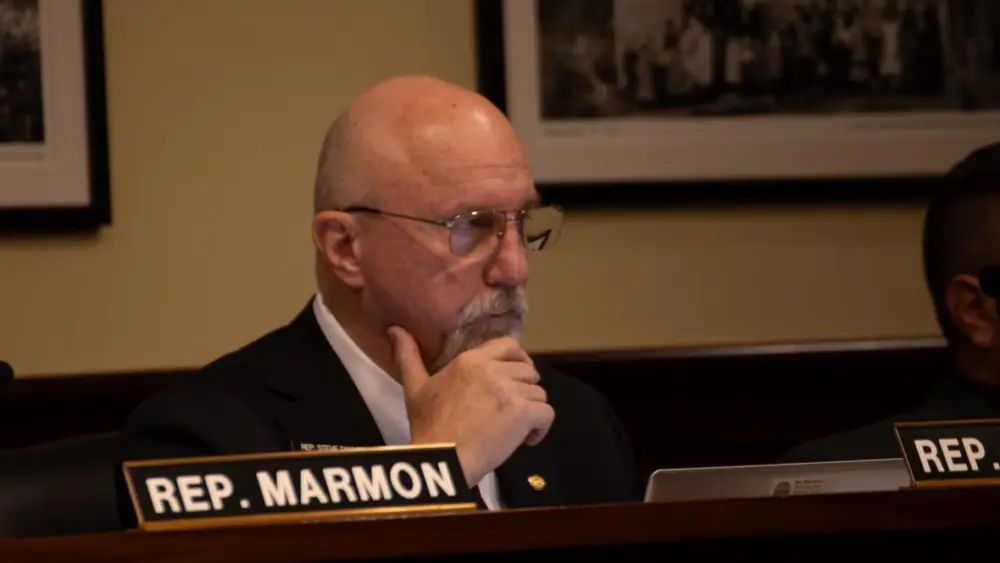
Rep. Brian Burnett, R-Chelan, who is the former sheriff of Chelan County, told The Center Square he has major concerns about the bill and worries it will weaken accountability for sex offenders and put public safety at risk.
“What they’re wanting to do is they’re wanting to minimize that charge and that conviction,” he said. “They failed to register. They failed to comply with the simple things. It’s not rocket science. It may be inconvenient, but it’s not hard. There are people there that help walk you through this process, but they want to minimize that and bring that down into a misdemeanor.”
Burnett says the legislation goes further to minimize the impact on the convicted offenders.
“It says you have to have multiple charges before it rises to the level of a felony sex offense. They said it shouldn’t be a sex offense, then it should only be a gross misdemeanor,” he said. “But here’s the deal: Statistics say that those who avoid registration, purposely, are the red flags. Okay, those are the ones that are more likely to be deviant and devious to do things to harm our children, our most vulnerable.”
There are more than 20,000 registered sex offenders in Washington state classified by risk levels based on their likelihood to reoffend.
Level 1 offenders are at a low risk of re-offense. Level 2 offenders pose a moderate risk of re-offense. Level 3 offenders pose a high risk of re-offense.
Level 2 and 3 offenders, as well as transient Level 1 offenders, are listed on the Washington Association of Sheriffs and Police Chiefs public registry.
“Failure to register as a sex offender is not a paperwork mistake. It is a deliberate choice to avoid supervision and accountability,” Burnett said in a news release about his objections to the bill. “As a sheriff, I dealt with this issue firsthand. Registration is one of the most important tools law enforcement has for protecting communities and monitoring known offenders. Weakening consequences for repeated violations is the wrong direction.”