OLYMPIA, WA – Washington could have become the second state in the country to adopt a framework intended to reduce textile waste and hold companies accountable for the lifecycle of their products.
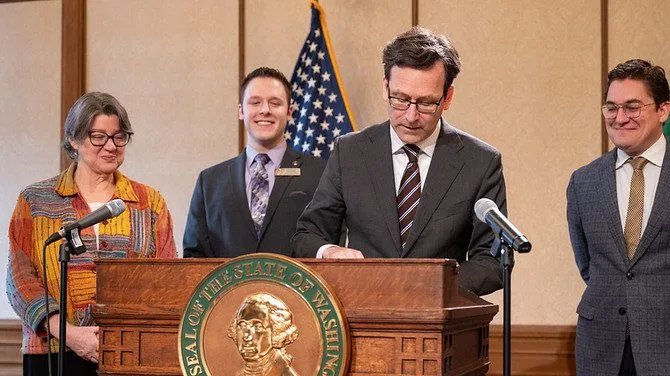
But a bill to establish that system, sponsored by Rep. Kristine Reeves, D-Federal Way, did not advance out of the House Appropriations Committee by a Monday deadline and won’t be moving ahead this year.
House Bill 1420 called for an “extended producer responsibility” program. This would have required companies to fund expanded consumer access to collection sites and infrastructure for sorting, repairing and recycling garments and other textile goods.
An amendment sharply narrowed the bill to only mandate a study to determine how a potential regulatory program could be implemented. It would have required the passage of a future law before the program could be up and running.
But amid disagreements over who should pay for the study, even the slimmed-down version failed to get the traction needed to reach the House floor.
“We’ve made it really easy to overconsume,” Reeves said during a House Environment and Energy Committee hearing. “We can do the ‘and both’ of reducing textile waste while boosting our repair economy.”
Supporters say the measure is necessary to shift disposal costs from taxpayers and local governments to the companies that make and sell textile products — particularly in the era of “fast fashion,” where trendy, inexpensive clothing can have a short life in people’s closets.
Opponents called the bill premature and urged the Legislature to wait and see how a similar framework plays out in California, which adopted its Responsible Textile Recovery Act in 2024.
Last year, the Washington Legislature passed its first extended producer responsibility law, the Recycling Reform Act, which requires producers to fund packaging and paper recycling.
The textile program is “vastly more complicated,” said Peter Godlewski, government affairs director for the Association of Washington Business.
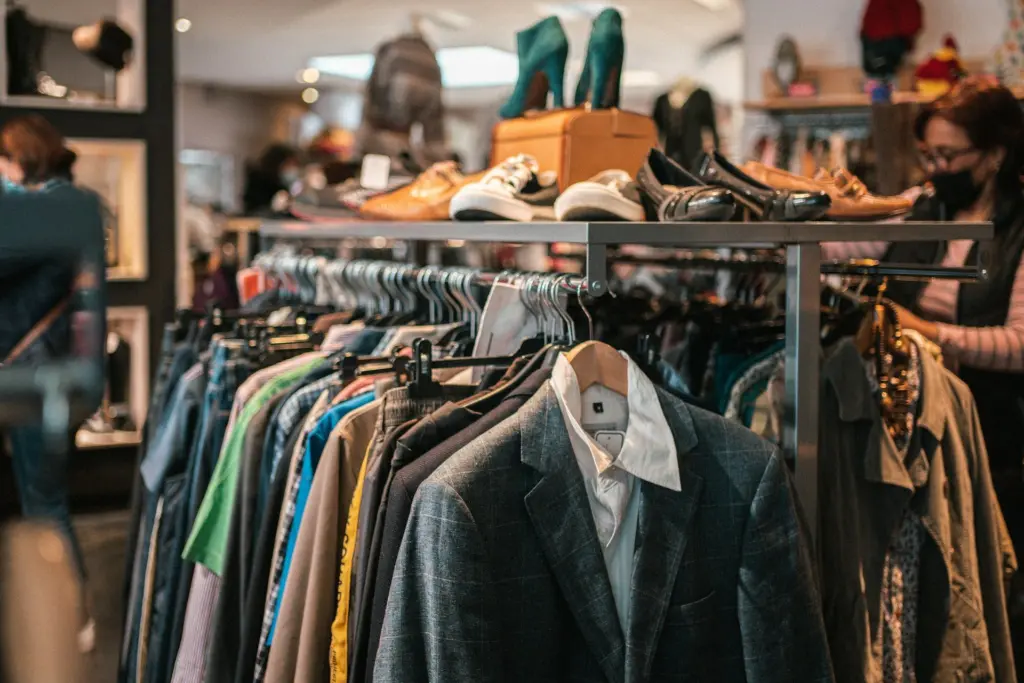
“There’s 15 different types of textiles in my suit jacket,” he added. “You can find a policy framework for managing that, but it’s very complicated.”
Developing a circular economy
During the bill’s first hearing, Reeves emphasized the need to change the fashion industry’s economy from linear to circular and pointed to low-income households “who have been doing this work for generations” by passing down clothes.
“We don’t actually have critical infrastructure to address the recycling need,” Reeves said in an interview. “We have to map the market … to figure out: what’s the missing infrastructure we would need to build?”
“It’s not like packaging,” she added.
If the bill is eventually enacted, Reeves said it could play out in various ways. Businesses could be incentivized to create “buy-back” programs for textile goods. Or households could get textile waste bins to be picked up regularly, similar to trash and recycling.
With the rise of fast-fashion, clothing sales nearly doubled from 2000 to 2015, according to Green America, a nonprofit advocacy group that focuses on sustainable economic practices. And the vast majority of those textiles come from other countries, namely China.
But even when those textiles are donated to secondhand stores, only about 30% make it to the merchandise floor, pointed out Heather Trim, executive director of Zero Waste Washington. The group is supporting the bill and was a driving force behind the packaging recycling legislation.
“An awful lot of stuff is getting bailed up in the back of the facilities and is either being sold pennies on the dollar to who knows what, maybe disposed, but also being sent to other countries,” said Trim. “And those other countries are now pushing back.”
The textile program proposed in the bill would unfold in stages.
First, textile companies would join a producer responsibility organization, or PRO. Then, that association would form a governing board and begin a needs assessment, scheduled to be completed in 2028. The needs assessment would review the state’s current scope of reuse, repair and recycling facilities and establish a budget and annual company performance standards.
As written, the bill considers different types of clothing as textiles but also other products such as handbags, backpacks, knitted accessories and workwear. It specifically exempts personal protective equipment, diapers and women’s menstrual products.
Textile producers with a gross revenue of $1 million or more would be required to join the association. One concern was including company uniforms as textiles, even though these items are largely unavailable to the public.
The Washington Hospitality Association, which represents hotels and restaurants, pushed back against including uniforms.
“Requiring a company to fund and participate in a PRO for uniforms … will add a cost and an administrative burden without much benefit,” said Kerry Dolan, the association’s government affairs manager.
The bill advanced out of the House Committee on Environment and Energy along party lines, with Democrats in support. But it did not get a vote in the Appropriations Committee. Reeves said she intends to reintroduce the bill next year.
Washington State Standard is part of States Newsroom, a nonprofit news network supported by grants and a coalition of donors as a 501c(3) public charity. Washington State Standard maintains editorial independence. Contact Editor Bill Lucia for questions: info@washingtonstatestandard.com.