BOISE, ID – Amid a backdrop of confusion and frustration, members of the Idaho Legislature’s powerful budget committee passed new fiscal year 2027 maintenance of operations budgets Friday that include 5% state budget cuts for most state agencies and departments.
For the last two weeks, several state agency directors and Gov. Brad Little’s budget chief Lori Wolff have warned that the additional new across-the-board cuts are unnecessary and will do lasting damage to core programs and services.
Republican Sen. Kevin Cook of Idaho Falls only needed 17 words Friday to describe the high stakes of the decision and the anxiety that some legislators and state officials are feeling about the across-the-board cuts.
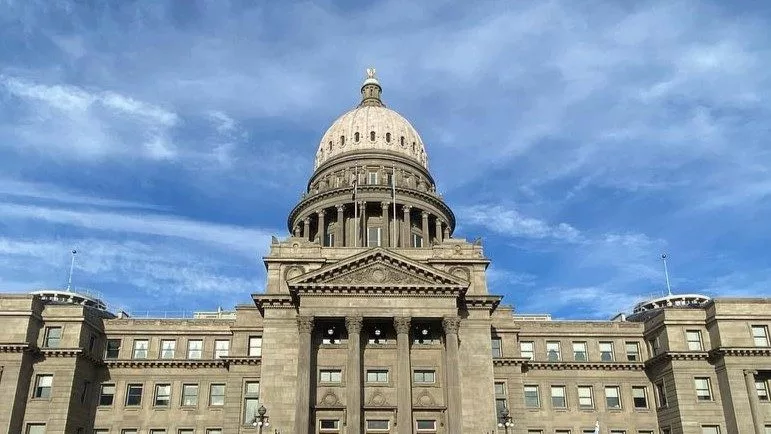
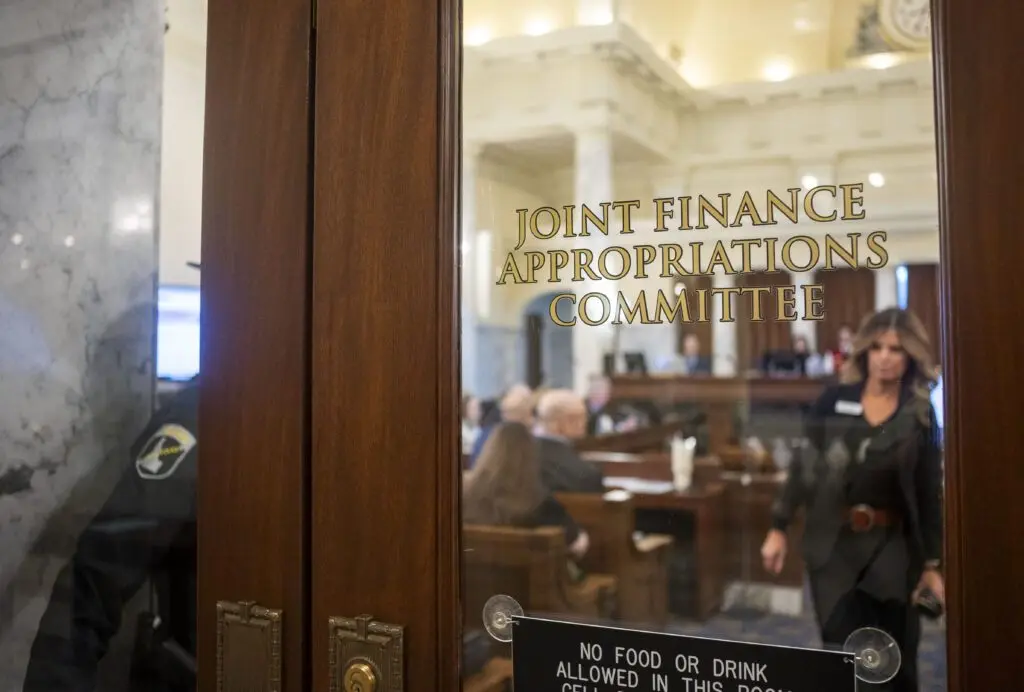
“We are passing something today that has the potential to break the state, and you know that,” Cook said at the beginning of Friday’s Joint Finance-Appropriations Committee meeting at the Idaho State Capitol in Boise.
Those cuts have the potential to delay tax refunds for Idahoans, hire fewer seasonal firefighters and increase wildfire risk, reduce water quality testing, cut back on mental health courts that have helped thousands of Idahoans turn their lives around, endanger the state’s crisis response system and more, according to a new series the Idaho Capital Sun published this week about the impact of the cuts.
Cook told members of the budget committee, or JFAC, that they should amend the day’s agenda to remove the vote on the maintenance of operations budgets, restore the 5% cuts and then adjourn the meeting to begin digging into the budgets to identify more precise, surgical cuts instead of the across-the-board cuts.
But Friday’s action by JFAC appeared to be a done deal and a foregone conclusion even before the morning’s votes were counted.
Sen. Jim Woodward, R-Sagle, attempted to make an alternative motion to add $10 million in additional funding into the public safety maintenance of operations budget to increase pay for Idaho State Police troopers.
However, one of JFAC’s co-chairs, Rep. Josh Tanner, R-Eagle, ruled that Woodward’s motion was out of order and did not let the committee vote on Woodward’s proposal to add in additional funding to the budget.
Tanner told Woodward his motion was out of order because the committee already took action Feb. 6 to approve statewide decisions that included approving the additional 2% budget cuts for fiscal year 2027 and beyond.
What is included in the Idaho Legislature’s maintenance budgets?
Over the course of three hours Friday, JFAC members passed a series of 10 maintenance of operations budgets that essentially include all of Idaho’s different state agencies, departments and branches of government lumped into the 10 budgets. Under the budgets, there is no additional money provided for raises for state employees or teachers next year.
Those maintenance budgets cover:
- The legislative branch of government
- public safety
- natural resources
- health and human services
- economic development
- the judicial branch of government
- Idaho’s statewide elected constitutional officers
- general government
- the Idaho State Board of Education
- Idaho’s K-12 public school system
The additional new cuts do not apply to Idaho’s K-12 public school system, Medicaid program, Idaho Department of Correction and Idaho State Police, Tanner and state budget analysts said.
JFAC’s three Democrats, Sens. Janie Ward-Engelking and Melissa Wintrow and Rep. Brooke Green, all D-Boise, voted against each of the budgets after saying the cuts were too deep, too imprecise and unnecessary.
Republican Kevin Cook and Woodward voted against most of the maintenance budgets after expressing similar concerns. Republican Reps. Dustin Manwaring, R-Pocatello; James Petzke, R-Meridian; and Rod Furniss, R-Rigby, also voted against some budgets after expressing concerns about the cuts and the process that led up to the cuts.
However, a core majority of 12 Republicans on JFAC, including six each from the Idaho House of Representatives and Idaho Senate, stuck together for every vote and were able to pass each of the 10 budgets with at least a 12-8 margin on Friday.
At times, particularly during the first hour of JFAC’s three-hour meeting Friday, some members of the committee appeared frustrated, confused, rushed and – for some – flat out angry with each other.
At one point, Senate Minority Leader Melissa Wintrow, D-Boise, asked Tanner not to joke around because of the serious nature of the decisions JFAC was weighing.
Tanner responded that he wasn’t joking, and said that JFAC’s decisions were difficult.
But, 13 minutes later, Tanner told Wintrow he was not listening when she asked him a question.
What happens next to Idaho’s state agency budgets?
The 10 maintenance of operations budgets next head to the full Idaho House of Representatives and Idaho Senate for consideration. It will take a simple majority vote of the members present in each chamber to pass the budgets. They would then be considered by the governor, who would have the option to sign them into law, veto them or allow them to become law without his signature.
JFAC members will also continue meeting each day and conducting smaller working group meetings to develop potential budget enhancements to bring to JFAC to consider adding funding into individual budgets.
Tanner promised JFAC members the working groups would be allowed to consider adding funding to individual agency budgets, but Cook and Ward-Engelking expressed concern about the likelihood of actually passing additional funding enhancements this year in an era of budget cutting.
JFAC is scheduled to reconvene at 8 a.m. Monday at the Idaho State Capitol in Boise. Even though Monday is Presidents Day, Idaho legislators generally do not take holidays off during the middle of a legislative session.
Idaho Capital Sun is part of States Newsroom, a nonprofit news network supported by grants and a coalition of donors as a 501c(3) public charity. Idaho Capital Sun maintains editorial independence. Contact Editor Christina Lords for questions: info@idahocapitalsun.com.