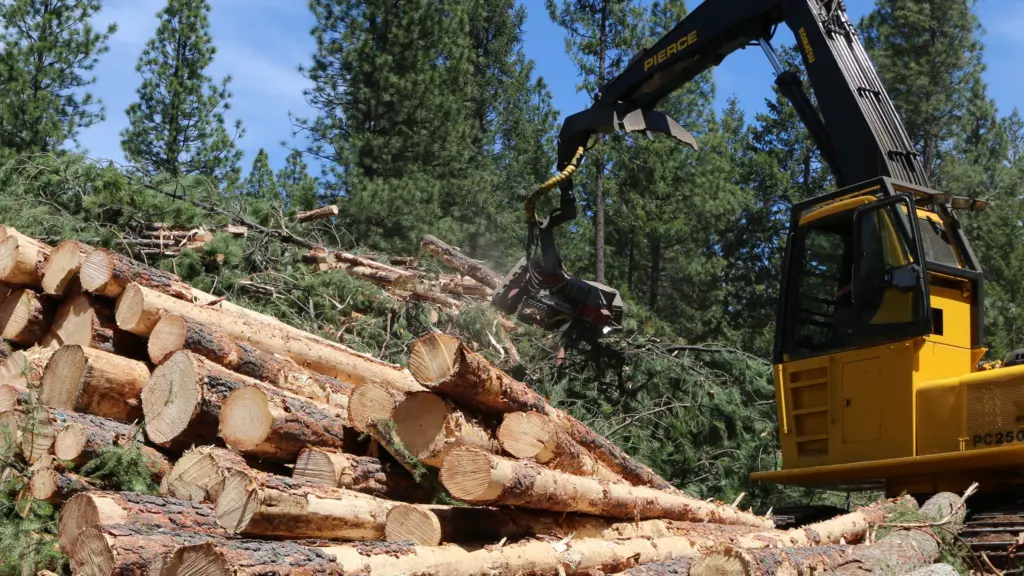
WASHINGTON, D.C. – Federal officials are attempting to open up millions of acres of forests in western Oregon for “maximum” timber production to “advance Trump administration priorities,” including areas that are home to federally protected, vulnerable species, the Bureau of Land Management announced.
The agency on Thursday shared in a notice of intent that officials will propose new updates to the Western Oregon Resource Management Plans that have governed logging and conservation on 2.5 million acres of forests in 17 Oregon counties for decades, and that were last updated in 2016. The notice kicks off a month-long public comment period that will wrap on March 23. The agency does not expect to hold any public meetings in advance of releasing its proposal, the notice said.
“Bringing timber production back to historic levels is essential for reviving local economies and reducing the threat of catastrophic wildfires,” said acting director of the land management bureau, Bill Groffy, in a statement. “President Trump has made it clear — enhanced domestic timber production is vital for our national security, economic prosperity, and effective wildfire management.”
Conservationists have called it a plan to return to a time when the agency clear cut roughly 2 acres of old-growth forests a day, and an attempt to override years of court precedent protecting vulnerable species that depend on the stands. That level of logging nearly drove the federally protected northern spotted owl and the marbled murrelet, a small seabird that nests in old-growth forests, to extinction.
“The public does not want to go back to the days of rampant old-growth clearcutting. They don’t want to go back to dead salmon and polluted rivers, or see their favorite places on public lands liquidated in order to maximize profits for the greedy few,” said Chandra LeGue, an advocate with the nonprofit conservation group Oregon Wild, in a statement. “These are treasured public lands, and we’re going to fight for them.”
In his March executive order “Immediate Expansion of American Timber Production,” President Donald Trump wrote that he’d use the Endangered Species Act Committee, commonly referred to as the “God Squad,” to override the species’ protections standing in the way of increased logging. The committee earned its nickname given its authority to revenue and determine the fate of imperiled species, and it’s been tapped rarely since its creation in 1978.
In a statement, Travis Joseph, president of the American Forest Resource Council, a trade association for the commercial logging industry, celebrated the bureau’s announcement that more acres would open for logging.
“Bureau of Land Management lands in western Oregon continue to grow significantly more timber each year than is harvested, contributing to overstocked forest conditions and increasing the risk of catastrophic wildfire across much of the region,” he said.
Joseph said they are some of the most productive timberlands in the world. Bev Law, a forest scientist and professor emerita at Oregon State University, said they are the most effective carbon-storing forests in the world, as long as they remain intact.
She called the plan to return to harvest levels of 1 billion board feet of timber per year “insanity.”
“These forests are the low hanging fruit — the temperate rainforests and the long-lived forests that we have in Oregon and Northern California — they live for thousands of years,” she said. “That’s carbon that’s not in the atmosphere, and they still keep taking in more carbon as time goes on. The best thing that we can do is to let the forest grow, to try and turn this (climate change) around.”
Arran Robertson, a spokesperson for Oregon Wild, said the plans governing the management of the federal forests in western Oregon exist because species were being driven to extinction in the 1990s.
The Bureau of Land Management under several presidential administrations has tried to allow more aggressive logging on the O&C lands, he said, but lawsuits stopped some of the most sweeping attempts, particularly under former president George W. Bush.
“Now this administration is going full throttle,” Robertson said.
This story first appeared on Oregon Capital Chronicle.