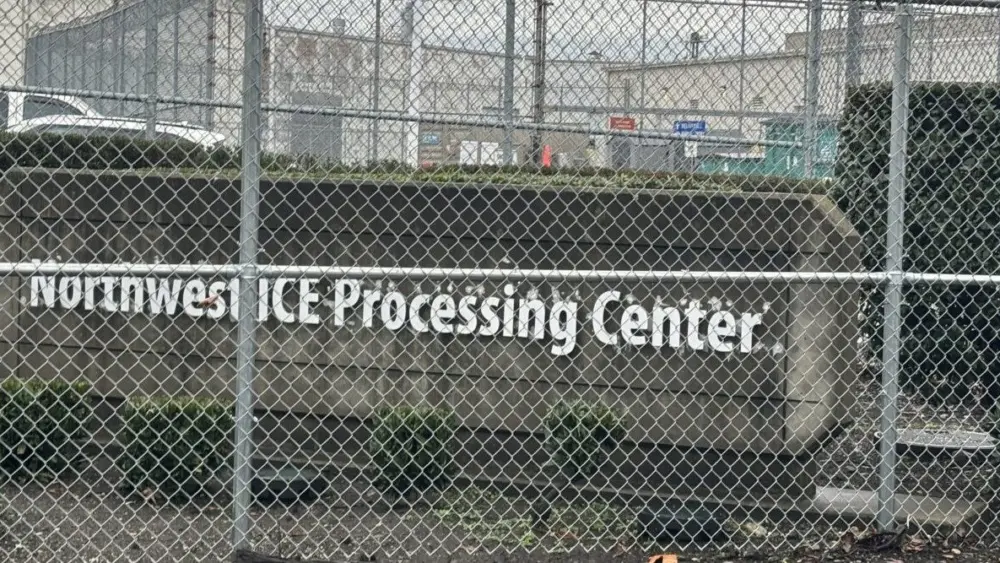
BOISE, ID – An Idaho House of Representatives committee voted Thursday to approve a bill mandating all local law enforcement agencies apply to enter agreements with federal Immigration and Customs Enforcement (ICE), despite opposition from law enforcement.
The House Local Government Committee voted 12-4 to send House Bill 659 to the full House for consideration, after a public hearing that lasted around an hour and a half.
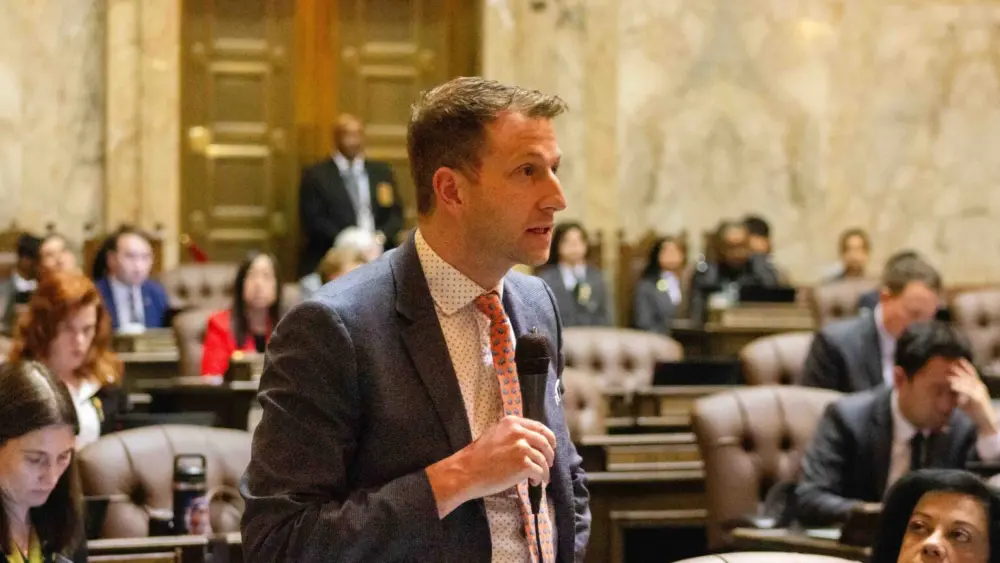
Rep. Dale Hawkins, R-Fernwood, presented the bill, which was among a slate of immigration-related proposals that he and a group of legislators announced earlier this year.
“We have laws; laws are to be obeyed,” Hawkins said. “There’s all kinds of arguments in some of the emails of some of the stuff that people do or don’t like. The reality is this, if you come to this country without permission, you’re in the country illegally.”
The bill would require all city and county law enforcement agencies to apply to what’s called the federal 287(g) program, in which local law enforcement enters an agreement to work more closely with the U.S. Department of Homeland Security, the parent agency of ICE. The bill would require agencies to look into programs that include but are “not limited to” the jail enforcement model and warrant service model.
The jail enforcement model allows local law enforcement to identify and process people who are in local jails who may be deported by ICE authorities. The warrant service office program allows local law enforcement to serve warrants to undocumented residents in jails. There are additional models, including “task force,” which allow officers to perform limited immigration enforcement in the field.
Under the bill, agencies that are “unable” to enter into a 287(g) agreement would need to publish a statement “declaring the reasons for its inability to enter into the memorandum and any efforts made to establish alternate cooperation with enforcement and removal operations of immigration and customs enforcement.”
Committee Chairwoman Rep. Barbara Ehardt, R-Idaho Falls, limited testimony to about 45 minutes, noting that not everyone who signed up to testify would have time to. Five people spoke in favor of the bill and four spoke against its passage.
Canyon County Sheriff Kieran Donahue, on behalf of the Idaho Sheriffs’ Association, opposed the bill, saying it was “an attack on the office of sheriff in so many ways.”
“We are a constitutional office,” Donahue said. “We do not do the (federal) government’s work. We do the state government and our constitutional duties.”
He said he didn’t enter into a 297(g) agreement because of the costs associated with backfilling positions while offers went away for training and that he’d still have to cover the salaries of officers who would need to travel for training. He said his office cooperates and assists ICE in other ways outside of the 287(g) program.
He also expressed concern that publishing the reasons an agency couldn’t enter an agreement would require public information that’s normally protected.
Hailey Chief of Police Steve England, on behalf of the Idaho Chiefs of Police Association, also spoke in opposition.
He noted that requiring all agencies to apply for this agreement may tie them to future presidential administrations with different approaches.
Members of a group called Secure Idaho, which formed in opposition to a 2024 ranked choice voting ballot initiative, spoke in support of the bill. Secure Idaho has expressed support for the entire slate of bills Hawkins and Sen. Brian Lenney, R-Nampa, announced in conjunction with Heritage Foundation fellow and former Idaho solicitor general, Theo Wold.
Secure Idaho co-founder Michael Angiletta cited reporting that immigration agent arrests across Idaho increased 797% in 2025.
“When enforcement activity increases at that scale, structured custodial coordination becomes even more important,” he said.
Idaho legislators: bill enforces the law, or is an ‘unfunded mandate’
There are 10 different 287(g) program agreements in Idaho, according to the ICE website. The Idaho State Police, through an agreement pursued by Gov. Brad Little, also has an agreement with ICE to transport certain inmates to immigration detention centers for deportation.
“There’s a lot of fear narratives going around right now, and it’s important that we stick to the integrity of the bill,” Rep. Clint Hostetler, R-Twin Falls, said, “and give options for those law enforcement that want to step up and protect the people.”
Rep. Monica Church, D-Boise, said she doubted the bill would “give resources” to law enforcement.
“What I heard from our law enforcement is that this is an unfunded mandate,” Church said. “The bill does not require that the feds pay for anything related to the costs, both up front and then to our communities by losing officers through all this training, and then, more importantly, maybe for this body, it does not even require that the state take the federal money if it were to be given to us.”
Church and Reps. Steve Berch, D-Boise; Rick Cheatum, R-Pocatello; and Josh Wheeler, R-Ammon; voted against the bill.
Hostetler is part of a group of Republican legislators who refer to themselves as “the Gang of Eight” that have taken a budget pledge that includes a promise to “stop taking federal money with strings attached.”
The bill will now be placed on the House calendar for a debate and vote at a later time. If passed, it will go to a Senate committee.
This story first appeared on Idaho Capital Sun.