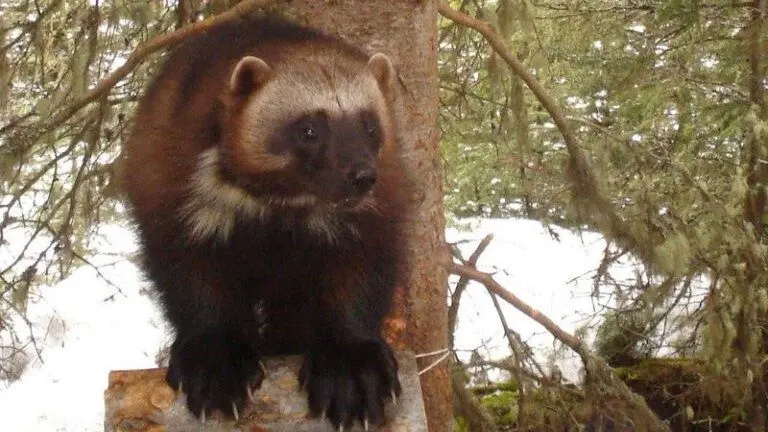
MISSOULA, MT – Another conservation group has filed a lawsuit challenging the federal government’s delay in determining critical habitat for wolverines, a federally listed threatened species. It says without a habitat designation, the government can’t begin the process of protecting the rare, high-elevation carnivores, which number less than 300 in the lower 48 states.
In January, a group of more than a dozen organizations and individuals filed a similar motion, alleging that the government had designated the wolverines as threatened in November 2023, and had a year to determine their critical habitat, with an additional year’s worth of time, if necessary. However, that meant the U.S. Fish and Wildlife Service should have published or even approved the habitat by November 2025.
Groups sue federal government for failure to protect wolverines
On Thursday, the Center for Biological Diversity filed suit in federal court in Missoula, asking magistrate Kathleen L. DeSoto to force the government to come up with a date-specific plan to protect the wolverines.
In its suit, which is similar to one filed last month, the Center for Biological Diversity argues climate change and global warming are rapidly shrinking wolverine habitat, which requires high-elevation snow to reproduce and thrive.
“When a species is listed as ‘threatened’ or ‘endangered,’ it receives a host of key protections designed to prevent its extinction and support its recovery, including one of the most crucial protections — the designation and safeguarding of critical habitat,” the lawsuit said.
The U.S. Fish and Wildlife Service has a policy of not commenting on pending lawsuits.
Loss of habitat, climate change will continue to threaten wolverines, lawsuit says
The habitat designation isn’t just important because it outlines where the species — in this case, the wolverines — currently live, but it also determines other areas that could play a role in future conservation of the species.
“The Endangered Species Act does not safeguard a species’ critical habitat until the (U.S. Fish and Wildlife) Service designates it,” the lawsuit said. “Accordingly, it is vital that the Service meticulously follow the Endangered Species Act’s procedures and deadlines to ensure it designates critical habitat in a timely manner.”
The change in climate — and continuous warming — is a huge threat to the species, the lawsuit said.
“Wolverines require deep snow that persists into the spring for natal denning during the denning season (February to May),” the lawsuit said. “These dens consist of a network of tunnels throughout landscape featuring boulders, avalanche debris, and downed logs. Wolverines also use persistent spring and summer snow beds at high altitudes for caching food in rendezvous sites for breeding females and kits.
“Because snowpack is key to wolverine survival, impacts from climate change are and will continue to be a significant stressor on vulnerable wolverine populations.”
The lawsuit asks DeSoto to force the Fish and Wildlife Service to designate wolverine habitat by a specific date (to be set by the court) as well as attorney’s fees.
“The Fish and Wildlife Service’s delay in protecting the wild places that wolverines call home threatens to push them closer to extinction,” said Andrea Zaccardi, carnivore conservation legal director at the center. “In the face of climate change, it’s crucial to protect the rugged, snowy areas that the wolverines need to survive.”
Daily Montanan, like the Idaho Capital Sun, is part of States Newsroom, a nonprofit news network supported by grants and a coalition of donors as a 501c(3) public charity. Daily Montanan maintains editorial independence. Contact Editor Darrell Ehrlick for questions: info@dailymontanan.com.
Idaho Capital Sun is part of States Newsroom, a nonprofit news network supported by grants and a coalition of donors as a 501c(3) public charity. Idaho Capital Sun maintains editorial independence. Contact Editor Christina Lords for questions: info@idahocapitalsun.com.