OLYMPIA, WA – Washington’s cap-and-trade program could soon link with carbon markets in California and Quebec, a move that agency officials say would decrease and stabilize decarbonization costs.
The state Department of Ecology released a draft linkage agreement on Tuesday and will take public feedback on it through May 1. The shared market could start as early as 2027.
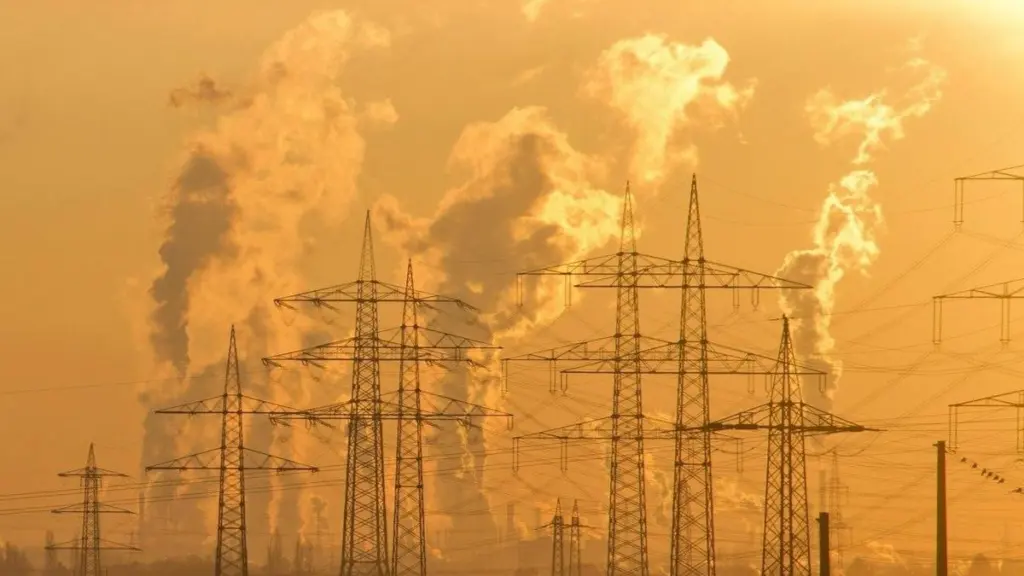
The idea of carbon markets is to compel major air polluters to switch to renewable energy by requiring them to pay for each metric ton of carbon they emit beyond a state limit. Washington’s framework was created under the 2021 Climate Commitment Act.
Each quarter, the state auctions off a finite number of air pollution allowances. As time goes on, fewer allowances will be available and prices will increase. If a company doesn’t use all of its allowances, it can sell those credits to other companies that need them.
Both supporters and critics of Washington’s cap-and-trade program say combining markets would benefit the state.
“From historic flooding and drought to extreme heat and devastating wildfires, climate change is impacting communities across our state and threatening our natural resources,” said Washington Department of Ecology Director Casey Sixkiller. “Together, we are demonstrating that states and provinces can meet this moment.”
If the markets were synchronized, all three jurisdictions would have joint auctions. A business in Washington could buy carbon allowances in Quebec, and vice versa.
Broadening the program could help stabilize Washington’s comparatively new and costly carbon market. California’s market began in 2012 and Quebec’s in 2013, and the two merged a year later. Allowances in both jurisdictions are under $30 each — significantly less than Washington’s, which sold for just over $70 in December 2025.
When Washington passed the Climate Commitment Act, it required Ecology to seek out a shared market with California and Quebec. Unlike those markets, though, Washington has a stricter 2030 decarbonization mandate and a provision to use 35% of carbon credit revenue to benefit vulnerable populations.
“Because we went third after both California and Quebec, we were able to learn lessons,” said Leah Missik, Washington legislative director for Climate Solutions. “In order to link with us, California had to reauthorize and extend their program, which is huge.”
The net benefit is greater than just the linkage itself, she added. As the markets move to link, each jurisdiction can look to the others for ways to improve.
As it stands, Washington’s law mandates that by 2030, in-state greenhouse gas emissions must be 45% below 1990 levels. California’s program, which was reauthorized last year to match more closely with Washington’s, mandates emissions be at 40% below 1990 levels by 2030. Quebec’s program mandates a 37.5% reduction below 1990 levels.
Opponents have criticized Washington’s timeline, calling it unreasonable and a contributor to the state’s affordability crisis. The mandate is also one reason the Washington market has faced volatility since its enactment.
Market volatility
Washington’s carbon auctions have already raised over $4 billion in just three years since they began. But the road has been rocky.
Almost $2 billion of the state’s revenue came from the first year alone when carbon prices soared. Then, in 2024, prices dropped dramatically when an initiative to eliminate the Climate Commitment Act made it onto the ballot. That measure failed in November 2024 with 61% of voters opting to keep the program intact. In 2025, the market bounced back.
Even critics of the Climate Commitment Act who advocated for the initiative to repeal it believe that entering a shared market is beneficial.
“It makes a bad system less bad,” said Todd Myers, vice president of research for the Washington Policy Center.
“Prices can go up or down based on changes in the economy, changes in the environment, I mean, all sorts of different things,” he added. “And, the smaller the market that you have, the more volatile it becomes.”
Linking Washington to markets in California and Quebec would add extra security to absorb a market shock — for example, if the state needed to use more natural gas during a drought that limits hydropower, Myers said.
Linking the markets would also likely lead to decreased carbon prices in Washington and increased prices in California and Quebec.
“With more certainty about [market] costs, companies can properly budget for investments in decarbonization,” said Caroline Halter, communications manager for the Department of Ecology. “And when companies decarbonize, they need fewer allowances, reducing their compliance costs and allowing them to deliver lower prices to consumers.”
Gov. Bob Ferguson is also in support of the proposal, stating that joining with California and Quebec will “lead to greater progress in reducing emissions” and “more predictability for businesses.”
This story first appeared on Washington State Standard.