BOISE, ID – A House committee advanced a bill to “clean up” language from a 2024 law that required parental consent to provide nearly any medical care to young people under 18.
House Bill 860 makes a number a changes to address inadvertent barriers created by that law to young people accessing emergency but non-life threatening care, medical examinations after reported abuse, and support through the 988 Suicide and Crisis Hotline.
The bill advanced amid concerns by the Idaho Prosecutors Association that the wording in it may limit medical examinations to children when crime has been alleged against them to only cases where there is a serious injury.
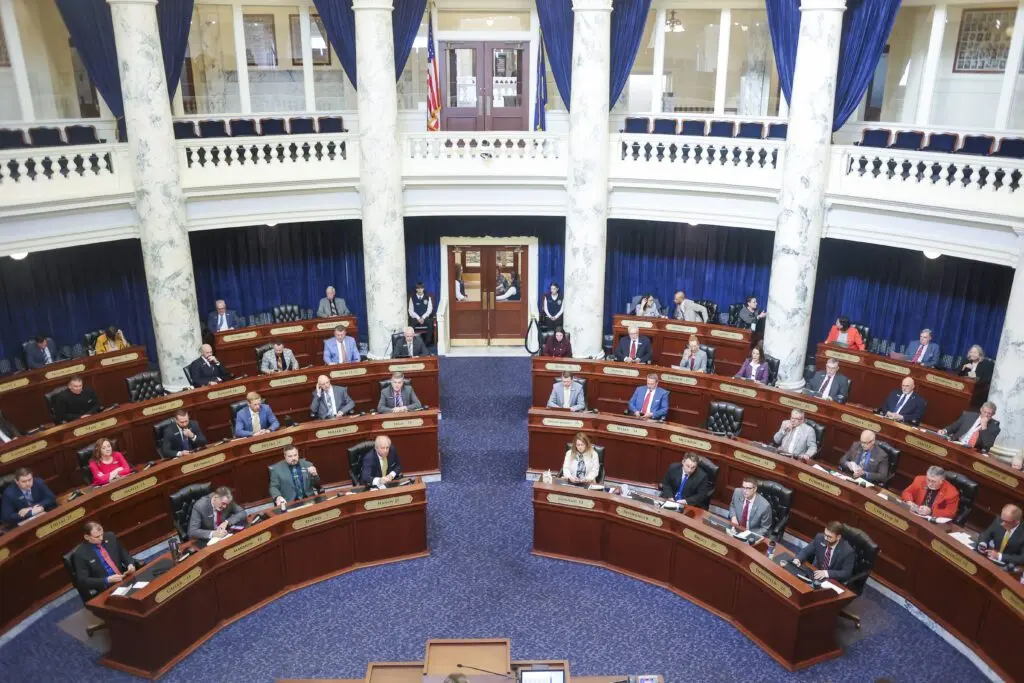
The House Judiciary, Rules and Administration Committee voted unanimously on Wednesday to send the bill to the full House for consideration.
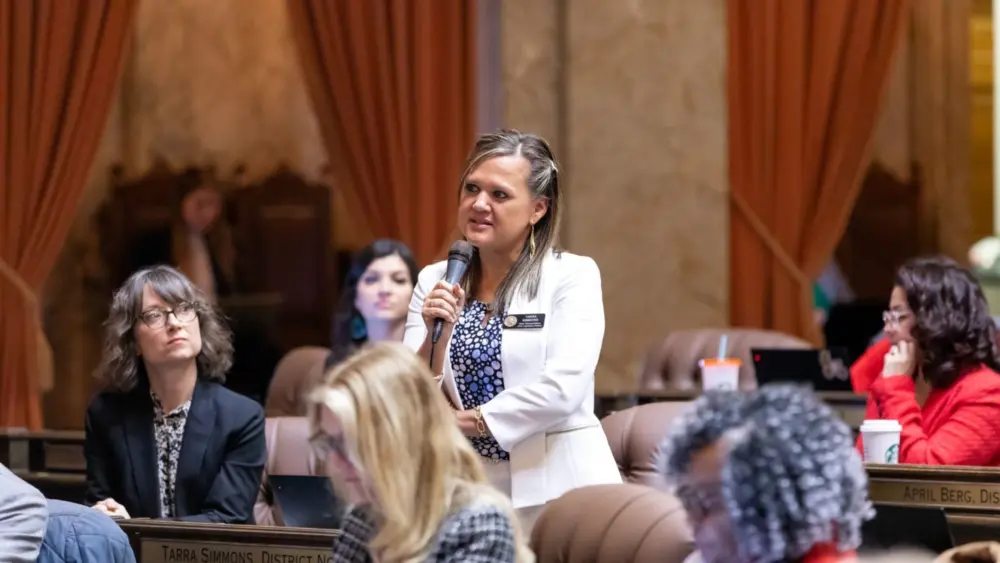
“This is essentially cleanup language, which you and your constituents have asked for from the medical parental rights bill in 2024 that we passed wholeheartedly,” Bill sponsor Rep. Barbara Ehardt, R-Idaho Falls, told the committee Wednesday.
The bill’s changes to the parental rights law would:
- Clarify that the law should not be interpreted to prohibit providing non-emergency first aid to a child that appears sick or injured, such as dressing a minor wound or applying a topical ointment.
- Allow treatment to address “a serious bodily harm” or prevent “serious physical illness or injury.”
- Add new requirements for receiving blanket consent for care from parents.
- Allow certain treatment and examinations related to an allegation of a crime against the child, or to collect evidence of an alleged crime when the collection is time-sensitive, such as a sexual assault case.
- Allow the 988 Crisis and Suicide Hotline to provide immediate services, and if the child is experiencing suicidal ideation, allow the hotline to do a follow-up call.
- Allow diagnosis of pregnancy, prenatal care, and peripartum care, none of which may include abortion care.
Idaho teens support changes to allow suicide hotline to help
Two Idaho teenagers, who said their calls to the 988 hotline were ended because they didn’t have parental consent, spoke in favor of the bill. Meridian High School freshman Jace Woods, this year contacted multiple legislators to try and get the law changed, the Idaho Capital Sun previously reported.
“Imagine being 15 trying to tell your parents that you want to die, not because you hate them but because you hate yourself,” Woods told the committee. “That takes courage most adults can’t even imagine.”
Idaho 988 Director Lee Flinn said she supported the changes because her operators had been constrained by the law in situations where a minor called but wasn’t at risk of imminent death or irreparable harm, which are the narrow exceptions in current law.
The hotline has also been unable to do follow-up calls with young people if parental consent couldn’t be obtained to do so. HB 860 would allow the hotline to support any young people who call and perform follow-ups.
“This immediate human connection can be the difference between a crisis escalating or a life being saved,” Flinn said.
Rep. Heather Scott, R-Blanchard, questioned Flinn about why the hotline had been ending calls with teenagers who called.
“I just can’t imagine any adult hanging up on anyone, and I want to know if there’s any politics involved in these decisions,” Scott said to Flinn, “knowing this is based out of Boise, there’s definitely different politics that go on across the state to make a point of whatever. I would hope that the (hotline) would not be doing something like that.”
Flinn responded, “I can give you full assurance we do not hang up on people.”
“I understand how it can feel very abrupt if a person is assessed at not meeting the emergency criteria,” Flinn said, “but we are really focused on safety.”
Idaho prosecutor group asks for amendments
Brian Naugle, executive director of the Idaho Prosecutors Association, said the group was hoping for a change to the bill regarding collecting evidence or conducting an exam of a child when there’s been an alleged crime against that child by the parent.
Under the bill, medical care could be given in those situations to prevent death or to “address serious bodily harm” to the child, and when “collection of such evidence is time-sensitive.”
“One of the unfortunate facts that is common to the crime of child sex abuse is that it often occurs, more often than not in fact, without physical injury that results in serious bodily harm, much less death,” Naugle said. “Being able to collect that evidence can mean the difference between us being able to charge a sex abuse case and not being able to.”
Lawmakers said it was late in the legislative session, which began in mid January and is expected to run roughly to the end of the March. Rep. John Gannon, a Boise Democrat, said he was concerned if the bill went to the floor for amendments, it would stall.
If the bill passes the House, it will go to a Senate Committee for a potential hearing. Gannon said there was an opportunity for the Senate to consider changes.
“I think there is a path forward,” Gannon said.
What issues prompted the ‘cleanup’ bill?
Since the parental consent law, created through Senate Bill 1329, went into effect July 1, 2024, there have been a number of consequences that bill sponsors say were unintended.
In August, the Idaho Capital Sun reported that the 988 Suicide and Crisis Hotline director said the bill limited operators’ ability to serve some young people under 18 who called, and they couldn’t conduct follow-ups with those kids.
Soon after the law went into effect, a health care provider with Idaho State Police raised alarms that it would inhibit sexual assault, or rape kit, exams on minor children when the perpetrator is a parent, family member or close family friend, Idaho Reports reported.
The Boise School District in response to the law asked parents and guardians for blanket permission to perform basic first aid on children, such as giving a Band-Aid, Idaho Education News reported.
The law also gained national attention when the Washington Post reported on a 13-year-old pregnant girl from McCall who could consent to her baby’s care but not her own.
Senate sponsor of SB 1329, President Pro Tempore Kelly Anthon, a Rupert Republican, in 2025 pushed a bill to address some of these circumstances, but it did not advance in the House after it passed in the Senate.
This story first appeared on Idaho Capital Sun.