OLYMPIA, WA – From mandatory police trainings to millions of dollars in state spending to close the “digital divide,” Washington agencies are struggling to prove whether major programs are working.
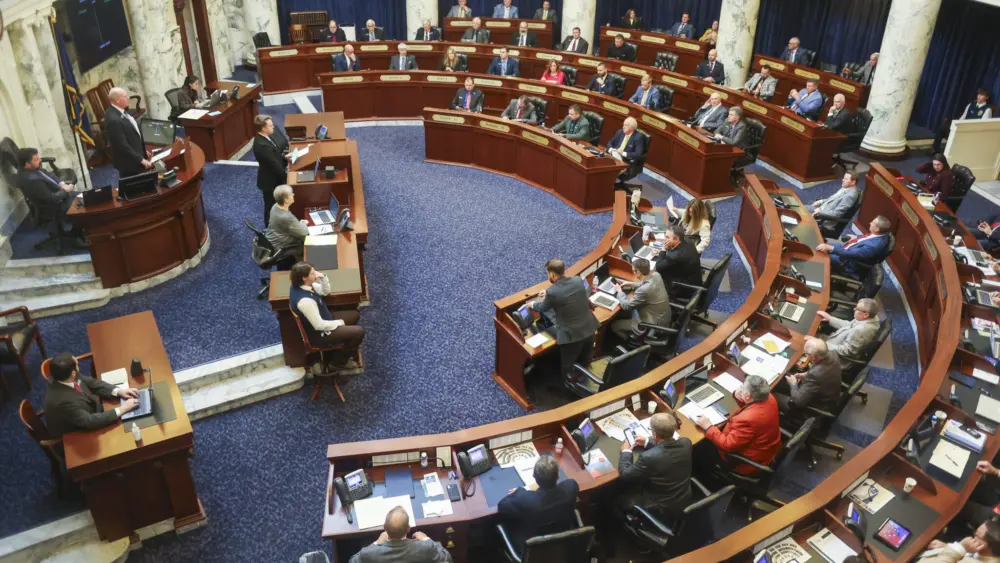
The Washington State Auditor’s Office said as much on Wednesday, when briefing lawmakers on three recent performance audits. The probes identified gaps in compliance, oversight, measurable outcomes and responsibility in fulfilling police training mandates, as well as $92.5 million spent on digital equity.
Voters approved the police trainings in 2018, and despite efforts to expand access to broadband internet with a Digital Equity Plan and a separate Digital Navigator Program, SAO says that state agencies aren’t on track and lack control over public funds.
“This performance audit report serves as a case study in how neglecting the fundamental tenets of government accountability can sabotage even the most noble goals,” State Auditor Pat McCarthy wrote in an audit of the Department of Commerce’s oversight of its $92.5 million Digital Navigator Program.
Across each audit presented on Wednesday, Washington had set major goals that it’s falling short on.
Compliance with the Law Enforcement Training and Community Safety Act
Voters approved a ballot measure in 2018 that required police officers to undergo 40 hours of training on violence, de-escalation and mental health. SAO found that only 16% of veteran officers and 14% of new officers have completed the training, and that half of all officers could be noncompliant by 2028.
As of May 2025, SAO staff said that 42% of officers had completed at least 20 hours of training, while 42% had completed fewer than that. Only around a third of the 670 instructors trained actually taught the courses, and the state Criminal Justice Training Commission lacks tools to encourage participation.
Police agencies told SAO that the costs of sending officers to the trainings were high and that doing so took needed officers off the street. Some said their officers questioned the relevance of certain cultural awareness trainings, and that the content appeared “biased or condescending” towards police officers.
“[CJTC’s] communication has been ineffective, compounding these barriers,” SAO Performance Auditor Robert Evashenk said. “Clearly communicating the rules and expectations of the program is essential, because if people do not understand what they’re supposed to do, they’re less likely to do it correctly.”
Jerrell Wills, interim director of the state training commission, claimed Wednesday that the CJTC has communicated the liability for noncompliance; however, when pressed by Rep. Gerry Pollet, D-Seattle, Wills acknowledged that the communication has been through informal conversations with leadership.
Sen. Leonard Christian, R-Spokane Valley, said it’s clear Washington won’t meet its goals and asked SAO staff what will happen to the officers if they don’t complete the state-mandated training by 2028.
“I don’t think that the law or any policies have any punitive action,” Performance Auditor Olha Bilobran said. “So, I don’t know what will happen to the officers, but the law doesn’t provide any suggestions.”
Assessing Washington’s Digital Equity Plan, management of the Digital Navigator Program
Performance Auditor Patrick Anderson said Washington lacks a comprehensive unified plan to address digital equity, which he defined as accessibility to broadband internet, technology and other resources.
The Legislature passed the Digital Equity Act several years ago to eliminate barriers and increase accessibility and affordability. The state Department of Commerce and the governor’s Office of Equity were chosen to play key roles, with several other groups and agencies also participating in digital equity initiatives.
“A plan is only as useful if it has a clear path to implementation, and Washington currently lacks a clear leader and a responsible funding or reliable funding source for broader digital equity efforts,” Anderson said, noting that the federal government cut funding that the state planned to rely on for these efforts.
The Department of Commerce’s $92.5 million Digital Navigator Program was a key part of this work.
In written comments, McCarthy said failures identified around the Digital Navigator Program were “so pervasive they go beyond a lack of basic internal control,” and that “there’s no excuse” for Commerce.
The audit into the program found that Commerce used a “questionable process” to award the $92.5 million in state grants, failed to properly vet funding recipients, track performance, or hold grantees to basic requirements to receive taxpayer funding. One staff member even left to work for a grantee.
“I am so troubled by this report,” Rep. Stephanie Barnard, R-Pasco, told SAO staff Wednesday.
Gov. Bob Ferguson has since cut the program after learning nearly $11 million went to one recipient for costs that state auditors couldn’t confirm were allowable under state law. That grantee also sought reimbursement for other costs with adequate documentation, but they were deemed “unallowable.”
“In May of 2023, Commerce expanded a grantee’s contract despite staff warnings that the agency had already violated the contracting rules,” Anderson said.
“In another case, staff requested reimbursement documentation before issuing additional payments, but a former broadband office director ordered the payments to proceed without the required documentation,” he continued.
Pollet questioned how Commerce awarded tens of millions of dollars in taxpayer-funded grants without prioritization guidelines or a focus on intended outcomes that increase access for certain populations.
Sarah Champion, interim chief contracts and compliance officer at Commerce, said the department is implementing contract management standards, adding that Commerce has about 8,000 active contracts.
Sen. Keith Goehner, R-Dryden, suggested that Commerce violated the “sacred trust” that taxpayers have placed in the department to spend public funds appropriately and asked whether anyone has faced disciplinary action or whether there have been attempts to recoup some unallowable grants.
“I’m not aware of any disciplinary actions,” Champion said. “We’ve gone through a very detailed reconciliation process, and should we establish that money is owed to the state, we will pursue recapture.”