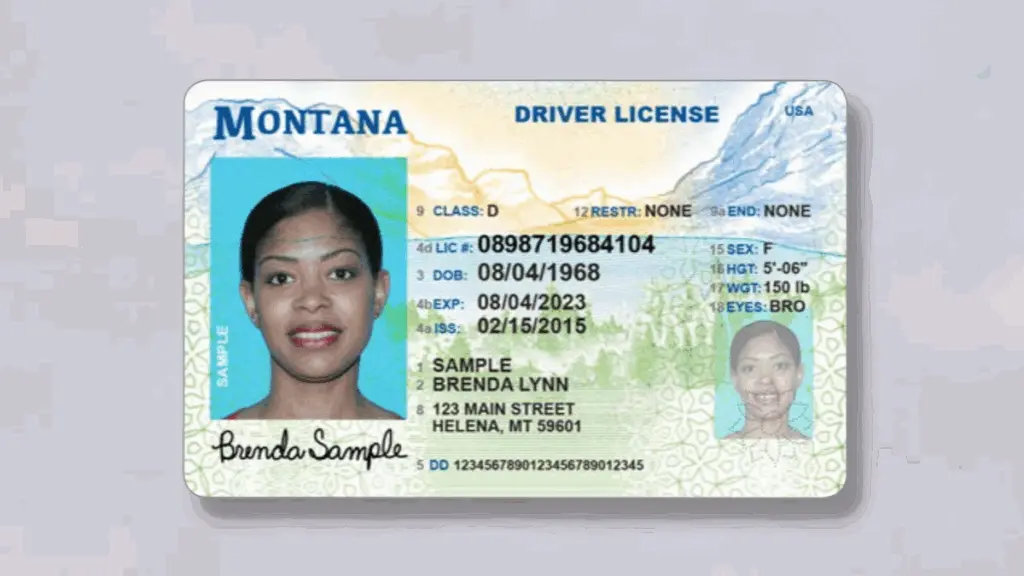
MISSOULA, MT – A Missoula County District Court ruled that the state’s refusal to issue a driver’s license to a nonbinary minor violates the Montana Constitution and that attorneys for the Montana Attorney General’s Office also misinterpreted state law by refusing the license based on sex.
The ruling by Judge Shane Vannatta said that the a minor, known as “M.B.,” has a birth certificate that says “nonbinary,” but state officials refused to issue a license — forcing M.B., to declare either “male” or “female,” which they refuse.
The judge said the state had the ability to issue a driver’s license to M.B., but instead refused to do so because it wouldn’t accommodate the nonbinary status, therefore discriminating against the minor, solely based on sex. M.B. had otherwise completed all the requirements to obtain a license, according to court records.
In his ruling, Vannatta said the Department of Motor Vehicles (and its parent division, the Montana Department of Justice) is prohibited from denying driver’s licenses to residents based upon their legal sex.
Originally, attorneys for the state had argued M.B. had failed to complete the application, and therefore it couldn’t process it because M.B., would not choose between male and female. Moreover, the state had also argued the software system would only produce a license if one of the two options was selected.
The case began as a Montana Human Rights Bureau complaint. During the investigation conducted by it, a hearing officer determined that the state had indeed discriminated against M.B, but attorneys for the state appealed to the Montana Human Rights Commission, five members of the public selected by the governor, in this case, Gov. Greg Gianforte, a Republican. That commission ruled in favor of the state, overturning the hearing officer, because it stated M.B. had not completed the application in full.
However, Vannatta ruled members had misconstrued the statutes regarding licensing drivers in Montana which requires the legal name, date of birth, and sex. The judge said the birth certificate listed M.B. as nonbinary and is the document that gives the legal name and date of birth.
“The DOJ does not cite to law that only an applicant that can indicate that they are either male or female is a ‘qualified’ applicant,” Vannatta said.
Furthermore, Montana law defines who may not be issued a driver’s license, and nonbinary is not included, court documents said.
“Whether the Motor Vehicles Division could enter M.B.’s ‘sex’ information of nonbinary into the (software system) is not determinative of M.B’s qualification as an applicant,” the court ruling said. “M.B. accurately completed the form. It was the MVD that did not accept the nonbinary designation (M.B.’s legal sex) and that did not enter the information in the system.”
Vannatta said the case raised constitutional issues as well, namely equal protection of the law.
“The equal protection clause requires that ‘all persons be treated alike under like circumstances,’” Vannatta said. “…The State of Montana issued M.B., a birth certificate with designation of nonbinary. Then the DMV denied M.B., the ability to obtain a driver’s license when they listed their legal sex as nonbinary while, at the same time allowing applicants who list their legal sex as either male or female to obtain a driver’s license.
“This is arbitrary and discriminatory state action that does not treat all applicants for a driver’s license under like circumstances and therefore it is unlawful under Montana’s equal protection clause.”
Vannatta also cited Montana law which said a government agency cannot deny a license or charter due to a person’s sex.
“The plain language of the statutes is that it is unlawful discriminatory practice for the state to deny a person privileges because of sex unless based on reasonable grounds,” Vannatta said.
The judge said the state has no reasonable grounds for denying a driver license based on sex, and indeed, having different options — male and female — proves that sex is not a reasonable ground to deny a license.
Subsequently, the state argued that changing the software would cost an estimated $50,000 to add other options. Vannatta’s order noted that since the case began, Montana had switched software systems. During the bidding process, it had the option of making the change, but still declined. It now said it would cost between $30,000 and $40,000 to make the change to the sex category, even though the entire software system was reported at $100,000.
Vannatta also awarded M.B., and their parents, attorney’s fees and costs as part of the lawsuit.
The Montana Attorney General’s Office did not respond to requests for comment before publication, including whether it planned to appeal the decision to the Montana Supreme Court, the state’s only appellate court.
“Transgender and nonbinary people should not be forced to choose choose inaccurate gender markers, while cisgender residents face no such barriers,” said American Civil Liberties Union Executive Director Akilah Deernose. “Today, the court agreed that the practice of gender identity discrimination violates our constitution and our state Human Rights Act by unlawfully singling out transgender and nonbinary Montanans for unequal treatment.”
This story first appeared on Daily Montanan.