OLYMPIA, WA – Rep. Mary Dye, R-Pomeroy, is warning that legislation introduced Tuesday to implement a California-style wildfire liability fund would increase electric power bills for utility customers across Washington.
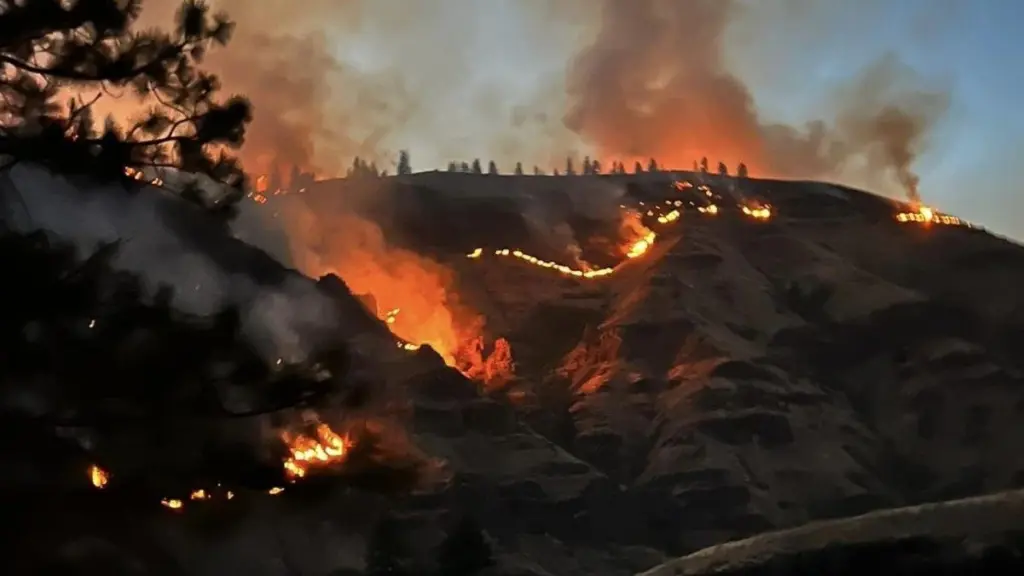
House Bill 2275, prefiled in the state House of Representatives, would create a large state-run wildfire liability fund financed by charges on electricity bills. The fund would cover payouts from lawsuits over utility-sparked wildfires.
The legislation is similar to the California Wildfire Fund, implemented in 2019, in which customers of the state’s largest investor-owned utilities pay more than $10.5 billion into a $21 billion fund, collected through a monthly surcharge on power bills. A report last month to the House Environment and Energy Committee in Olympia revealed that much of the California fund may soon be depleted due to massive wildfires last year in Los Angeles County.
Dye, who serves as ranking Republican on that committee, said Washington families are already paying an extra $400 a year on their utility bills since the state’s Clean Energy Transformation Act and the Climate Commitment Act (cap and trade) were implemented in recent years.
“Policies enacted over the past five years by the majority Democrats in Olympia, including the CCA and the largest tax increases in the state’s history, adopted in the last legislative session, have increased the prices of food, gasoline, rent, and utilities. Washington has an affordability crisis. And now, Democrats want to add more costs to every electric customer, from the single mom struggling to make ends meet to the local café, hair salon, auto repair shop, and grocery store. An unelected bureaucracy in Olympia would set these new charges on utility bills, raising the cost of living for everyone,” said Dye.
Dye said civil litigation attorneys, who stand to profit from the legislation, are already lining up to push it through the Legislature in the 2026 session.
“The Seattle Times recently documented that a California law firm, which won billions of dollars for its clients in wildfire lawsuits, has now set its sights on Washington state to advocate for this wildfire fund. They have reportedly enlisted former Governor Jay Inslee and Mike Webb, a longtime adviser to Governor Ferguson, to help move this legislation over the finish line,” noted Dye.
“Why would out-of-state litigation attorneys be interested in Washington state? My answer is, follow the money,” she added. “If they take a cut of every claim paid out by the fund, this could be very lucrative legislation for a specialized group of attorneys at the expense of Washington utility ratepayers.”
Dye said Washington should not be emulating California.
“A California-style wildfire fund may sound appealing, but California households now pay the highest electricity rates in the continental United States — largely because every fire, every liability judgment, and every cost ends up on ratepayers,” Dye added. “Washington families are already struggling with paying their power bills, keeping the lights on, and keeping their homes warm. They cannot afford to dig deeper into their pockets.”
Rather than sticking Washingtonians with higher power bills, Dye said there are better ways to accomplish the objective of preventing wildfire-related utility bankruptcies and making wildfire victims whole without punishing ratepayers.
“We should consider targeted liability reform, just like Utah did in 2024. Utah created a system that places reasonable caps on non-economic damages, preventing unpredictable, multibillion-dollar jury awards that have put utilities at risk. Their system establishes a liability safe harbor, so utilities that fully comply with their wildfire mitigation plans are protected from unlimited liability for events outside of their control,” said Dye. “The approach keeps utilities solvent, prevents insurance markets from collapsing, and prevents catastrophic rate increases for the public.”
The 2026 legislative session begins Jan. 12 in Olympia.