WASHINGTON, D.C. – Philadelphia is poised to launch the nation’s first city-sponsored retirement plan for workers whose employers don’t offer them.
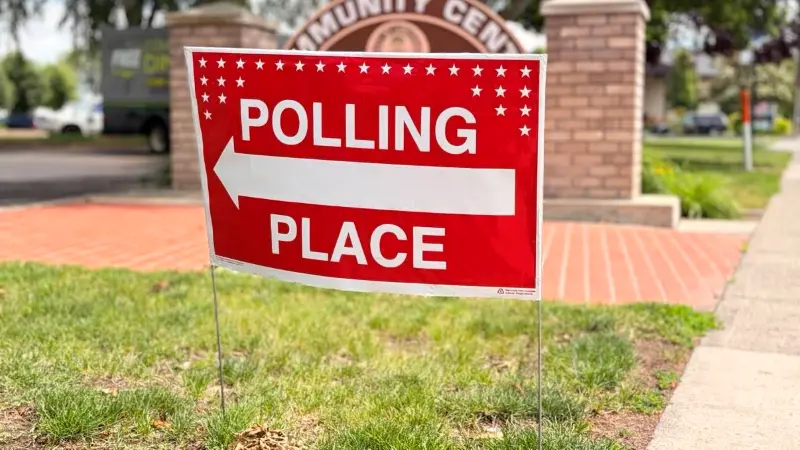
Voters on Tuesday sanctioned the city council’s PhillySaves program by adopting a change to the city charter. The move will require employers without retirement benefits to enroll their workers in the new plan. Unless workers opt out, they will have a small portion of their paycheck diverted into an individual retirement plan, or IRA.
“This is a big darn deal for the city of Philadelphia,” Democratic Mayor Cherelle Parker said at a bill signing event approving the program earlier this year.
Proponents said the program would help address affordability, improve financial literacy and help families build generational wealth. Supporters included AARP, the Chamber of Commerce for Greater Philadelphia and The Pew Charitable Trusts.
Philadelphia will be the only city to run an automatic retirement program, but it joins a growing number of states with such plans. More than 50 million Americans don’t have retirement plans through work.
The new programs require most employers without retirement offerings to set up payroll deductions for their workers, but do not require any employer match. Employees are automatically enrolled in an Individual Retirement Account, or IRA, but can choose to opt out of the programs. Studies show that making investment the default option — that is, allowing people to opt out rather than asking them to opt in — leads to much higher participation rates.
Supporters say these automatic programs make it easier for more people to start building a nest egg. As more people do, states expect to see an eventual savings through reduced social services spending. Some business interests have opposed state mandates to join plans, saying they’re a burden and questioning their effectiveness.
More than 1.2 million workers across the 15 states with active programs have collectively saved $3 billion for retirement through state-sponsored plans, according to tracking from the Georgetown University Center for Retirement Initiatives. At least two more states are expected to launch programs in the coming years, and others are considering it.
Since Oregon launched the first state plan in 2017, the total amount saved nationwide through state auto-IRAs has accelerated: It took six years to amass the first $1 billion in 2023. But it took just 18 months after that to reach the $2 billion mark in 2024, the center found.
“It’s exciting to see that the state programs are helping to move the needle,” said Angela Antonelli, executive director of the center.
Americans haven’t saved for retirement. States are creating automatic savings plans.
The programs are generally overseen by state treasurers and appointed boards. Private contractors administer the investment funds, which fluctuate with financial markets.
While the Philadelphia move highlights the growing interest in these programs, it’s unclear how many other cities may follow suit because of the implementation costs. Smaller states, including Delaware, Rhode Island and Vermont, have pursued retirement plan partnerships rather than going it alone, Antonelli said.
“Philadelphia would be a test case for other cities,” she said.
Last month, President Donald Trump signed an executive order to create another way for workers without employer-sponsored plans to save for retirement. It calls for the creation of a new website, TrumpIRA.gov, where workers could research and enroll in IRA accounts, with some lower earners eligible to collect a matching contribution from the federal government.
Antonelli said the White House spotlight validates state leadership on the issue.
“That the president of the United States has drawn attention to this is only contributing to additional interest on the part of more states now to start adopting these programs,” she said.
By creating an auto-IRA program, states can help more low- and moderate-income workers qualify for a federal match of up to $1,000 for individuals and $2,000 for married couples that will begin next year. That match, created by Congress in 2022, will come in the form of a federal tax credit deposited directly by the U.S. Treasury into retirement accounts.
State debates
State lawmakers this year continued to debate the creation or expansion of auto-IRA programs.
This year, Minnesota launched its auto-IRA program that aims to cover workers at all employers with five or more employees. Hawaii’s program is set to launch this year, Antonelli said, with Washington state starting its plan next year.
So far, the states that have created auto-IRA programs are largely liberal ones. Some conservative states, including Missouri and Utah, have set up voluntary programs to help small employers find retirement plans.
In politically divided Pennsylvania, legislation to create an auto-IRA plan remains stalled after passing out of the Democratic-controlled state House last year. It has yet to receive a vote in the Republican-controlled Senate.
“It is a Band-Aid on a hemorrhage,” said Greg Moreland, state director of the Pennsylvania chapter of the National Federation of Independent Business. “We all can agree that folks are not saving enough for retirement. This, though, when looking at the data isn’t the answer.”
State-mandated paid leave programs now cover millions of American workers
The NFIB chapter, which represents about 13,200 small businesses in Pennsylvania, opposed the legislation, arguing it would create too much of a burden on small businesses that would have to enroll their workers.
Moreland cited the number of employees who chose to opt out of auto-IRAs as evidence they are unwanted by workers. Georgetown’s tracking shows about 35% of California participants opted out of that state program, while more than 37% opted out of the Illinois program.
Workers have withdrawn more than $1 billion from state auto-IRA programs since 2017, and Moreland argued accounts are too small to provide meaningful retirement income. Since Colorado’s program started in 2023, workers there have accumulated an average account balance of just under $2,000, while Oregon workers have saved an average balance of $3,229 since that state’s 2017 program launch.
“They’re not treating this like an actual retirement account,” he said.
But proponents note that many of the participants are among the economy’s lowest paid workers and auto-IRAs provide both emergency savings now and a supplement to Social Security income in the future.
“The way I look at it is, well that’s 60 or 65% of the population that wasn’t saving before,” said Emerson Sprick, director of retirement and labor policy at the nonprofit Bipartisan Policy Center.
“People know where their paycheck is going. They know what they can afford to do and what they can’t afford to do. And if they can’t afford to save at the moment they opt out.”
Sprick said research has shown the creation of state plans had led more employers to offer their own retirement plans. Because auto-IRAs target those without retirement plans, employers that offer pensions or 401(k)s do not have to comply with state mandates.
While anyone can invest in a private IRA or other savings vehicle, employer-sponsored plans encourage savings by automatically deducting funds, oftentimes with an employer match, from paychecks.
“There’s a significant access gap,” he said. “That access gap is concentrated among the smallest employers and among the industries with the lowest average wages and it leads to real disparities in financial outcomes in retirement.”
Will cities follow Philly?
On Tuesday, Philadelphia voters approved a ballot question sanctioning the creation of a nine-member board to oversee the new PhillySaves program.
The pay gap between women and men widened last year, analysis finds
New York City and Seattle both approved auto-IRA plans, but neither city implemented theirs because statewide programs launched first.
John Scott, director of the retirement savings project at The Pew Charitable Trusts, which helped Philadelphia create the PhillySaves program, said other cities may follow its lead.
Pew estimates the city will spend about $1 million in upfront costs and about $500,000 on annual administration. Participation will be mandatory for employers with at least one employee that have been in business for at least two years and who do not already offer a retirement benefit.
“When you look at the arc of the assets accumulating, it’s starting to look like an exponential growth curve, and people take notice of that,” he said. “So, it’s not surprising that we’re seeing more interest and more legislation being introduced around the country.”
Stateline reporter Robbie Sequeira contributed to this story. Stateline reporter Kevin Hardy can be reached at khardy@stateline.org.
Stateline is part of States Newsroom, a nonprofit news network supported by grants and a coalition of donors as a 501c(3) public charity. Stateline maintains editorial independence. Contact Editor Scott S. Greenberger for questions: info@stateline.org.