Originally posted on IdahoEdNews.org on April 28, 2026
BOISE, ID – Idaho students are likely to pay more for college this fall — when the sticker price for higher education goes up by as much as $425 per year.
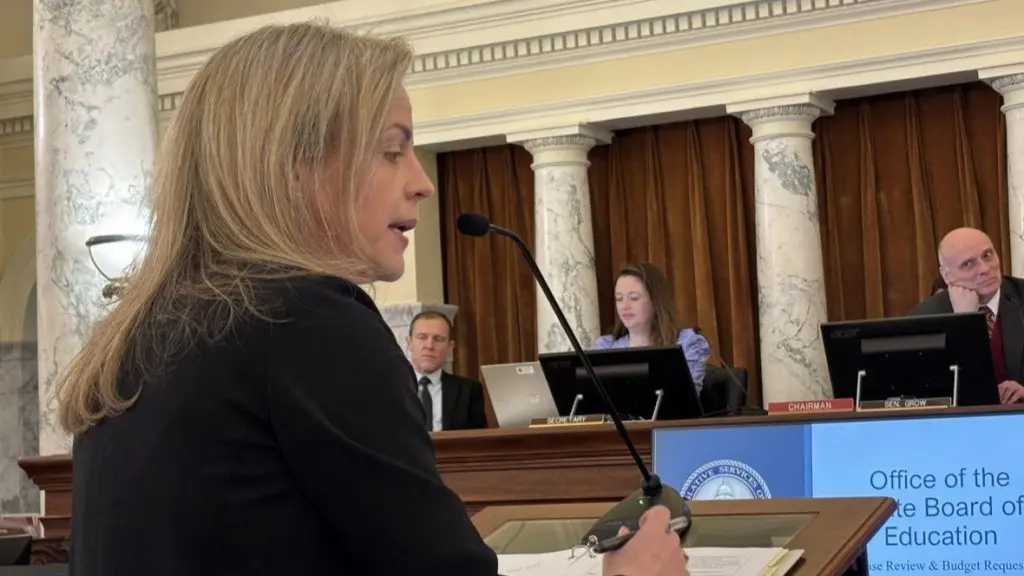
The State Board of Education Tuesday unanimously passed a series of tuition and fee hikes for Idaho’s four-year schools.
The increases will range from 4.4% to 4.7%, the largest hikes in three years. Tuition and fees increased across the board by 3.5% this year, and 3% the previous year.
Here’s the bottom line — full-time tuition and fees for in-state undergrads.
| College or university | 2025-26 cost | 2026-27 cost | Net increase | Percentage |
| Boise State University | $9,364 | $9,789 | $425 | 4.5% |
| Idaho State University | $8,914 | $9,339 | $425 | 4.7% |
| University of Idaho | $9,400 | $9,825 | $425 | 4.5% |
| Lewis-Clark State College | $7,876 | $8,226 | $350 | 4.4% |
For full-time out-of-state students, undergraduate tuition and fees will range from $29,477 at Boise State to $23,938 at LC State.
For in-state graduate students, next year’s tuition and fees will range from $11,796 at the U of I to $11,117 at LC State. Costs will go up by at least 4.7% at each four-year school — except for Idaho State, which is freezing graduate costs, in an attempt to stay in line with its peer institutions.
The impacts — and debate — on campus
All told, the tuition and fees will generate close to $17.6 million across the higher education system.
Boise State will collect by far the largest share of the money, some $8.3 million. Almost $2 million will go toward financial aid and fraud detection systems, and a “degree tracker” system aimed at student retention and graduation.
“The proposed tuition and fee increase is also necessary to mitigate the negative impacts of eliminating faculty and staff positions (and) reducing academic and student support programs during a period of enrollment growth,” Boise State said in a written presentation to the State Board. The increase will also address “an urgent need to hire faculty” in engineering and health sciences, two high-demand programs that are at capacity.
The University of Idaho says it will use some of its $4.3 million in tuition and fees to stand up its counseling and mental health center, “a top concern and priority for student leadership.”
Reactions from student leaders have been mixed.
In a March 30 statement on the proposed fee increases, U of I student body president Seyi Arogundade called the counseling and mental health center “a critical resource for student wellbeing and success.” In a statement on behalf of student government, LC State student body president Rayne Martinez said the increases are “minimal and will ultimately serve to benefit the students.”
Boise State’s student government instead passed a resolution opposing all “significant” tuition increases — a statement that didn’t directly address next year’s price hike.
That left State Board President Kurt Liebich to ask whether the 4.5% increase had crossed that tipping point. Interim CFO Stacy Pearson said Boise State trimmed back its initial request for a 6.5% increase, after an on-campus public hearing in March.
“We definitely heard their message,” she said.
The political backdrop
Tuesday’s State Board votes came after a trying legislative session for higher ed, which rendered the tuition increases all but inevitable.
The four-year schools shouldered a disproportionate share of the budget cuts imposed by Gov. Brad Little and the Legislature, since K-12 was largely spared from spending reductions. Higher ed took a $14.6 million cut for the current budget year, which ends June 30. For next year, the cuts will reach $26 million — including reductions that are built into higher ed’s ongoing budget base.
In a memo to board members Friday, Executive Director Jennifer White noted the need to sustain programs and support systems that adequately serve Idaho students. But she also noted that “even modest tuition increases matter” could discourage students from enrolling in college.
“Tuition cannot serve as the primary long-term solution for the financial pressures facing our institutions,” White wrote.
How we got here — and where we go from here
After a three-year tuition freeze imposed shortly before the COVID-19 pandemic, and two years of smaller cost increases, budget pressures have “accumulated” at the U of I, CFO Brian Foisy said Tuesday. This fall’s increases will address inflation and rising salary and benefit costs.
“We are not asking students to pay for inefficiency,” he said.
The tuition and fee increase should bring in $4.1 million for U of I, essentially balancing the books next year.
Elsewhere in the higher ed system, the added tuition and fees will have mixed impacts. LC State’s increases should provide about a $900,000 buffer. Boise State will still have to erase a $5.2 million shortfall, using one-time money and finding spending cuts.
Idaho State’s $4.1 million will provide the framework for a balanced budget — but only after university officials find additional spending cuts.
“We have done and will continue to do the hard work,” said Jennifer Steele, Idaho State’s vice president for finance and university planning.
State Board approves federal application to consolidate 3rd-grade tests
Also Tuesday, the State Board approved a pair of federal waiver proposals from state superintendent Debbie Critchfield.
One would allow third-graders to take just one standardized reading and literacy test — the Idaho Reading Indicator (IRI). Currently, third-graders take the IRI along with the English language arts (ELA) portion of the Idaho Standards Achievement Test (ISAT).
Last year, Critchfield proposed eliminating the requirement that third-graders take both literacy assessments after the U.S. Secretary of Education, Linda McMahon, urged state education leaders to seek waivers for federal mandates like assessments.
State Board members unanimously voted Tuesday to approve Idaho’s application to waive the ELA portion of the ISAT for third-graders, who would still have to take the math portion. If the waiver is approved by the federal government, the testing changes would take effect ahead of the 2027-28 school year.
“We overtest the children, and this is the right step for us to move forward,” said board member Peter Koehler.
But the State Board’s Accountability Oversight Committee (AOC) noted some concerns about the change. The subcommittee includes two State Board members along with representatives from the Idaho Department of Education, a handful of school districts and members at large.
After reviewing the waiver in January, the AOC expressed support for a single third-grade assessment. But the panel noted concerns about “the potential for lower quality data with a less rigorous test” and about “the lack of test items covering writing” in the IRI.
“The IRI is focused on assessing foundational reading skills,” Alison Henken, K-12 accountability and projects program manager for the State Board, said Tuesday. “The ISAT English language arts has a much broader coverage of our third grade content standards.”
Board member Shawn Keough, who sits on the AOC, said the panel’s concerns “are being worked through and will continue to be worked through as this process moves forward.”
The other waiver that the State Board approved Tuesday would make Idaho an “Education Flexibility (Ed-Flex) program partner state.”
The Ed-Flex program gives state education agencies the authority to waive federal requirements on school districts particular Title I, II and IV requirements. According to the Idaho Department of Education’s application, Critchfield is asking for authority to waive four requirements:
- The requirement that school districts and charter schools not carry over more than 15% of allocated funds except once every three years,
- The requirement that districts spend 20% of funds from the Well-Rounded Educational Opportunities and Safe and Healthy Students programs, and
- The 15% spending cap on the Effective Use of Technology program.
“It would allow our state to make those waivers available without having to go one by one to the federal government,” Critchfield said Tuesday.
State Board sets new IDLA course fees
Lastly on Tuesday, the State Board set new course fees for the Idaho Digital Learning Alliance (IDLA), aligning the fees with a law enacted earlier this month.
In addition to cutting the online course platform’s state funding in half, House Bill 940 set a $40 cap for IDLA courses that meet state graduation requirements along with a $100 baseline for courses that aren’t required for graduation. These fees apply to public school districts and charter schools that deliver in-person learning.
Virtual-only schools now have to pay the full course fee — $445 — according to the new law. Private- and home-school students also must pay the full fee, although a separate bill passed this year allowed recipients of the Parental Choice Tax Credit to claim IDLA as a reimbursable expense.
The State Board unanimously approved the new fees.