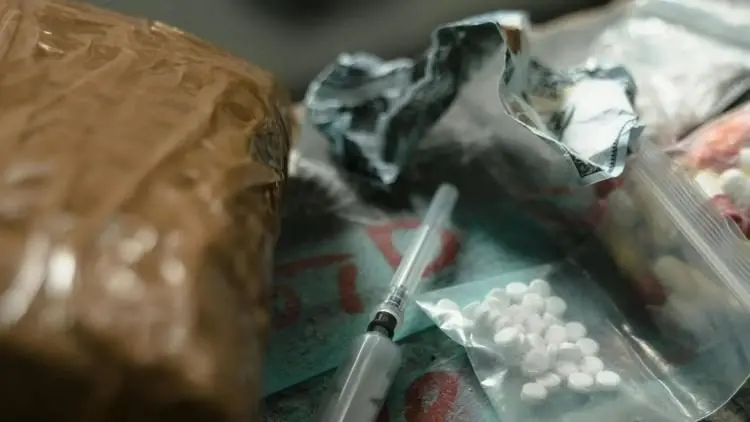
WASHINGTON, D.C. – A record more than 100 million lethal doses of fentanyl have been seized at the southwest border in the past six months.
The seizures were made by U.S. Customs and Border Protection agents working out of 54 ports of entry (POE) in California, Arizona, New Mexico and Texas. The seizures were made in the first six months of fiscal 2026, which began Oct. 1.
The total excludes seizures made by Border Patrol agents and other federal agents as well as state and local law enforcement officers in the same period, from Oct. 1 through April 30.
If seizures were included from other agencies, the total would be significantly higher.
“As the nation’s border security agency, CBP is on the frontline against foreign terrorist organizations that threaten the safety and well-being of Americans,” CBP Commissioner Rodney Scott said. “CBP is uniquely positioned to detect, identify, and seize illicit drugs like fentanyl before they enter our communities.”
Drug trends
Law enforcement across the southwest border have identified new drug smuggling trends. One is larger quantities of methamphetamine and cocaine pouring in, The Center Square reported.
This is the case at ports of entry and between ports of entry along the southwest border. CBP OFO seizures of meth and cocaine at POEs in just six months have already surpassed the volume seized in the previous year, CBP says.
In the first six months of fiscal 2026, CBP officers seized 152,000 pounds of methamphetamine at POEs, surpassing all of fiscal 2025.
They also seized more than 28,000 pounds of cocaine at POEs, already surpassing fiscal year 2025 by 6,000 pounds, according to CBP data.
Another trend is a shift from smuggling fentanyl pills to powder.
“Fentanyl powder contains more doses by weight than individual tablets,” CBP explains. “Doses vary depending on many factors. For powder, doses can vary based on purity and potency, so they are calculated using averages from seized material. One kilogram of powder can be pressed into roughly 75,000 typical fentanyl tablets. CBP assumes one pill is considered one dose.”
Fentanyl powder is “easier to conceal, more concentrated, and can be mixed with other drugs, increasing its danger to the public. Fentanyl powder can be hidden in everyday items, mailed in small packages, or transported in bulk shipments,” CBP explains.
Smuggling and seizure trends
CBP OFO agents are seizing more illicit drugs due to several factors. The cartels have shifted operations and are adapting methods to bring in large volumes of drugs instead of people due to changing federal immigration and border policies, law enforcement officers have explained to The Center Square.
Under the Biden administration, policies were implemented to facilitate illegal entry into the country. This included creating and expanding parole, asylum and refugee programs to release inadmissible and largely unvetted foreign nationals into the country. Federal employees from multiple agencies were pulled away from their jobs to process them into the country, reducing the number of agents in the field, including those dedicated to drug interdiction.
A record high of at least 14 million illegal border crossers were encountered/apprehended, including those who evaded capture, during the Biden administration, The Center Square exclusively reported. The number is believed to be significantly higher. It’s unknown how many people and how much illicit drugs were smuggled into the country during the Biden administration.
The Trump administration halted and reversed these policies, resulting in historic low illegal crossings. The administration and Congress allocated record funding to expand enhanced technological capabilities and hire more CBP and Border Patrol agents. With historic low illegal crossings, more officers in the field focusing on interdiction and adapting to smuggling trends, greater volumes of illicit drugs are being seized.
“In the last year, the U.S. experienced a dramatic shift in illegal migration trends, allowing CBP to pivot hundreds of officers and resources to enforcement efforts. This milestone is a direct result of these ongoing efforts. These interdictions highlight officers’ unparalleled skill, judgment, and experience in detecting illicit fentanyl,” CBP said.
Interdictions are often conducted under hazardous conditions, requiring specialized training for officers and canines and protective measures to safely handle dangerous substances, CBP adds.
CBP OFO officers are responsible for border security at 328 ports of entry nationwide. They include air POEs at international airports, land POEs at the northern and southwest borders and sea POEs at commercial seaports and cruise terminals.
Texas has the most POEs in the country and at the southwest border of 32. California has the second greatest number of 19. Also at the southwest border, Arizona has 10 and New Mexico has three, which are all located in El Paso, Texas. The CBP El Paso Sector includes all of New Mexico.