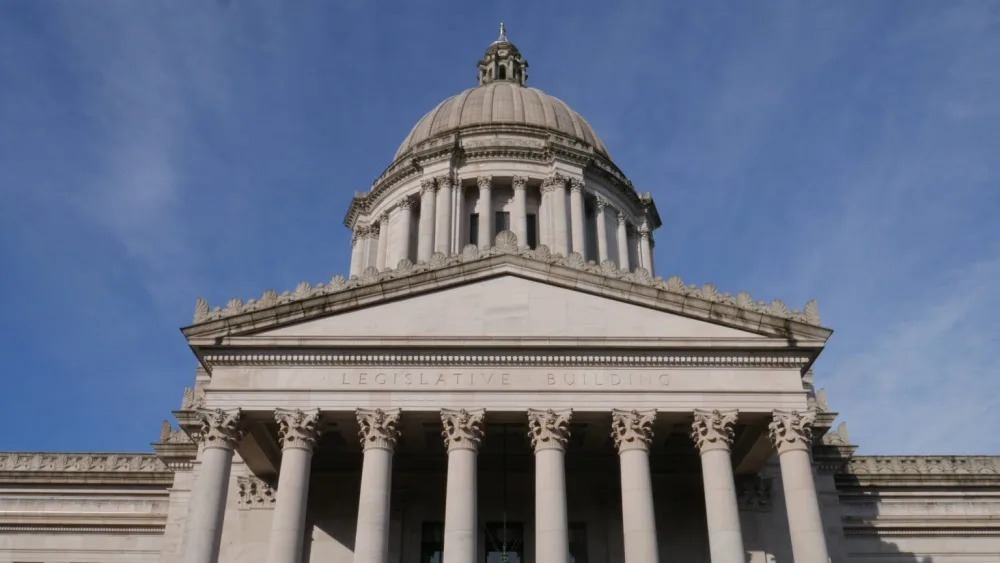
OLYMPIA, WA – State officials say eastern Washington forests are “overstocked” following years of fire exclusion policies and management practices that have left drier areas ripe for serious wildfires.
The warning came Tuesday as the Department of Natural Resources develops alternative management practices for eastern Washington. DNR staff briefed the state Board of Natural Resources on the issue ahead of a June meeting, where they will discuss options that could affect thinning and controlled burns.
Cameron Crump, manager of the DNR’s Forest Resources Division, said active management is “widely accepted” as necessary to restore a resilient landscape. Prescribed burns were a more common active fuel management tool until the 1990s, when DNR’s policies placed new regulations on the practice.
“A century of fire exclusion policies and past management practices have altered eastside forest ecosystems,” Crump said, referencing policies aimed at suppressing natural and human-caused fires.
“Dry forest types are now overstocked and contain an overabundance of fire-intolerant tree species,” she explained Tuesday. “Overstocking has led to more drought, stress and mortality from insects and disease; this has increased the risk of uncharacteristic, high-severity fires in these forest types.”
According to Tuesday’s presentation, DNR manages more than 2.25 million acres of forest land, with eastern Washington accounting for 34% of that.
The state created the Forest Health Revolving Account in 2017 to help fund the work by retaining timber sale revenue until the fund exceeds $10 million.
DNR has distributed roughly $22.8 million to FHRA beneficiaries, such as counties and public schools.
Sam Steinshouer, a state lands forest health program manager within the Forest Resources Division, estimated that the state has spent more than $100 million on forest treatments out of FHRA so far.
“I assume that’s a drop in the bucket compared to [actual] need,” Public Lands Commissioner Dave Upthegrove, the head of DNR who also sits on the Board of Natural Resources, responded Tuesday.
Upthegrove has faced criticism over the last year over a decision to conserve 77,000 acres of forest, which critics say threatens logging, funding for management and disbursements to trust beneficiaries.
Steinshouer said FHRA funds much of DNR’s treatment work in eastern Washington, but taxpayers still fill the gap with state and federal funding.
Some of that work includes preserving fire-resistant species by managing fuels with thinning, prescribed burns and replanting/preserving more resilient tree types.
While DNR policies in the 1990s made prescribed burns much less common than before, the practice still occurs to some extent in eastern Washington, but is no longer a go-to management tool for DNR.
“We’ve set some ambitious goals and are working through the limiting factors,” Upthegrove said.
Steinshouer showed examples on Tuesday where thinning in 2010 mitigated the extent of the Walker Creek Fire near Tonasket in 2021.
Variable retention harvesting, as opposed to clear-cutting a forest, also offered another revenue source for management while prioritizing more resilient tree species.
“Almost any kind of management is better than no management at all,” Steinshouer said, noting that managing bugs like the Douglas-fir beetle and diseases is also crucial to rebuilding a resilient forest.
If DNR can address the ongoing forest management issues in eastern Washington, it could reduce taxpayer exposure in the event of a major wildfire that threatens local infrastructure and resources.
Upthegrove said that DNR is pushing to make prescribed burns a larger part of its fuel reduction work.
“I’ve noticed, just as an elected official, the social license is definitely there,” he said. “I think people are understanding more and more that it’s better to have these controlled fires than a big, uncontrolled one.”